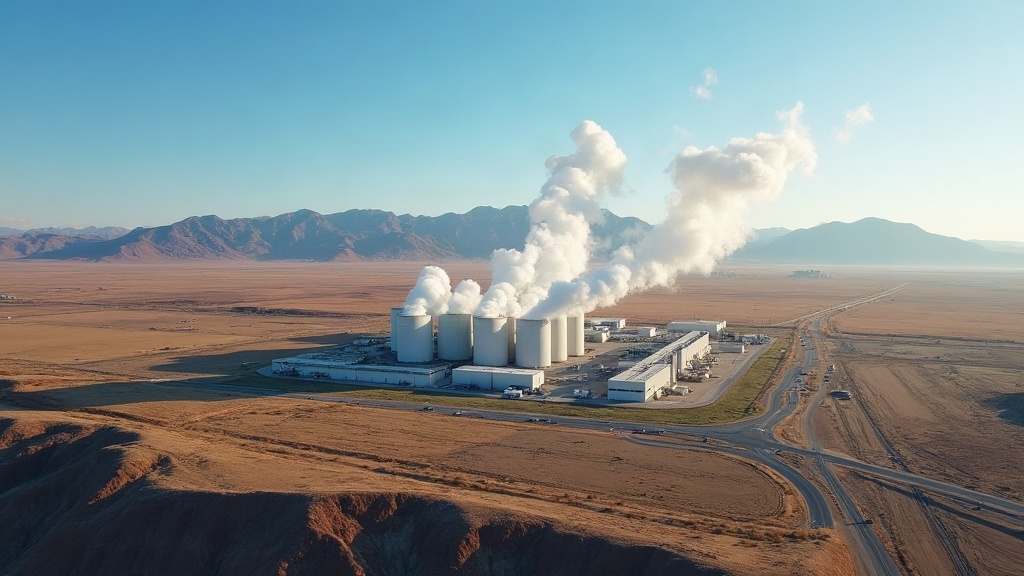
According to Kuna's Public Works Director Adam Wenger, the Treasure Valley is currently using more water than is going back into the aquifer. That data point, confirmed in a BoiseDev report on Kuna's data center expansion, is the kind of number that should land in the lap of every homeowner in Ada and Canyon County.
We're not saying your faucet will run dry next Tuesday. But we are saying the math matters, and understanding what Meta, Microsoft, and other large-scale water users are doing with groundwater in this region helps you make smarter decisions about your home's water quality right now.
The Treasure Valley Is Already Drawing More Than It Replenishes
The Snake River Plain Aquifer system, which underlies much of the Treasure Valley, is a finite resource that recharges through snowmelt, irrigation return flows, and rainfall percolation. During periods of rapid population growth and industrial expansion, total demand can and does outpace that recharge rate.
That is exactly what Adam Wenger, Kuna's Public Works Director, confirmed publicly in 2026. His comment was careful and measured: he does not believe the data centers currently planned for Kuna will cause a significant drawdown on their own. But the larger statement, that the valley overall is taking out more than it puts back, is the number that deserves attention.
To put it plainly: the entire region is running a water deficit. Data centers are one piece of that picture. Population growth, agriculture, and residential development are others. The question for homeowners is what a declining aquifer means for the water that actually reaches your tap.
What Meta and Microsoft's Data Centers Actually Use
Large hyperscale data centers, the kind Meta and Microsoft build and operate, consume water primarily for cooling. Server farms generate enormous heat; that heat has to go somewhere, and water is the most efficient medium for removing it.
There are two main cooling approaches:
- Closed-loop cooling towers: Water circulates in a closed system, absorbing heat and then releasing it through evaporation at the top of a tower. Some water is lost to evaporation in each cycle; the rest is recirculated. This is the dominant approach at large facilities and uses far less water than open-loop systems.
- Open-loop or once-through cooling: Water is drawn from a source, used once to absorb heat, and then discharged. Less common for large tech campuses due to regulatory and efficiency reasons.
Meta's data center facilities have publicly disclosed water usage efficiency (WUE) targets. For context, a WUE of 1.0 would mean using one liter of water per kilowatt-hour of IT energy. Large facilities often run between 0.5 and 2.0 liters per kWh depending on climate and cooling design.
A facility drawing 10 megawatts of IT load and running at 1.0 WUE would use roughly 10,000 liters of water per hour. At scale, with multiple facilities across the Kuna corridor, the cumulative draw on local groundwater supplies adds up, even with closed-loop efficiency gains.
The specific sourcing of that water, whether from Snake River Plain Aquifer wells or surface water rights, is governed by Idaho water law and the facilities' permitted water rights. Most large industrial users hold senior water rights that are separate from municipal allocations. But they all draw from the same hydrological system that eventually feeds your city's wells.
How Tech Industry Water Demand Affects Your Municipal Tap Water
Here is the mechanism that connects a data center in Kuna to the hardness in your Meridian kitchen faucet.
When aquifer levels drop, groundwater that remains in the system sits in contact with the surrounding rock formations for longer before it is pumped to the surface. The Snake River Plain is underlain by basalt and sedimentary layers that are rich in calcium and magnesium carbonate minerals. The longer water stays in contact with those rocks, the more minerals dissolve into it.
That dissolved mineral content is exactly what we measure when we talk about water hardness. More contact time, more dissolved minerals, harder water at the tap. This is not a hypothetical mechanism; it is basic geochemistry. It happens gradually over years, not overnight, which is why baseline testing now gives you a valuable number to compare against in future years.
There is a secondary effect as well. As aquifer levels decline in one zone, adjacent areas may draw from deeper formations where the mineral composition is different, often higher in silica, iron, or manganese. Municipal water systems adjust treatment protocols in response, but home water quality between the municipal treatment plant and your tap can still shift.
You can read more about how the data center water story connects to residential groundwater in our earlier piece: Kuna's Data Centers and Your Tap Water. And for a broader look at how tech industry growth affects the whole valley's groundwater picture, see Data Centers vs Homeowners: Treasure Valley Groundwater Explained.
What Boise Water Data Shows
Current hardness readings for Treasure Valley municipal water systems, based on utility consumer confidence reports and independent testing:
- Boise city water: 10 to 15 grains per gallon (gpg), approximately 171 to 257 mg/L as calcium carbonate. This is classified as hard to very hard on the standard scale.
- Meridian water: 12 to 17 gpg, depending on the service zone and time of year. Meridian relies heavily on Snake River Plain Aquifer wells, making it more sensitive to aquifer-level shifts than Boise, which blends river water into its supply.
- Nampa and Caldwell: Typically 13 to 18 gpg, also heavily aquifer-dependent.
- Kuna: 14 to 19 gpg in many zones; Kuna's supply is among the hardest in the valley and relies almost entirely on groundwater wells.
- Star: 12 to 16 gpg, with variation by neighborhood and well depth.
For reference, water is classified as hard above 7 gpg (120 mg/L) and very hard above 10.5 gpg (180 mg/L) by the USGS. Every community in the Treasure Valley sits firmly in the hard to very hard range. Even a modest increase of 1 to 2 gpg across the board, driven by gradual aquifer decline, would push Meridian and Kuna into ranges that cause noticeably accelerated scale buildup on appliances and plumbing fixtures.
What Homeowners in Kuna, Star, and Nampa Corridors Should Know
If you live in Kuna, Star, or the Nampa corridor, you are in the zone where the data center footprint is most concentrated. Several Meta and Microsoft facilities, along with other hyperscale operators, have selected or are developing sites in this southwestern Treasure Valley band specifically because of available land and power infrastructure.
That is not a cause for panic, but it is useful context. Your tap water is already among the hardest in the valley. The question is whether trends over the next five to ten years push those numbers higher.
A few things worth tracking as a homeowner in these areas:
- Your city or water district publishes an annual Consumer Confidence Report (CCR) that includes hardness measurements. Download it each year and compare numbers.
- If your home uses a private well, you have no municipal buffer at all; your hardness level tracks the aquifer directly. Well owners in the Kuna and Star area should test annually.
- New construction in these corridors often gets water from deeper wells than older homes, which can mean different mineral profiles. Get a test done before you move in, not six months after your water heater starts showing scale.
Practical Steps to Protect Your Home
Understanding the regional picture is useful. Knowing what to do at your specific address is more useful.
Step 1: Get a baseline water test. The only way to know exactly how hard your water is today is to test it. Municipal reports give averages for the whole system; your individual tap result depends on your specific location, plumbing age, and whether you are on the edge of a distribution zone. TrueWater Idaho provides free in-home water tests throughout the Treasure Valley. We measure hardness in gpg, TDS in ppm, pH, and iron on-site, and we give you the numbers on paper before we leave.
Step 2: Right-size a softener for today's levels plus a buffer. For Meridian and Kuna homes testing at 13 to 17 gpg, a system rated for 15 to 20 gpg gives you comfortable headroom. A water softener that is too small regenerates constantly and wastes salt and water; one that is properly sized runs efficiently and handles any near-term hardness increases without adjustment.
Step 3: Add a reverse osmosis system at the kitchen tap. A water softener removes hardness minerals throughout the house, protecting appliances, fixtures, and plumbing. But for drinking and cooking water, an RO system adds a second layer of filtration that removes residual TDS, any trace contaminants, and the sodium that softening adds to water. It's a modest investment for a significant improvement in the water you actually consume.
Step 4: Set a calendar reminder to re-test in 12 months. If regional trends push hardness numbers upward over time, you want to know it early. A year-over-year comparison tells you whether your system is still keeping up or whether a regeneration frequency adjustment is needed.
Find Out What's Actually in Your Tap Water
Free in-home water test throughout the Treasure Valley. We measure hardness, TDS, pH, and iron on-site and leave you with a written report.
Schedule Your Free Water TestOr call us directly: (208) 968-2771