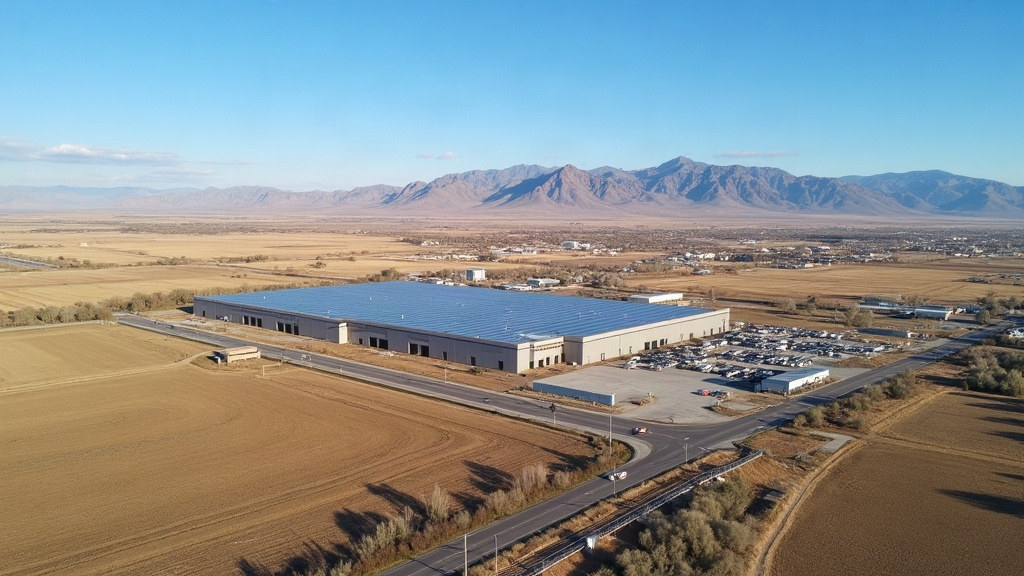
A single data center can consume up to 100 million gallons of water per year through evaporative cooling alone. That is roughly the annual water use of 830 Treasure Valley households. Now multiply that by the wave of tech facilities heading toward Kuna, and you start to see why local homeowners are asking a simple question: what does this mean for my tap?
BoiseDev has been tracking this closely, and the numbers are significant enough to pay attention to. Meta's $1.2 billion facility near Kuna is just the first. A second campus from Diode Ventures is also in the pipeline. Idaho legislators responded in early 2026 with House Bill 895, which is now law. We want to give Treasure Valley homeowners a clear, grounded picture of what is actually happening, what the science says about your water, and what you can do about it today.
What Is Actually Happening in Kuna Right Now
Meta flipped the switch on its Kuna data center in September 2026, marking the completion of a four-year, $1.2 billion build. It is Meta's 28th American data center and its first in Idaho, located near the intersection of Kuna-Mora and Cole roads. At peak summer load in July and August, the facility draws up to 2 million gallons of water per day from the municipal system. For the rest of the year, demand drops considerably because the cooler Idaho climate allows air-only cooling to carry most of the load.
The design choice that sets Kuna apart from older data centers is the closed-loop liquid cooling system. Instead of evaporating water into the air like a traditional cooling tower, Meta's sealed pipes circulate roughly 200,000 gallons of water through the facility continuously, reusing the same water for years. That is about a third of the volume of an Olympic-sized swimming pool, and once it is in the loop, virtually none of it is consumed.
Meta also transferred approximately 2.5 million gallons per day of senior water rights back to the City of Kuna as part of the project agreement, and the company built a water treatment plant it plans to donate to the city. Those moves are significant: the net effect is that Kuna actually gained water infrastructure capacity rather than losing it.
The Aquifer Question: Should Boise and Meridian Homeowners Worry?
The Treasure Valley sits on top of the Eastern Snake Plain Aquifer, a massive groundwater system flowing through layers of volcanic basalt rich in calcium and magnesium carbonates. That geology is why your water is hard. Boise tap water typically runs 10 to 13 grains per gallon, classified as very hard by USGS standards. Meridian comes in even higher, at 12 to 17 grains per gallon, with total dissolved solids registering well above the national average.
Here is the nuance that most coverage misses: industrial water draw does not directly change your water's hardness. The mineral content is determined by the rock the water flows through, not by how much water is removed from the system. What large-scale users do affect, however, is overall aquifer pressure and the rate of groundwater replenishment. During drought years like 2026, utilities shift toward heavier groundwater reliance, and that longer residence time in the aquifer can actually increase mineral concentration at the tap.
Kuna's Public Works Director has stated publicly that the current planned facilities will not cause a significant drawdown of area water resources in the near term. The USGS and Idaho Department of Water Resources updated their Treasure Valley Groundwater-Level Change Maps as recently as August 2026, and the picture is one of managed stress rather than crisis. But "near term" is doing a lot of work in that sentence, especially as more campuses are proposed.
Idaho's New Data Center Water Law: What HB 895 Changes
Idaho legislators moved quickly after the BoiseDev reporting on data center water use gained traction. House Bill 895, now signed into law, sets a clear rule for any data center breaking ground on or after July 1, 2026: cooling systems may not use water as a consumptive use unless that water comes from a licensed municipal or water district system.
The practical effect is that new facilities must either use closed-loop, non-consumptive systems or contract with an existing water utility, which can then plan capacity accordingly. The difference in water consumption between the two approaches is dramatic:
- Evaporative (old model): up to 100 million gallons per year for a 50-megawatt facility
- Closed-loop (new model): roughly 100,000 gallons per year for the same facility
That is a 1,000-fold reduction. The law does not apply retroactively, but every new campus in the Treasure Valley will be subject to it. Idaho Conservation League tracks HB 895 and its implementation if you want to follow the legislative detail.
How Regional Growth Changes Your Hard Water Problem
Even with strong water law and efficient technology, the underlying reality for Boise, Meridian, Eagle, Nampa, Caldwell, and Kuna homeowners does not change: your water is very hard, and it has been for decades. Data centers are not making it harder. But the conversation they have sparked is worth having, because Treasure Valley growth in general, from subdivisions to server farms, does put cumulative pressure on regional water systems.
We see the effects at the tap every day. Scale buildup on water heater elements. Shortened appliance lifespans. Dry skin and hair after a shower. Spotty glassware. If your water is running 12 or more grains per gallon, which covers most of Meridian and large parts of Nampa and Caldwell, those problems compound over years into real costs. Hard water costs Boise homeowners an estimated $800 or more per year in shortened appliance lifespans and excess soap and detergent use.
The data center story is a useful moment to ask: what is actually in my water right now? Not in theory, and not based on a city report that averages across an entire service area, but at your specific address, from your specific pipes.
What the Experts Are Saying
The Idaho Department of Water Resources maintains a Treasure Valley Groundwater Flow Model, originally developed with USGS. Their most recent data update, published August 2026, shows the aquifer under monitoring but not in crisis. The agency tracks recharge rates, drawdown, and seasonal fluctuations across the region.
On the industrial side, the Capital Press coverage of HB 895 noted that agricultural water users, who hold the senior water rights in Idaho under the prior appropriation doctrine, were among the most vocal supporters of the new law. Farms and data centers are competing for the same limited resource, and that tension will only grow as the Treasure Valley continues to develop.
What Treasure Valley Homeowners Can Do Today
Policy and infrastructure planning happen on a long timeline. Your water heater, dishwasher, and skin are dealing with hard water today. Here is what we recommend:
- Get a free professional water test. Not a strip test from a hardware store. A proper test that measures hardness in grains per gallon, TDS, pH, and any trace contaminants specific to your address and well or municipal source.
- Right-size a whole-house softener. A properly sized salt-based softener handles the calcium and magnesium that make Treasure Valley water so hard. It protects every water-using appliance in your home from the tankless heater to the ice maker.
- Add reverse osmosis at the kitchen tap. For drinking and cooking, an RO system removes dissolved minerals that a softener exchanges for sodium, giving you truly clean water at the point you consume it.
- Know your numbers. If you are in Meridian or Nampa, your baseline hardness is likely higher than Boise proper. Our complete Treasure Valley water quality guide breaks down hardness levels by city.
The data center build-out in Kuna is a sign of how fast the Treasure Valley is growing. That growth does not change what is already in your water. But it is a good reminder that nobody is coming to solve your home's hard water problem except you.
Ready to Know What Is in Your Water?
We offer free water tests throughout the Treasure Valley, including Boise, Meridian, Eagle, Nampa, Caldwell, Kuna, and Star. No pressure, no sales pitch. Just real numbers from your tap so you can make an informed decision about treatment.
Get Your Free Water Test
We come to you. Results same day. No obligation.
Book Your Free TestOr call us directly: (208) 968-2771
Frequently Asked Questions
How much water does Meta's Kuna data center actually use?
Meta's Kuna facility holds roughly 200,000 gallons in its closed-loop cooling pipes and reuses that water for years. At peak summer load in July and August, it draws up to 2 million gallons per day from the municipal system. For context, the company actually transferred 2.5 million gallons per day of senior water rights back to the City of Kuna as part of the deal.
Does Kuna data center growth make my home's water harder?
Not directly. Water hardness is determined by calcium and magnesium levels in the aquifer, not by how much water is drawn from it. However, increased regional demand during drought years pushes utilities to draw more heavily from groundwater, and the Eastern Snake Plain Aquifer that supplies much of the Treasure Valley is already under pressure. That means the underlying hard-water problem your softener or filtration system treats is not going away.
What does Idaho's new data center water law (HB 895) require?
House Bill 895, now Idaho law, requires any data center that breaks ground on or after July 1, 2026, to use a non-consumptive cooling system or source water from a municipal district. The law was designed to encourage closed-loop systems, which use about 100,000 gallons per year, versus evaporative systems that can consume up to 100 million gallons per year for a 50-megawatt facility.
Should Treasure Valley homeowners be concerned about their tap water right now?
The immediate impact on tap quality is low. Kuna's Public Works Director has stated the current planned facilities will not cause a significant drawdown of area water resources in the near term. The bigger and more immediate concern for Boise, Meridian, Eagle, Nampa, and Caldwell homeowners is the existing hard water problem: 10 to 17 grains per gallon is classified as very hard and affects appliances, skin, and water heaters today.
How can I protect my home's water quality while Kuna grows?
Start with a free water test. A professional test tells you your exact hardness level and whether any additional contaminants are present. From there, a properly sized whole-house water softener combined with a point-of-use reverse osmosis system handles both hardness and any trace mineral concerns, regardless of what large-scale industrial users are doing to regional demand.