Published November 13, 2026 • 5 min read
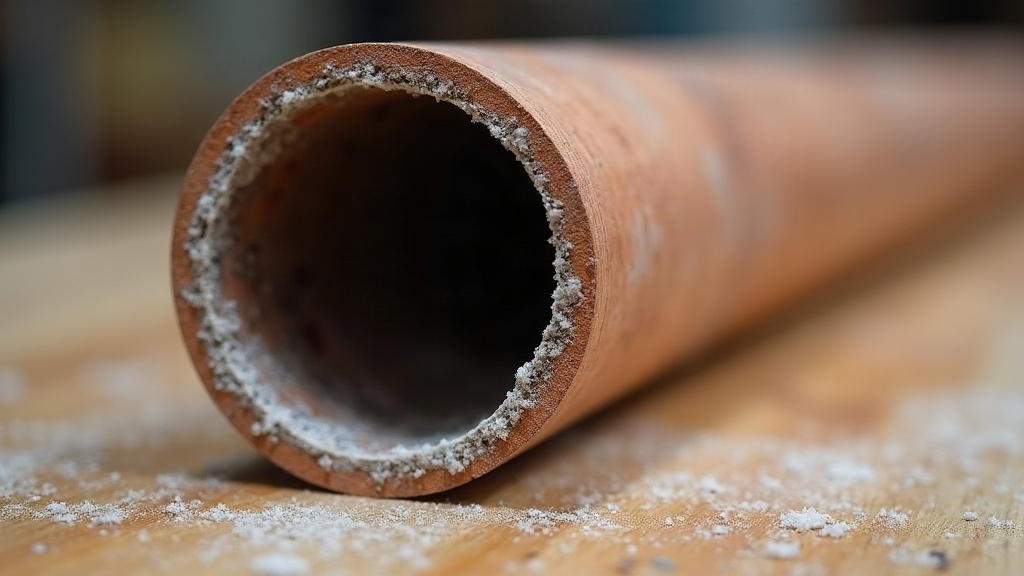
If your home in the Treasure Valley is more than about 15 years old, there is a good chance the inside of your pipes looks different than the day they were installed. Water in Boise, Meridian, and Nampa is hard, typically somewhere between 10 and 17 grains per gallon depending on where you live. Every time that water sits, heats, or evaporates, it can leave minerals behind. Over years, those minerals narrow the pipe. Here are seven signs to check before the problem gets expensive.
1. Showers and Faucets That Used to Be Stronger
Falling pressure is the most common clue. When scale lines a pipe, the opening gets smaller, and the same water has to squeeze through a tighter space. If one fixture is weak and the rest are fine, the aerator or showerhead is probably the problem. If the whole house feels weaker, especially on the hot side, scale in the lines is a real possibility.
2. Crust on Aerators and Showerheads
Unscrew the aerator on a kitchen faucet and look at the screen. White, chalky grit means minerals are coming through the line. Our guide on clogged pipes and hard water in Boise shows how to tell a simple fixture clog from a deeper line problem.
3. Hot Water Lines That Run Worse Than Cold
Heat speeds up scale. When hard water is heated, calcium carbonate drops out of the water faster, so hot lines and the water heater collect the most. If your hot pressure is clearly weaker than your cold, or hot water takes longer to arrive, that is a classic pattern. Our article on whether to flush a water heater that never was covers the tank end of the same problem.
4. A Water Heater That Rumbles, Pops, or Heats Slowly
Scale and sediment at the bottom of a tank trap steam bubbles under the layer, which causes popping and rumbling. A tank that takes longer to recover or an energy bill that creeps up can be tied to the same layer insulating the heating element or burner.
5. White Flakes or Specks in the Water
Small white flakes in a glass or in the sink strainer can be scale breaking loose from pipe walls or from the water heater. It is not usually dangerous, but it tells you deposits are present and moving.
6. Slow Drains and Spotty Dishes Together
One alone is common. Together with the signs above, spots on dishes and glassware plus slow-moving water suggest minerals are the thread tying it all together. A dishwasher that leaves film is another sign hardness is high at the source.
7. Old Galvanized or Mixed Pipes
Homes built before the 1960s may still have galvanized steel in places, and mixed repairs are common in older Boise neighborhoods. Galvanized pipe narrows from scale and corrosion together, so it can close up faster than copper or PEX. If your plumber has said the pipes are original, treat the checklist more seriously.
What To Do If You See Three or More
Start with the cheap fixes: soak aerators and showerheads in vinegar, and have the water heater flushed if it has not been done. Then address the cause. A water softener installation removes hardness minerals before they enter your plumbing, so new scale stops building. If you are in Meridian, our water softener Meridian page shows what we typically see there.
If a pipe is badly narrowed, no softener will reopen it, and a plumber may need to replace that section. We will tell you honestly when that is the case. Call us at (208) 968-2771 for a free phone quote. Tell us your home's age, your pipe type if you know it, and what you have noticed, and we will say what fits.
Frequently Asked Questions
Seeing These Signs? Get a Free Phone Quote
Tell us your home's age and what you have noticed, and we will quote over the phone. No pressure, no pitch.