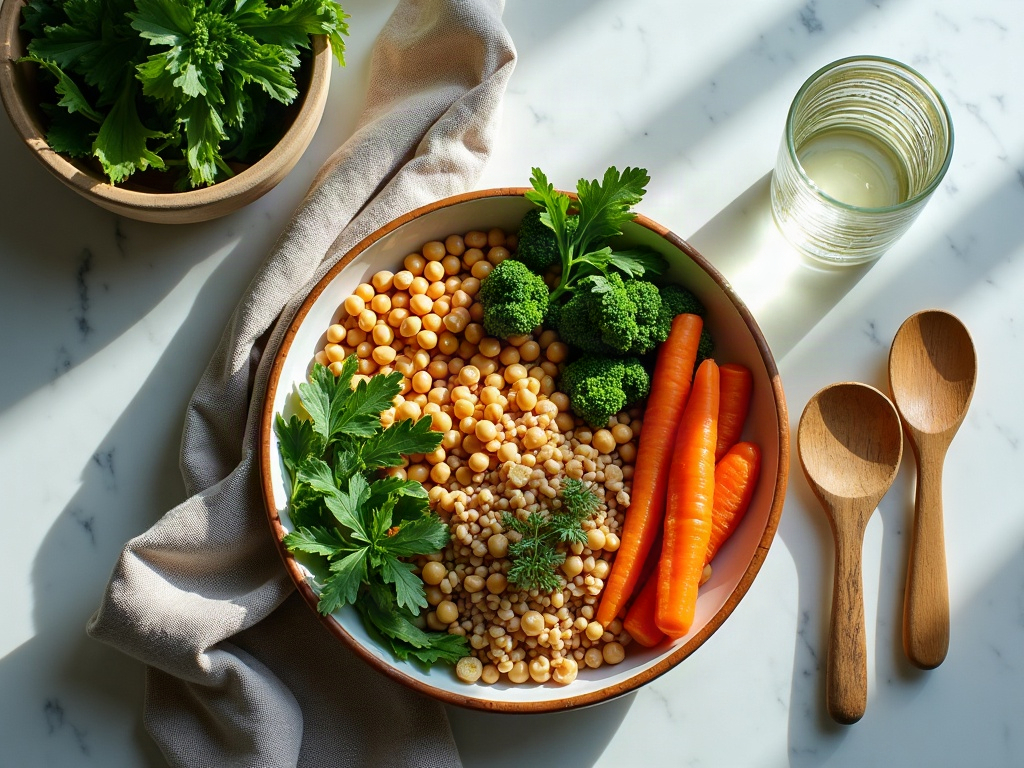
October 1st is World Vegetarian Day, and plant-based eating has officially gone mainstream. One in four Americans is actively cutting back on meat, and the Treasure Valley has followed that trend. Farmers markets in Boise and Meridian are stacked with beautiful produce. Recipe sites are full of stunning lentil soups, vibrant grain bowls, and rich chickpea curries. People are cooking more intentionally than ever.
The promise of plant-based cooking is simple: let the ingredients speak. No heavy sauces to hide behind, no rich fats to compensate. You want the bright, clean flavor of a well-cooked vegetable, the creamy body of a properly softened bean, the delicate complexity of a slow-simmered vegetable broth.
Here is what most Boise-area cooks never think to question: the water coming out of your tap is not a neutral ingredient. Treasure Valley tap water runs between 10 and 17 GPG (grains per gallon) of dissolved minerals, depending on whether you are in Boise, Meridian, Eagle, or Nampa. That mineral load is an active participant in everything you cook, and in plant-based cooking specifically, it has a bigger impact than almost any spice or technique you could choose.
What Makes Boise Water "Hard" (and Why It Matters in the Kitchen)
Hard water is water with a high concentration of dissolved calcium and magnesium. You have seen the evidence even if you did not know what caused it: that white ring inside your coffee mug, the cloudy film on your drinking glasses, the stubborn crust around your faucet aerator. That residue is the mineral content of your tap water, left behind when the water evaporates.
Boise city water comes in around 10 to 15 GPG. Meridian, which draws more heavily from the aquifer, typically runs 12 to 17 GPG. Eagle and Nampa fall in a similar range depending on the season and source. Anything above 7 GPG is classified as hard. Our tap water is well into the "very hard" category for most of the year.
That matters more right now than usual. East Idaho News reported in late September 2026 that Idaho is facing a historic drought risk, with aquifer drawdown beginning earlier than normal this season. As water levels drop, the mineral concentration per gallon tends to rise slightly. Treasure Valley cooks are currently working with water that is on the harder end of its typical range.
In cooking, calcium and magnesium do not just build scale on your kettle. They interact chemically with the food itself, and the effects are measurable. For more on what hard water does to everyday cooking, see our complete guide to hard water in Boise.
The Bean Problem Nobody Talks About
If you have ever soaked dried beans overnight and still ended up with something grainy and tough after an hour of simmering, hard water is likely why. This is not a technique failure. It is chemistry.
Legumes contain pectin in their cell walls. Calcium in hard water cross-links with that pectin, effectively reinforcing the cell wall structure and making it resistant to softening under heat. Research published in Food Chemistry documented this "hard-to-cook phenomenon" in legumes and identified calcium and magnesium as the primary drivers. It is well-established food science, not a theory.
The practical result: your lentils take longer to soften. Your chickpeas never quite get that silky, creamy texture that makes a great hummus or curry. Your black beans hold their shape when you want them to break down into a thick, cohesive dish. The workaround most recipe sites suggest is adding a pinch of baking soda to the cooking water. It helps, but it introduces a subtle soapy flavor that alters the final dish. Cooking with already-softened water removes the problem at the source.
What Happens to Your Greens, Grains, and Broths
The bean issue is the most documented, but the effects of hard water spread across almost every category of plant-based cooking.
Vegetables: Calcium in cooking water slows the breakdown of fiber in leafy greens and brassicas. Blanched broccoli stays a little tougher than it should. Spinach wilts unevenly. The color issue is related but slightly different: hard water affects chlorophyll stability during cooking, which is why your bright green vegetables can fade to an olive drab faster than expected.
Grains: Quinoa, oats, and rice absorb cooking water as they hydrate and expand. When that water carries dissolved minerals, those minerals become part of the grain. The result is a background mineral flavor that sits on the palate after you swallow. It is subtle, but it competes with the clean, nutty flavor you are trying to develop.
Broths and herbal teas: Vegetable broth is almost entirely water. When you simmer onion, carrot, celery, and herbs in hard Meridian tap water, the minerals suppress the delicate volatile aromatics that make the broth taste like something. The result is a flat, slightly mineral-tasting liquid that serves as a base but not as a flavor. The same is true for herbal teas, which is why the same tea bag often produces a noticeably better cup with filtered water.
The Water Is the Recipe
Think about how much of a typical plant-based meal involves water contact: soaking beans overnight, boiling grains, steaming vegetables, blanching greens, simmering broth, cooking pasta for a primavera. Water is not an incidental part of the process. It is the medium through which almost all of the cooking happens.
Animal protein cooking is more forgiving of water quality. Fat from meat and fish creates a barrier between the food and the cooking water. Rendered fats carry flavor and texture on their own. Heavy seasoning in meat-centric dishes masks the background mineral contribution from tap water. Plants do not have those buffers. A lentil soup is mostly lentils and water. A grain bowl is grains cooked in water. The water is not hiding behind anything.
This is also why many home cooks have had the experience of making a dish at a friend's house and noticing it tasted different, better in a way they could not explain. If your friend happens to have a water softener or lives in a different part of the valley with lower mineral content, that is a real and measurable variable. The recipe did not change. The water did.
We cover this dynamic in more detail in our piece on how hard water affects pasta and tea in Boise, which is worth reading if you want to understand the chemistry side more fully.
What Soft Water Actually Does for Plant-Based Results
When the calcium and magnesium are removed from the cooking water through a properly installed water softener, the effects on plant-based cooking are practical and immediate.
- Dried beans and lentils soften in roughly half the time and reach a genuinely creamy texture without any additives.
- Blanched and steamed greens hold their color longer during cooking and have a cleaner, more pronounced flavor.
- Vegetable broths taste like the vegetables in them. The aromatics come through instead of getting buried under mineral flatness.
- Cooked grains have a lighter, cleaner base flavor that supports whatever seasoning you add rather than competing with it.
- Herbal teas and infusions become noticeably more aromatic and nuanced.
None of this requires a different recipe or a different technique. The variable that changes is the water. For a household in Boise, Meridian, Eagle, or Nampa that cooks plant-based meals several times a week, the cumulative difference in result quality is significant.
Find Out Exactly How Hard Your Water Is
We offer free water tests for Treasure Valley homeowners in Boise, Meridian, Eagle, and Nampa. A 20-minute visit tells you exactly what is in your tap water and what your options are. No obligation, no pressure.
Frequently Asked Questions
Does hard water actually change the taste of vegetables?
Yes, and the effect is most noticeable in delicately flavored vegetables and in broths. Dissolved calcium and magnesium suppress volatile aromatic compounds during cooking, which flattens the flavor profile. Brassicas, leafy greens, and root vegetables cooked in soft water consistently produce a cleaner, brighter flavor than the same vegetables cooked in the 10 to 17 GPG water typical of Boise and Meridian tap supplies.
Can I just use bottled water for cooking?
Technically yes, but the cost and volume required make it impractical for regular cooking. A single pot of bean soup uses a half gallon to a full gallon of water. Cooking grains, blanching vegetables, and making broth add up quickly. At $1 to $2 per gallon for quality filtered water, the cost per meal becomes significant over time. A whole-home water softener treats all the water coming into your kitchen and is a one-time investment that covers every dish you cook.
Will a water softener change the sodium content of my cooking water?
A salt-based softener uses an ion exchange process that trades calcium and magnesium ions for sodium ions. The amount of sodium added is small and proportional to the hardness level of your water. For Treasure Valley water at 12 to 17 GPG, softening adds roughly 20 to 30 milligrams of sodium per liter, which is low relative to the sodium already in most cooking. If you are on a medically supervised low-sodium diet, we can discuss a reverse osmosis system for the drinking and cooking tap specifically, which removes virtually all dissolved solids including sodium.
How hard is the water specifically in Meridian vs. Boise vs. Eagle?
Boise city water typically runs 10 to 15 GPG. Meridian, which relies more heavily on deep aquifer wells, tends to come in at 12 to 17 GPG. Eagle and Nampa fall in a comparable range, often 11 to 16 GPG depending on which wells are active at any given time. All of these are well above the 7 GPG threshold for "hard" water and deep into "very hard" territory. The only way to know your specific number is a direct water test at your address, which we provide at no charge throughout the Treasure Valley.