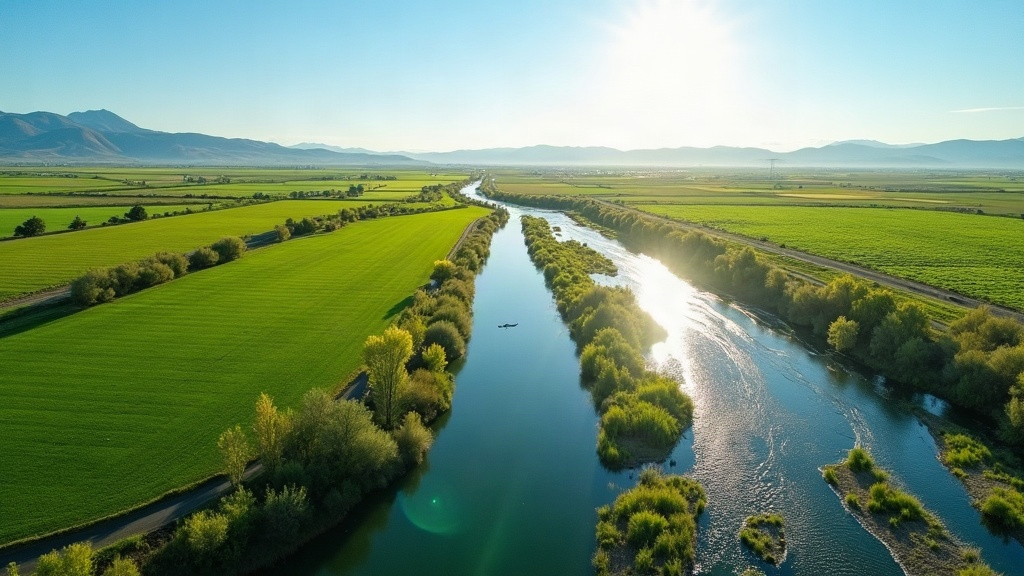
When Nampa announced the September 28 irrigation shutdown, coordinating the Pioneer Irrigation District, Nampa-Meridian Irrigation District, and Boise-Kuna Irrigation District for their annual end-of-season cutoff, most residents filed it away as routine. Irrigation wraps up, winter arrives, move on.
But that scheduled shutdown is actually a window into something most Treasure Valley homeowners have never had to think about: Idaho's water rights system, and exactly where your home falls in the priority order. With data centers, population growth, and back-to-back drought cycles putting new pressure on the Treasure Valley aquifer, understanding the basics of Idaho water law has moved from a farmer's concern to a homeowner's concern.
Here is what you need to know.
What "Prior Appropriation" Actually Means
Idaho uses a legal framework called prior appropriation, often summarized as "first in time, first in right." Unlike states where owning property adjacent to a river automatically grants you some claim to its water, Idaho's system allocates water through a permit-based priority structure.
Every water right in Idaho has four elements: a priority date, an amount measured in cubic feet per second or acre-feet per year, a specific beneficial use (irrigation, municipal, industrial, domestic), and a designated point of diversion. When water is plentiful, everyone uses what their permit allows. When supply runs short, the state's water master enforces priority. Senior rights (older priority dates) receive their full allocation first. Junior rights get cut back, sometimes to zero.
The Idaho Department of Water Resources (IDWR) manages this system and maintains a public database of water rights across the state. You can look up the priority date and allocation for virtually any water right in the Treasure Valley through their online portal.
This system was designed in the 1800s to settle disputes between miners and farmers competing for the same rivers. It works reasonably well when the players are clear and the quantities understood. What it was not designed for is the current growth pattern of the Treasure Valley.
The Nampa Shutdown Shows How It Works in Practice
The irrigation districts shutting down September 28 are not doing so because they are out of rights. They stop delivery because seasonal demand has ended and coordinating the shutdown helps the aquifer recharge over winter.
These organizations hold water rights with priority dates stretching back to the 1880s and 1890s. The Pioneer Irrigation District was formed at the turn of the century to manage diversion rights from the Boise River, and those rights are senior to virtually everything established after them, including the municipal water systems that now serve Boise, Meridian, Eagle, and Nampa.
In a drought year, the senior rights win. Agricultural districts can legally keep their full allocation while municipal systems face curtailment orders. This does not mean your city water is at immediate risk, but it does mean the cities are managing their water portfolios carefully, filing for additional rights, purchasing temporary allocations from senior holders, and planning infrastructure with that legal hierarchy in mind.
Where Municipal Water and Private Wells Fit
Most Treasure Valley homeowners receive water through a city utility. Boise, Meridian, Nampa, and Eagle each hold water rights acquired over decades of growth. A fast-growing city like Meridian has been adding rights steadily since the 1990s. Those newer rights are junior to older agricultural ones, but they are the rights that serve most residential customers in the valley today.
If your home is on a private well, the picture is more nuanced. Idaho exempts domestic wells using less than 13,000 gallons per day from some administrative requirements. But that exemption is not a priority date. Well owners are tapping a shared aquifer system without a formal place in the drought-year queue.
That matters more now than it did a decade ago. The Treasure Valley aquifer has been under increasing pressure from population growth, extended drought cycles, and new industrial users competing for the same groundwater. According to the USGS Idaho Water Science Center, groundwater levels across parts of the western Snake River Plain aquifer have declined measurably in areas of intense pumping over the past two decades.
How New Industrial Users Enter the System
The wave of data center development near Kuna and Star has added a new category of water user to the Treasure Valley. Facilities planned or operating for major technology companies require significant water volumes for evaporative cooling systems.
Under prior appropriation, these facilities must file water right applications with IDWR and wait for adjudication. The priority dates on any rights they receive will reflect the filing year, somewhere in the 2023 to 2026 range. Those dates are among the most junior in the entire Snake River Basin.
In theory, this means data centers get cut off first in a drought. In practice, groundwater interference is the more immediate concern. Heavy industrial pumping from a shallow or mid-depth aquifer can lower the water table for nearby wells regardless of whose right is senior. Idaho's rules on well interference are still evolving to address this scale of industrial demand. We covered this in detail in our article on data centers and Treasure Valley groundwater.
The Hard Water Connection
Water rights govern access. They do not determine what is dissolved in the water once it reaches your home. And in the Treasure Valley, what is dissolved in the water is a significant amount of calcium and magnesium.
Boise municipal water typically measures 10 to 15 grains per gallon (gpg) of total hardness. Meridian runs 12 to 17 gpg. Both figures fall in the "very hard" to "extremely hard" classification. The minerals come from the geology of the Snake River Plain aquifer, which passes water through volcanic basalt and calcium-rich limestone before it reaches your tap.
Hard water is not a health risk, but it is an ongoing cost. It builds scale in water heaters, pipes, and appliances, reduces soap effectiveness, and affects skin and hair. Whether your home is on city water or a private well, the hardness levels in the Treasure Valley are consistent enough that treatment is almost always worthwhile. A whole-house water softener removes that hardness before it reaches your fixtures and typically recovers its cost within three to four years through avoided repair and energy costs.
What You Can Actually Do as a Homeowner
You cannot change your city's water rights priority date or alter the geology of the aquifer. What you can do is understand your situation and protect your home accordingly.
If you are on city water in Boise or Meridian, your utility manages the rights side of the equation. Your job is treating the water that arrives. That means addressing hardness with a whole-house softener and, for cleaner drinking water, a reverse osmosis system for the kitchen tap.
If you are on a private well, add annual water testing to your home maintenance routine. Test for hardness, iron, nitrates, and bacteria. If you are in Canyon County or near agricultural or industrial land use, consider testing for arsenic and PFAS as well. Our full guide covers this in detail: Idaho Well Water Owner's Guide 2026.
Either way, knowing what is in your water is the first step. We offer free water quality testing across Boise, Meridian, Eagle, Nampa, and surrounding communities with no sales pressure, just information you can act on.
Get a Free Water Quality Test
We test your Treasure Valley home water on-site, explain exactly what we find, and give you honest recommendations. No pressure, no obligation.