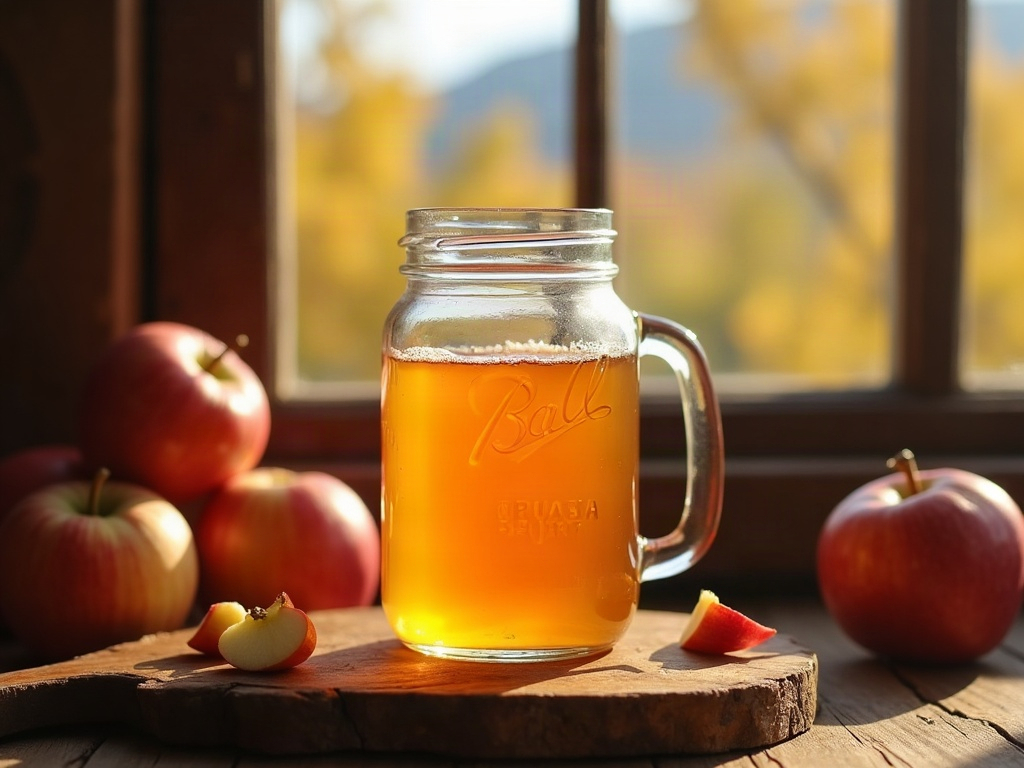
Apple Season in the Treasure Valley Is Here
September in the Boise area has its own rhythm. The mornings cool off, the light turns golden, and suddenly the orchards around Emmett Valley start calling. Tyler's Rocky Point Orchard, Candy Apple Orchard on Harvest Lane, Cherry Hill Farms out in Caldwell, and the Saturday Boise Farmers Market on Shoreline Drive all fill up with Fuji, Honeycrisp, and Gala apples that have been ripening since July.
Home cider pressing is having a moment right now. People are hauling bags of fresh-picked apples back to Meridian and Eagle, pulling out their presses, and making batches for themselves, their neighbors, and their families. It is one of those fall activities that feels genuinely satisfying, hands-on, and connected to where you live.
But a lot of Boise-area home cider makers keep running into the same frustrating result: their cider comes out flat, cloudy, or off-tasting, even when the apples themselves were great. They blame the apple variety. They tweak the yeast. They try different pressing techniques. And they still get the same mediocre result year after year.
There is something they are almost never thinking about: the water.
What the Treasure Valley's Water Actually Looks Like
The water coming out of taps in Boise, Meridian, Nampa, and Caldwell is hard. We are talking 10 to 17 grains per gallon (gpg), which puts Treasure Valley water firmly in the "very hard" category. That hardness comes primarily from dissolved calcium and magnesium, picked up as groundwater moves through the volcanic and sedimentary rock layers beneath the Snake River Plain.
Most of the time, you notice hard water in the form of white scale on your faucets, spotty glasses from the dishwasher, or soap that does not lather well. What you probably do not think about is how that same mineral load interacts with apple juice chemistry when you are making cider at home.
How Hard Water Flattens Your Cider
Apple cider is a delicate balancing act between natural sugars, apple acids (malic acid, primarily), tannins, and water. When you use hard tap water to rinse your equipment, dilute your juice, or top off your fermentation vessel, you are introducing a significant mineral load that disrupts that balance in two distinct ways.
First, bicarbonates in hard water neutralize apple acids. Fresh apple juice has a naturally acidic pH, usually between 3.3 and 3.9. That acidity is what gives cider its brightness and crispness. Treasure Valley water carries dissolved bicarbonates that act as a buffer, raising the pH of your juice and dulling those acids. The result is a flat, one-dimensional flavor. You press beautiful Honeycrisps, and the cider tastes like it was made with grocery-store apples.
Second, excessive mineral hardness interferes with yeast fermentation. If you are making hard cider or letting your fresh cider ferment at all, mineral balance matters enormously. While small amounts of calcium are actually beneficial for yeast health, too much calcium, combined with high bicarbonate levels, can push the pH into a range where yeast activity slows down or stalls. You get a stuck or sluggish fermentation, off-flavors from stressed yeast, and a final product that is nowhere near what you were hoping for.
Beyond flavor, hard water used for equipment rinsing leaves mineral deposits on your press, your fermentation buckets, and your airlocks. Those mineral films are hard to clean fully with soap and can harbor contamination and affect the pH of anything that touches them later.
The Simple Fix Most Home Cider Makers Miss
Professional cideries know this. Most serious home brewers know it for beer. But home cider pressing is treated more like cooking than brewing, so the water quality conversation rarely comes up.
Here is what actually works: using softened or filtered water anywhere water touches your cider process. That means:
- Rinsing all equipment, including your press, fermentation vessel, airlocks, and tubing, with softened water before use
- Topping off fermentation vessels with softened or filtered water rather than straight tap water
- Diluting concentrated juice, if you are working with purchased apple concentrate, using filtered water
A whole-house water softener removes the calcium and magnesium that cause hardness, replacing them with a small amount of sodium that does not affect cider flavor or fermentation. A reverse osmosis system at the kitchen tap takes that a step further, producing near-pure water for the most precise results.
If you want to get deep into the chemistry, you can also add a small amount of food-grade lactic acid to your juice to counteract bicarbonate buffering and hit your target pH before fermentation. But for most home cider makers, fixing the water is a more straightforward win. It addresses the root cause rather than compensating for it.
For more on how hard water affects everything in your home, including appliances and plumbing, take a look at our article on washing machine hard water damage in Idaho.
What to Expect When You Switch
People who fix their water quality before pressing notice the difference immediately. The juice tastes brighter right off the press. The color is cleaner. If they are fermenting, the yeast takes off faster and finishes more completely. The finished cider actually reflects the variety of apple they started with, rather than a generic, muddied version of it.
This is not about buying expensive equipment or becoming a water chemistry nerd. It is just about removing the one variable that has been quietly sabotaging every batch. The apples around Emmett and Caldwell are genuinely excellent. Your cider should taste like it.
If you are curious about what your home's water hardness looks like specifically, we offer free water tests across the Treasure Valley. It takes about 20 minutes and you leave knowing exactly what is in your water and whether a softener would make a difference for you. See our guide on how water quality affects more than you expect at home.
Common Questions About Apple Cider and Water Quality
Find Out What's in Your Water
Your cider deserves better than 15 gpg tap water. Book a free water test and we will show you exactly what your home is working with and what a softener would actually change.