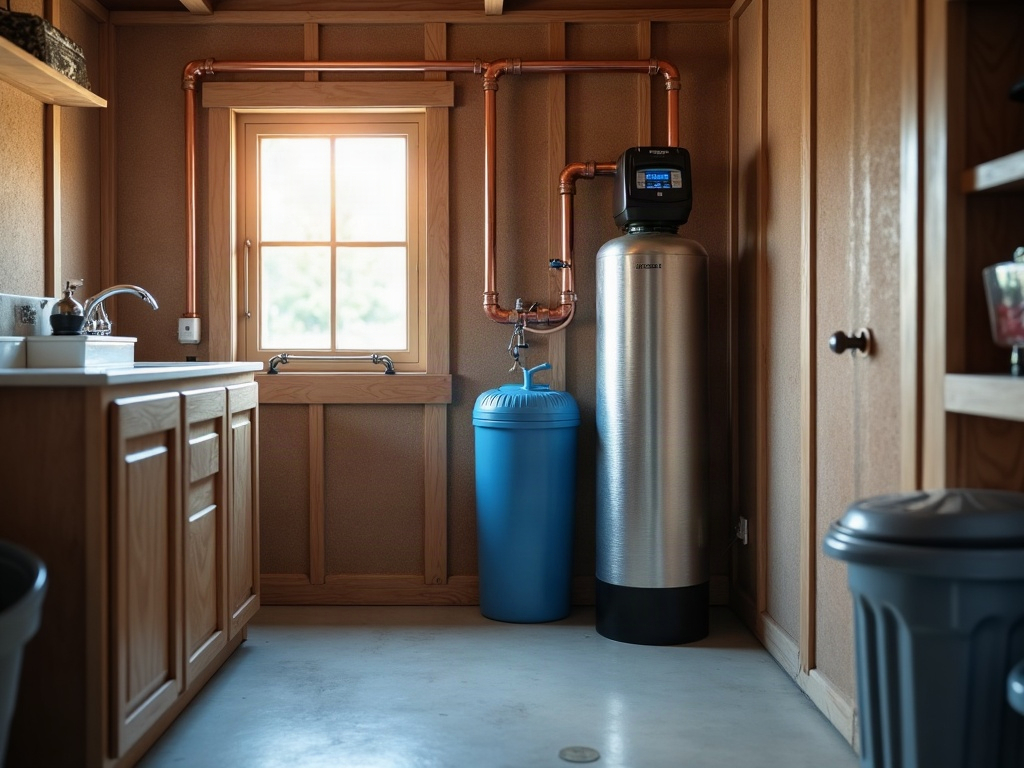
A simple fall checklist that protects your water softener through Idaho's harshest winters.
This week, the Boise City Council is deciding the fate of the Eckert Bridge over the Boise River, weighing infrastructure investment against the health of local waterways and floodplains heading into fall. It is a good reminder that protecting water infrastructure before winter hits takes deliberate action, whether you are managing a city bridge or a water softener in your garage in Meridian.
Idaho winters are unforgiving. Temperatures in the Boise metro regularly drop to the single digits in January and February. That kind of cold creates real problems for water treatment equipment that most homeowners never think about until something goes wrong. A frozen brine line, a salt bridge, or a regeneration setting left at summer levels can quietly cost you hundreds of dollars in repairs and leave you with untreated hard water for weeks.
We put this checklist together for homeowners across Boise, Meridian, Eagle, and the broader Treasure Valley. It takes about 30 minutes to run through, and it can save you from a cold-weather service call when you least want one.
Why Idaho Winters Are Hard on Water Softeners
Treasure Valley water is already among the harder water supplies in the Pacific Northwest. Boise typically runs 10 to 15 grains per gallon (gpg) of hardness. Meridian pushes higher, often 12 to 17 gpg depending on the source. Your softener works hard year-round to handle that load.
Winter compounds the challenge in three specific ways:
- Temperature swings in garages and utility rooms. Many Treasure Valley homes have softeners installed in garages or uninsulated utility areas. During the day, a closed garage might stay relatively warm. At night, when outdoor temps drop to 10 or 15 degrees, that same garage can get dangerously cold for water lines and brine components.
- Increased water demand. Winter means longer hot showers, holiday guests running through your bathrooms, and more laundry. Your softener is regenerating more often and using more salt than it did in July.
- Aquifer and mineral shifts after irrigation season. The Nampa-Meridian Irrigation District shuts off around September 28 each year. When irrigation stops, aquifer recharge slows. For homeowners on well water in the Treasure Valley, that can cause a slight shift in incoming mineral concentration over the winter months, which means your softener's calibration may need a check.
None of these problems are serious if you catch them early. All of them become serious if you ignore them until February.
The Salt Check Every Boise Homeowner Should Do Before November
Salt management is the single most overlooked part of water softener ownership. Most people top it off when they happen to think about it. Winter requires a more deliberate approach.
How full should the brine tank be?
Keep it between half and two-thirds full going into winter. That range gives you a solid buffer for increased regeneration demand without letting salt sit long enough to form a hardened crust. A brine tank that is more than three-quarters full can develop a salt bridge faster, especially in a garage that fluctuates between warm and cold.
Salt type matters in cold climates
Use high-purity pellet or cube salt. Evaporated salt pellets leave the least insoluble residue, which means fewer cleaning cycles and less bridging risk. Rock salt is cheaper but leaves more impurities that accumulate in the bottom of the brine tank over a long winter.
Check for salt bridges now
A salt bridge is a hardened crust that forms across the tank, leaving an air gap between the salt and the water below. The system thinks it has salt; it does not actually dissolve any. You end up with soft-looking water usage and hard water at the tap. To check, use a broom handle and gently press down through the salt. If it does not give way, you have a bridge. Break it up carefully, then check again in four to six weeks.
Temperature fluctuation is one of the primary causes of salt bridges, which is exactly why a garage-installed softener in Boise is more vulnerable in winter than summer.
Adjusting Your Regeneration Settings for Winter
Most residential softeners are set to regenerate on a fixed schedule, typically calibrated during installation based on average household usage. That average does not account for the Thanksgiving week when your in-laws are in town, or the January stretch when everyone is taking long showers to warm up.
What to change
We recommend adding one additional regeneration cycle per week in November through March compared to your summer baseline. If your system is set to regenerate every three days in summer, bump it to every two days through winter. If your unit supports demand-initiated regeneration (DIR), switch to that mode. DIR systems measure actual water usage and regenerate only when the resin is depleted, which is both more efficient and more reliable than a fixed timer.
Hardness setting verification
If you are on municipal water in Boise or Meridian, the hardness level is relatively stable year-round. If you are on a private well, check your hardness in October after the irrigation district shuts off. A simple hardness test costs almost nothing and tells you whether you need to recalibrate your softener for the season.
Freeze Protection for Garage-Installed Softeners in Idaho
This is the highest-stakes item on the list. A frozen water softener is not just an inconvenience. It can crack the resin tank, split the brine line, or damage the control valve. Repairs range from $150 to over $600 depending on what breaks.
Know your risk zone
An uninsulated garage in Meridian or Eagle can drop to ambient outdoor temperatures during a cold snap. When Boise hits 8 or 10 degrees Fahrenheit in January, your garage softener is at real risk. If your softener is installed in a conditioned basement or interior utility room, you are generally fine. If it is in a detached garage or an uninsulated attached garage, read this section carefully.
Three freeze protection steps
- Insulate the brine tank and supply line. Pipe insulation foam is available at any hardware store. Wrap the supply line and the fitting at the top of the brine tank. This adds meaningful protection against brief cold snaps.
- Add a pipe heating cable. For garages that regularly drop below 32 degrees, a self-regulating pipe heating cable on the supply and drain lines is the most reliable protection. These use very little electricity and turn off automatically when temperatures rise. The U.S. Department of Energy recommends pipe insulation as a first-line measure for any water line exposed to freezing temperatures.
- Keep the garage door down. Simple but effective. A closed garage door traps heat from the house and ground and can keep interior temps 10 to 15 degrees warmer than outside during a cold night.
Brine Line and Bypass Valve Checks Before Cold Snaps
Brine line inspection
The brine line is the small-diameter tubing that runs from the brine tank to the control head. Check it for cracks, kinks, or mineral deposits at the connection points. A compromised brine line will fail faster under cold stress. If you see white calcification around the fittings, clean it with a diluted vinegar solution and check the connections are tight.
Know where your bypass valve is
Every water softener we install at Water Softener Boise includes a bypass valve, and we show every homeowner where it is. But over time, people forget. The bypass valve is typically a lever or push-pull knob located at the back of the unit where the main water line connects. In bypass mode, water flows directly to the house without going through the softener.
Why does this matter in winter? If your softener develops a leak, freezes, or malfunctions during a cold snap, the bypass valve lets you restore water to the house immediately while the unit is being serviced. You do not have to shut off the whole house. Know where it is before you need it.
Drain line check
The drain line carries backwash water away from the softener during regeneration. Make sure it is not running to a location where it could freeze on the way out. If your drain line empties into a cold crawl space or runs along an exterior wall, consider adding insulation around that section or rerouting it to a warmer drain location before temperatures drop.
Signs You Need a Professional Winter Inspection
DIY maintenance covers most winter prep. But some situations call for a professional check before the cold arrives. Contact us if you notice any of the following:
- Your water feels hard again even though you can see salt in the tank. This is classic salt bridge behavior or a failing resin bed.
- Water in the brine tank looks dark or murky. Sediment buildup means it is time for a brine tank cleaning, which is easier to do now than in January.
- Your system is more than 10 years old. Older control valves and resin beds are more vulnerable to cold-weather stress. A pre-winter inspection can catch worn seals and failing components before they become emergencies.
- You notice water near the base of the unit. Any leak at a fitting or from the control valve should be addressed before freezing temps arrive. Cold makes small leaks worse fast.
- You are on well water and have not tested hardness this fall. With the irrigation district shutoff coming September 28, this is the right time to run a test and make sure your settings match your actual incoming water. Read our full guide to well water softener maintenance in Meridian for more detail on seasonal adjustment.
The Water Softener Boise team serves Boise, Meridian, Eagle, Nampa, and the full Treasure Valley. A pre-winter inspection typically takes about 45 minutes and covers salt levels, resin health, control valve function, brine line integrity, and freeze risk assessment for your specific installation.
Get a Free Water Test Before Winter Arrives
We test for hardness, iron, TDS, and pH. Takes 15 minutes. No obligation. Serving Boise, Meridian, Eagle, and the Treasure Valley.
Book Your Free Water TestOr call us directly: (208) 968-2771
Frequently Asked Questions
Ready for a Winter-Ready Water Softener?
Our team services water softeners across Boise, Meridian, Eagle, Nampa, and the full Treasure Valley. Call us or book online for a free water test and pre-winter inspection.