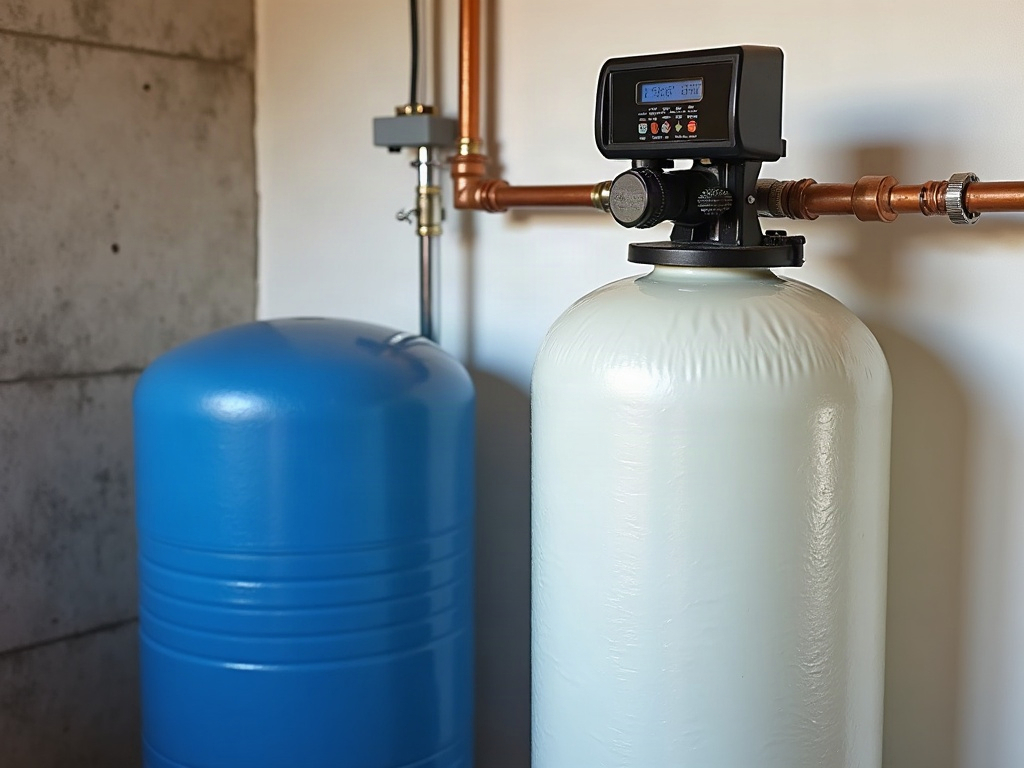
Most Treasure Valley homeowners replace resin once every decade. But in 2026, with Idaho drawing more heavily from groundwater after a record-low snowpack season, we are seeing resin wear out in 6 to 8 years in homes across Boise, Meridian, Nampa, and Eagle. If your softener has salt in the tank but your water still feels hard, the resin may be the reason, and this article will help you figure that out without guessing.
What Resin Actually Does (and Why It Wears Out)
Inside every water softener is a tank filled with thousands of tiny polymer beads, called resin. Those beads are loaded with sodium ions. When hard water flows through, the beads swap their sodium for calcium and magnesium, the two minerals that cause scale buildup, spotted dishes, and dry skin. The water leaving the tank is soft. The beads are temporarily exhausted.
Regeneration reverses the process. A brine solution floods the resin tank, flushes out the calcium and magnesium, and reloads the beads with sodium so they can go back to work. This cycle repeats thousands of times over the life of the unit.
Here is the part most homeowners do not know: every regeneration cycle degrades the resin beads slightly. The polymer structure weakens over time. In areas with chlorinated municipal water, like Boise and Meridian, that degradation happens 2 to 3 times faster than in homes on well water, because chlorine attacks the resin polymer directly.
Treasure Valley water runs 10 to 17 grains per gallon (gpg) of hardness. Boise city water typically tests at 10 to 15 gpg; Meridian often runs 12 to 17 gpg. That is considered very hard to extremely hard by water quality standards. The higher the hardness load, the more ion exchange cycles the resin goes through each year, and the faster it ages. National averages put resin life at 10 to 15 years; in our market, realistic service life is closer to 8 to 12 years in most homes.
Warning Signs Your Resin Needs Replacement
The most reliable signal is simple: you still have salt in the brine tank, but the water coming out of your taps is hard. Scale builds up on faucets and showerheads. Soap does not lather the way it used to. That combination, salt present but no softening, points directly at the resin, not the salt or the settings.
Before assuming it is the resin, rule out a salt bridge. A salt bridge is a hardened crust that forms in the brine tank, usually a few inches above the water line. It looks like salt is in the tank but no brine is actually forming below it. Push a broom handle down into the salt. If it hits resistance partway down, you have a bridge. Break it up, let the system run a manual regeneration, and test your water again. If hardness returns within a day or two, the resin is the problem.
Orange or rust-colored staining in toilets, sinks, or around drain openings signals iron fouling. Resin can capture a limited amount of iron alongside hardness minerals. When it becomes saturated with iron, it loses capacity for everything, and the iron starts passing through into your plumbing.
Physical breakdown is another clear indicator. If you see small beige or amber beads in your water lines, in a post-filter cartridge, or around faucet aerators, the resin has started to fragment and pass through the distributor tube. That media belongs in your plumbing, not in your pipes.
Finally, watch your salt consumption. If the softener is cycling more often than your settings call for, or you are going through significantly more salt than usual, but water quality has not improved, the resin may have lost capacity and is struggling to keep up with the same hardness load it once handled easily.
How Idaho's Water Conditions Accelerate Resin Wear
Treasure Valley sits on a geological formation that produces some of the hardest groundwater in the Pacific Northwest. Boise Basin aquifers carry dissolved calcium and magnesium from the surrounding basalt and sedimentary layers. Boise city water, which is treated and blended before delivery, typically lands at 10 to 15 gpg. Meridian, which draws more heavily from dedicated groundwater wells, often sees 12 to 17 gpg at the tap.
The 2026 water year added pressure that most softeners were not designed for. A record-low snowpack in the Boise Basin forced water utilities to rely more heavily on groundwater sources starting in early summer. Groundwater carries higher mineral loads than surface water. Softeners in Boise and Meridian have been working harder since June than they would in a typical year, running more regeneration cycles and processing more hardness per gallon. That accelerated wear is not something you can see from the outside; it shows up as premature resin exhaustion.
Municipal chlorination is a separate factor. Both Boise and Meridian disinfect their water supply with chlorine or chloramine. These disinfectants are necessary for public health, as noted in EPA drinking water standards, but they are corrosive to resin polymer over time. Homes on city water should expect to replace resin on the shorter end of the service life range.
Homes in Nampa and Eagle on private wells face a different combination. Well water in those areas often carries both high hardness and dissolved iron. Iron is far more damaging to resin than hardness alone. It coats the beads, blocks active sites, and cannot always be fully removed during a standard brine regeneration. Well water users in those communities typically need resin replacement sooner than city water users, and they usually benefit from fine mesh resin or an iron pre-filter rather than standard cation resin.
How We Test Before We Replace
We do not replace resin on a hunch. Before we pull any media, we run three simple checks that tell us whether the resin is actually the problem.
The first is a hardness test at the tap with salt confirmed in the brine tank. We test the water coming out of a treated line. If it reads above 1 gpg after a recent regeneration, the softener is not doing its job.
The second is a physical inspection. We pull a sample of resin beads from the media tank. Healthy resin is firm, amber-colored, and uniform in size. Worn resin is soft, mushy, discolored yellow or brown, and often fragmented. You can tell a lot just from handling a handful of beads.
The third is a salt efficiency check. We calculate how many pounds of salt the system is consuming per 1,000 gallons of treated water and compare it to the manufacturer's rated efficiency. A rising salt-to-water ratio means the resin is losing capacity and the system is compensating by regenerating more frequently. This check catches degradation before it shows up in water quality.
For more detail on what proper regeneration should look like and how to monitor it, see our guide on water softener regeneration in Meridian and the Treasure Valley. Testing takes less than an hour and costs far less than replacing media that did not actually need it.
Resin Replacement Cost in the Treasure Valley
Resin replacement is one of the more affordable repairs in water treatment, especially compared to buying a new unit. Here is what you can expect in the Boise, Meridian, Nampa, and Eagle area.
Resin media itself costs between $50 and $150 depending on type. Standard cation resin, which handles hardness in typical city water applications, is on the lower end. Fine mesh resin, which is designed to handle hardness and dissolved iron simultaneously, runs 20 to 30 percent more but is the right choice for homes in Nampa or Eagle with iron in their well water. Specialty blends for high-chlorine environments are available as well.
Labor runs 1.5 to 2 hours for a standard single-tank residential unit. Most resin replacement jobs in our service area come to $200 to $350 all-in, including media, labor, and a post-service water test.
The question of resin swap versus full unit replacement depends on the age and condition of the control valve. If the softener is under 12 years old and the valve is functioning correctly, replacing the media almost always makes more economic sense. A new unit costs $800 to $1,800 installed; a media swap at $200 to $350 extends service life by another 8 to 12 years. If the valve is failing, cycling incorrectly, or the unit is over 15 years old, we will tell you honestly that a replacement is the better investment.
According to USGS water hardness data, Idaho groundwater ranks among the hardest in the western United States, which is why proper resin specification matters here more than in most markets. Using the wrong resin type for your specific water profile means replacing it sooner than you should have to.
What the Replacement Process Looks Like
We walk through the same steps every time, whether the home is in Boise, Meridian, Nampa, or Eagle.
We start by draining the media tank completely and extracting the old resin. The tank is flushed and inspected for any cracks or fouling on the interior walls or distributor tube. If the distributor is damaged, we replace it before adding new media, because a cracked distributor will let resin beads pass into the water lines regardless of how good the new media is.
New gravel underbed goes in first, then the fresh resin is poured in at the correct volume for the tank size. We reinstall the distributor tube and valve head, then program the control valve to match your current water profile: actual hardness at the tap, household size, and iron content if applicable. A system set to Boise 2018 water data will not perform correctly against Meridian 2026 groundwater; reprogramming is not optional.
We run a manual regeneration cycle on-site, then test the water at the tap before we leave. You see the hardness reading before we pack up. Most jobs in the Treasure Valley are completed the same day they are scheduled.
For a complete picture of what routine service should include between resin replacements, see our article on water softener maintenance for Boise homeowners.
How to Extend Resin Life Going Forward
Once we replace your resin, a few habits will keep it performing well for as long as possible.
Keep the brine tank at least halfway full of salt at all times. When the salt level drops too low, the softener regenerates with weaker brine, which does not fully purge iron from the resin. Iron that stays in the resin oxidizes and permanently fouls the beads. Checking the salt level once a month takes 30 seconds and prevents years of premature wear.
If your water has measurable iron, add a resin cleaner like Iron Out to the brine tank every 3 to 4 months. These products dissolve iron deposits from the resin surface and flush them out during the next regeneration cycle. This is especially important for homes in Nampa and Eagle on well water.
Make sure your regeneration frequency is set to match your actual water usage. An undersized regeneration schedule means the resin spends time in a partially exhausted state, which allows hardness and iron to slip through and stresses the beads more than a properly timed cycle would.
If you are on a private well in Nampa or Eagle and your water carries sediment, a 5-micron sediment pre-filter upstream of the softener will significantly extend resin life by stopping particulates before they reach the media tank.
Finally, schedule an annual performance check. A quick hardness test and salt efficiency calculation once a year catches declining resin before it fails completely. Catching a 20 percent capacity drop early means you can plan the replacement; missing it entirely means you wake up one day to full hard water and no warning.
Frequently Asked Questions
How long does water softener resin last in the Boise area?
In most Treasure Valley homes, resin lasts 8 to 12 years. The national average of 10 to 15 years assumes moderate hardness and unchlorinated water. Boise and Meridian water is both very hard (10 to 17 gpg) and chlorinated, which shortens resin life. In 2026, heavy groundwater use due to low snowpack has pushed mineral loads higher than normal, so some softeners installed 7 to 8 years ago are already showing reduced capacity.
Can I replace water softener resin myself?
Technically yes, but it is one of those repairs where the small details matter a lot. If the distributor tube is cracked, adding new resin on top of it sends beads directly into your plumbing. If you choose the wrong resin type for your water profile, you are replacing it again sooner than necessary. And reprogramming the control valve for current hardness levels is a step most DIY guides skip entirely. We see the most callbacks from homes that did a self-service media swap and skipped the system reprogram. For most homeowners in Boise or Meridian, professional service at $200 to $350 all-in is worth it for the water test at the end and the correct programming.
What is the difference between standard resin and fine mesh resin?
Standard cation resin handles calcium and magnesium hardness well and is the right choice for most Boise and Meridian homes on city water. Fine mesh resin has smaller bead size, which gives it more surface area per volume and makes it significantly better at capturing dissolved iron before it oxidizes. For homes in Nampa, Eagle, or other Treasure Valley areas on private wells where iron is present alongside hardness, fine mesh resin is the better investment even though it costs 20 to 30 percent more. Using standard resin in a high-iron application will result in faster fouling and a shorter service life.
My softener is 10 years old. Should I replace the resin or buy a new unit?
At 10 years, the decision comes down to the control valve. If the valve is cycling correctly, holding its settings, and not leaking around seals, a media swap makes financial sense. You are looking at $200 to $350 for resin replacement versus $800 to $1,800 for a new unit installed, and you get another 8 to 10 years of service life out of the existing hardware. If the valve is erratic, losing program settings, or showing seal wear, replacement is the better long-term call. We check the valve condition as part of every service visit and give you a straight answer on which direction makes more sense for your specific unit.
Not Sure If Your Resin Needs Replacing?
We test before we replace. Schedule a free water quality check and our Treasure Valley team will tell you exactly what your softener needs.