What Is a Regeneration Cycle?
With the Idaho Statesman reporting Treasure Valley could see its first frost within the next few weeks, a lot of Meridian homeowners are thinking about pipes, heating systems, and what happens when temperatures drop below freezing. One item that tends to go unnoticed until the weather turns cold: your water softener kicking on at 2 AM.
If you have ever been awakened by a faint gurgling or rushing water sound in the middle of the night, only to find nothing wrong in the morning, you likely heard a regeneration cycle. That sound is your softener doing its job, recharging itself so it can keep protecting your pipes, water heater, and appliances from Meridian's hard water.
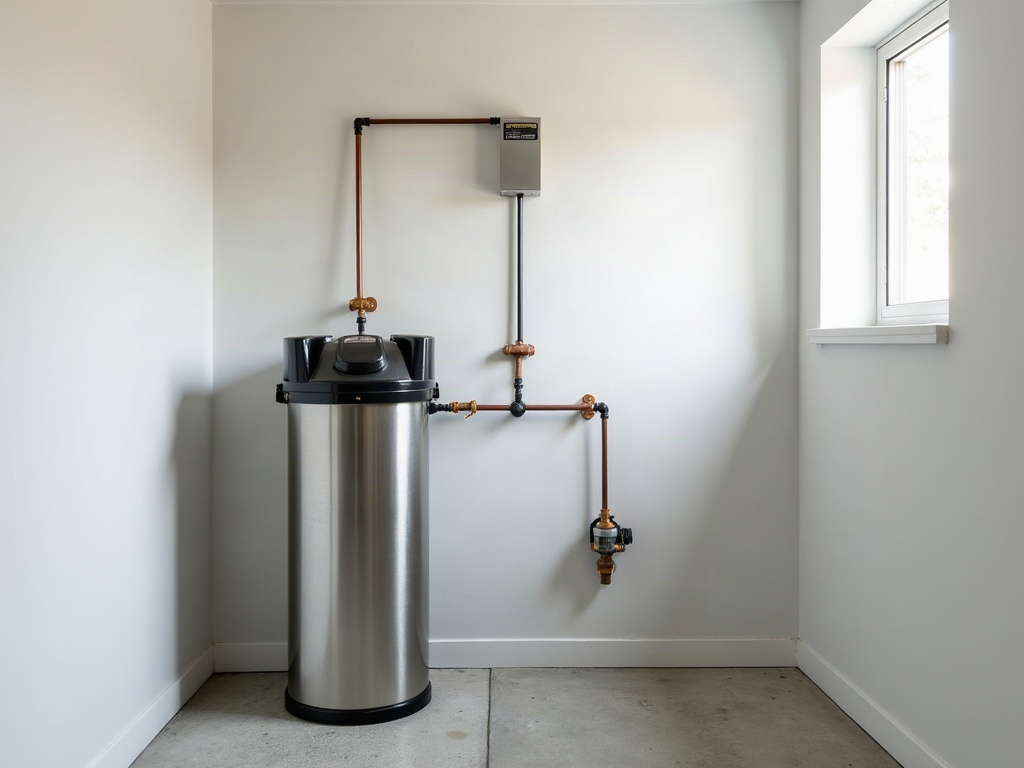
A regeneration cycle is the process by which a water softener cleans and restores its ion exchange resin. Over time, the resin collects calcium and magnesium ions stripped from your water. When enough of those minerals have built up, the resin can no longer soften effectively. Regeneration flushes those collected minerals out of the resin using a saltwater (brine) solution, leaving the resin refreshed and ready to go another round.
Meridian Water Hardness at a Glance
- Boise municipal water: 10 to 15 grains per gallon (gpg)
- Meridian water: 12 to 17 gpg
- Classified as: Very hard (anything above 10.5 gpg by EPA standards)
- Typical regeneration frequency: Every 5 to 7 days for a 3-person household
How the Ion Exchange Process Works
Your softener tank is filled with thousands of tiny resin beads, each carrying a sodium ion. As hard water flows through the tank, calcium and magnesium ions (the minerals that cause scale, stiff laundry, and spotted dishes) swap places with the sodium ions on those beads. The calcium and magnesium get locked onto the resin; soft water flows out the other end.
Think of the resin like a sponge with a limited capacity. Once it has absorbed all it can hold, it stops working. Regeneration is the process of wringing out that sponge.
During regeneration, the control valve draws brine from the salt tank and flushes it slowly through the resin bed. The high concentration of sodium in the brine forcibly displaces the calcium and magnesium, which drain away with the spent brine water. The resin beads are left recharged with fresh sodium, ready to start the process again.
A full cycle uses approximately 35 to 65 gallons of water and 1 to 2 pounds of salt. At Meridian's hardness levels, that is a reasonable trade-off for protecting your plumbing and appliances from scale buildup.
Why 2 AM? The Logic Behind the Timer
Most softeners ship from the factory set to regenerate at 2 AM, and there are good reasons for that default.
- Lowest water usage in the home. Showers, laundry, and dishwashers are not running at 2 AM. The softener can cycle through 35 to 65 gallons without anyone noticing reduced water pressure or temporarily getting unsoftened water.
- Protects water quality at peak hours. During regeneration, a small amount of brine and hard water can bypass the system. Running the cycle overnight keeps that from affecting morning showers.
- Reduces noise impact. The cycle involves the control valve moving through several stages, the brine pump running, and water draining. Those sounds are less disruptive at 2 AM than at noon.
A complete cycle takes 90 to 120 minutes, so by 4 AM your system is fully recharged and your morning water is soft again. The timing is intentional, not a malfunction.
Winter Prep Note
As Treasure Valley approaches first frost, scale buildup in pipes becomes more than a nuisance. Hard water deposits narrow the interior of pipes over time. When those narrowed sections freeze, they are far more likely to crack or burst under ice expansion pressure. A properly regenerating softener is part of your winter plumbing defense.
How Often Does a Meridian Home Need Regeneration?
Regeneration frequency depends on three factors: the hardness of your water, the size of your resin tank (measured in grains of capacity), and how much water your household uses daily.
For a reference point: a 3-person household in Meridian with a 32,000-grain softener and water hardness at 14 gpg (middle of the local range) typically regenerates every 5 to 7 days. Here is the math behind that estimate:
- A 3-person household uses roughly 75 to 100 gallons per day.
- At 14 gpg, each gallon carries 14 grains of hardness minerals.
- 100 gallons x 14 gpg = 1,400 grains removed per day.
- 32,000 grains capacity divided by 1,400 grains per day = about 22 days at 80% efficiency, or roughly once per week accounting for a safety margin.
If your home has four or more people, a larger softener or more frequent regeneration may be needed. Conversely, if your water test comes back at the lower end of Meridian's range (closer to 12 gpg), you may get 8 to 10 days between cycles. We strongly recommend a free water test before adjusting settings on your own.
There are two approaches to scheduling regeneration: timer-based and demand-initiated.
- Timer-based: The softener regenerates on a fixed schedule, such as every Saturday at 2 AM, regardless of actual usage. Simple and reliable, but may regenerate unnecessarily during low-usage weeks.
- Demand-initiated: The softener tracks gallons used and triggers regeneration only when the resin reaches a set capacity threshold. More efficient; uses 15 to 25% less salt and water on average. This is what we recommend for most Treasure Valley households.
What Regeneration Sounds Like (Normal vs. Not Normal)
Knowing the difference between a healthy regeneration cycle and a sign of trouble can save you a service call.
Normal sounds during regeneration:
- A low hum or motor sound from the control valve cycling through positions
- Water flowing and draining for 15 to 30 minutes at a time
- A gurgling sound as brine draws from the salt tank
- The cycle completing and returning to standby within 90 to 120 minutes
Signs of a problem worth investigating:
- Regeneration running multiple times per day. If your softener is regenerating every few hours, the control valve or meter may be malfunctioning. Check the settings first; if they look correct, call us.
- Brine not draining after regeneration. Standing water in the brine tank after a cycle indicates a blocked drain line or a failed brine valve. Left unchecked, it can halt the regeneration process entirely.
- Salt bridges in the brine tank. A crusty salt crust forming above the water level can create an air gap that prevents the resin from drawing brine. Your softener goes through the motions but never actually recharges. Tap the sides of the tank gently with a broom handle to break up the bridge.
- Hard water at the tap despite recent regeneration. If your dishes are spotting again within a day of a cycle, the resin may be exhausted and need replacing, or the salt level is too low to form effective brine.
For a broader maintenance checklist, see our guide on water softener maintenance in Boise.
Optimizing Your Regeneration Settings for Boise Water Hardness
If you have a softener installed in Meridian, Eagle, Nampa, or anywhere in the Treasure Valley, here are the settings to double-check before winter arrives.
1. Hardness setting. Your softener's control panel has a hardness dial or digital input. Set it to match your actual water hardness. If you do not know your number, Meridian city water typically tests between 12 and 17 gpg. Setting it too low means the resin will exhaust faster than the timer expects; setting it too high wastes salt on unnecessary regenerations.
2. Regeneration time. The 2 AM default is fine for most households. If your household uses water overnight (a CPAP machine, a toddler's humidifier, late-night shift workers), consider shifting the cycle to 3 AM or 4 AM to ensure supply is not interrupted.
3. Salt level. The brine tank should have at least 4 to 6 inches of water above the salt at all times, with salt filled to no higher than two-thirds of the tank capacity. Overfilling causes salt bridges; underfilling weakens the brine and leaves the resin under-recharged. We cover this in detail in our article on how often to add salt to your water softener in Boise.
4. Reserve capacity. Most systems allow you to set a reserve, a buffer of capacity held back so the household has soft water available even if regeneration is delayed a day. A reserve of 15 to 20% is appropriate for Meridian's hardness range.
5. Check the bypass valve. Before winter maintenance checks, confirm your bypass valve is in the service position. A valve accidentally left in bypass means untreated hard water is flowing through the house, and that hard water scale is building up in your pipes heading into freezing temperatures.
Frequently Asked Questions
Free Water Test for Meridian Homeowners
Not Sure If Your Softener Is Keeping Up?
We test water hardness at the tap, check salt levels, and walk you through your regeneration settings. No charge, no pressure. Serving Meridian, Boise, Eagle, and Nampa.