Published November 6, 2026 • 7 min read
This week, papers from Elko, Nevada to Winston-Salem ran a story under the headline "The hidden enemy in your tap: What hard water is doing to your home and how to fix it." We could not pull the full text, so we will not quote it, but the headline is the point. Hard water does its damage quietly. In the Treasure Valley, the more common version of that problem is a household that already owns a softener and assumes it is handling the job.
Many people think a softener that hums, clicks, and runs at 2 AM is a softener that works. Those are signs it has power, not proof it is softening. Here is the 5-minute test we use to find out, and what to do with the answer.
Why "It's Running" Does Not Mean "It's Working"
A softener has two jobs. It traps calcium and magnesium on resin beads, and it flushes those minerals away with salty brine on a schedule. The control head, the timer, the motor, and the lights can all keep running after the resin has quit trapping anything. The unit looks alive and the water is hard again.
Because Boise water commonly tests at 10 to 15 grains per gallon (gpg) and Meridian runs 12 to 17 gpg, the gap is easy to feel but hard to see at first. The USGS hardness scale calls anything above 180 mg/L "very hard." One gpg equals about 17.1 mg/L, so 10 gpg is roughly 171 mg/L and 15 gpg is roughly 257 mg/L. Treasure Valley tap water sits at the top of that scale. A softener that has stopped working puts you back there with no warning light.
The 5-Minute Water Softener Hardness Test
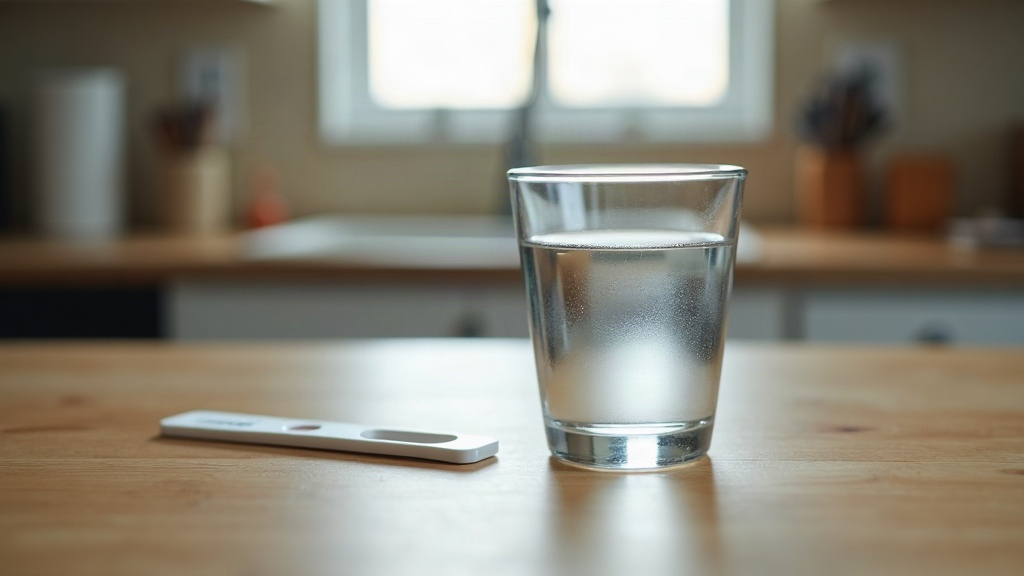
You need a hardness test strip kit from a hardware store. Most cost under ten dollars and read in gpg or ppm. Here is the order we follow:
- Minute 1: Run the kitchen cold tap for 60 seconds to clear standing water, then fill a clean cup.
- Minutes 2 and 3: Dip a strip and read it at the time printed on the package. Write the number down.
- Minute 4: Test an untreated line for comparison. In many Treasure Valley homes the outdoor hose bib is plumbed ahead of the softener. If yours is, that reading is your raw water hardness.
- Minute 5: Compare. A working softener should read about 0 to 1 gpg (under roughly 17 mg/L) at the kitchen tap. If the kitchen reads close to the hose bib, the softener is not softening.
If you have no strips, try the soap test. Fill a clear bottle one third full with tap water, add ten drops of liquid soap, cap it, and shake for ten seconds. Thick suds over clear water means soft. Thin suds over cloudy water means hard. It is rough, but it flags a failed unit.
Five Signs Your Softener Stopped Softening
The test gives the number. These are the symptoms we hear about on calls from Boise, Meridian, and Eagle:
- White crust returns on faucets and shower heads, the same buildup we cover in our Meridian scale buildup guide.
- Dishes and glasses spot again after the dishwasher runs.
- Soap and shampoo stop lathering, and skin feels dry or tight after a shower.
- Laundry turns stiff or dingy.
- The salt level in the brine tank never drops, even after weeks.
One sign alone can have other causes. Two or three together, plus a kitchen strip reading above 3 gpg, tells you the unit has a real problem.
Ten-Minute Checks Before You Call Anyone
Most failed softeners have a simple cause. Work through these in order:
- Bypass valve. Look at the back of the control head. If the valve is in the bypass position, hard water goes straight past the resin. Kids, installers, and plumbers leave it that way more often than you would think.
- Salt level. Lift the brine tank lid. Keep salt at least a third full, and above the waterline.
- Salt bridge. A hard crust can form over empty space, so the salt looks full while the water below has none. Press a broom handle gently into the salt. If it hits a hard shell, break it up.
- Power and clock. After an outage the time of day may be wrong and regeneration can run at the wrong hour or not at all. Reset the clock and start a manual regeneration.
- Hardness setting. If the head is set for 5 gpg and your water is 14, the resin runs out early. Match the setting to your tested hardness.
After fixing anything, start a manual regeneration, wait for it to finish, and retest the next morning. If you want to see what a normal cycle sounds like and how long it takes, our regeneration explainer walks through it.
What the Test Numbers Mean
Use this as a quick read of your kitchen cold tap result after a full regeneration:
- 0 to 1 gpg: Working as designed.
- 1 to 3 gpg: Slipping. Check salt, settings, and brine draw. Possible early resin wear.
- Above 3 gpg: Not softening. Repair or replace is the question.
- Same as the hose bib: Bypassed or fully failed.
Repair or Replace: Our Verdict by Age
If the unit is under 10 years old and the problem is a bypass valve, salt bridge, timer, or a worn seal, repair it. Those are small parts and a service visit, commonly in the low hundreds of dollars, and the resin tank is usually fine.
If the unit is 12 to 15 years old, you have done the checks above, salt and settings are correct, and the water still tests hard after a full regeneration, the resin has likely worn out. Resin can be replaced, but on an older tank and valve the repair bill starts approaching the cost of a new system, and the next failure is already waiting. A new installed softener in the Treasure Valley typically runs $2,500 to $4,500. Between those ages, price the repair first and replace when the quote passes about half the cost of a new unit.
A free water test settles it. We read your hardness at the tap, check the unit, and give you a plain number for repair and for replacement. You decide with both in hand.
Frequently Asked Questions
Find Out What Your Softener Is Really Doing
Get a free water test at your kitchen tap. We read the hardness, check the unit, and quote repair or replacement. No pressure, no pitch.