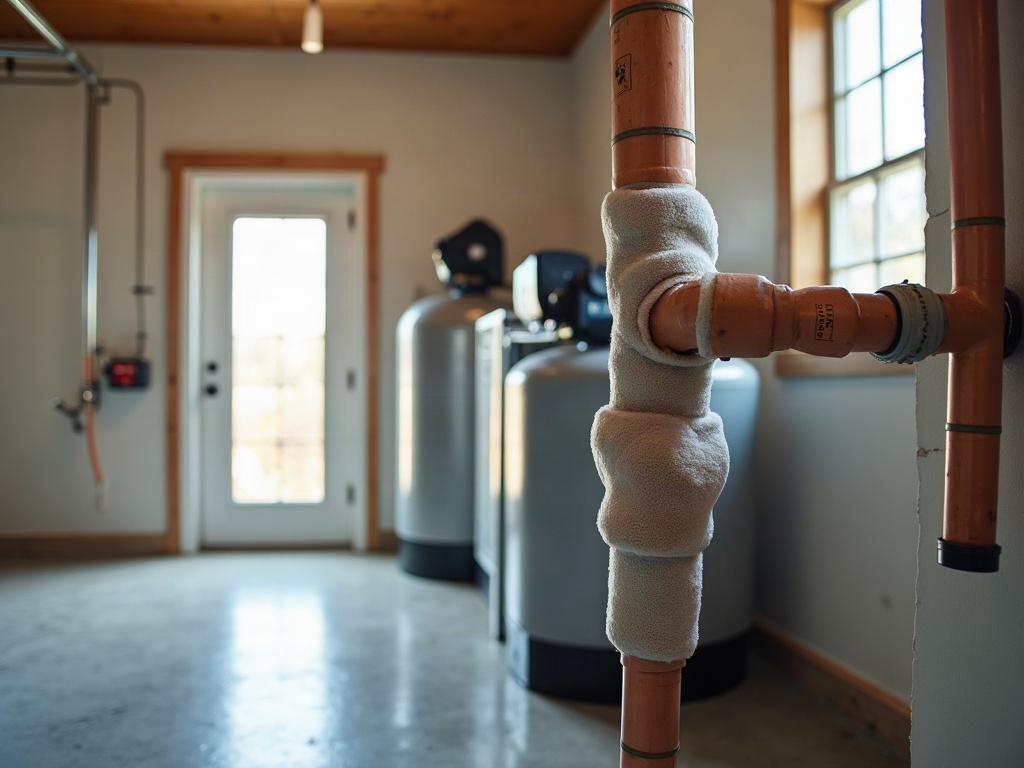
Can a water softener freeze? Most Treasure Valley homeowners assume the answer is no. It is in the garage, not outside. Garages stay above freezing, right? The answer is that it depends, and with Idaho's reservoirs sitting at historic lows heading into fall, water managers are flagging a potentially harsh winter ahead. East Idaho News reported on September 18, 2026 that the state's reservoirs have hit historic lows and that the winter outlook raises additional water worries. Now is the time to ask the question, before the first hard freeze answers it for you.
Yes, Your Softener Can Freeze. Here Is What That Means
A water softener contains water at all times. The mineral tank holds water-saturated resin beads. The brine tank holds a salt solution used to regenerate the resin. The control valve has water moving through it during every regeneration cycle and retains moisture in its internal chambers between cycles.
When garage temperatures drop to 32 degrees Fahrenheit, the water in exposed pipes and in the control valve begins to freeze. At around 15 to 20 degrees Fahrenheit, even the brine tank's salt solution can freeze, depending on its concentration. Unlike pipes inside a heated wall, a garage softener sits fully exposed to ambient temperature.
The fiberglass resin tank can crack when ice expands inside it. The plastic control valve can split at its seams. Connecting copper or PVC pipes burst. The damage is not always visible immediately, which means many homeowners discover the problem on the first cold morning when no water flows through the house. Repair or replacement costs typically run $500 to $2,000 or more depending on what cracks.
How Cold Does It Get in Treasure Valley Garages?
Boise and Meridian see average January low temperatures of 26 to 29 degrees Fahrenheit. Those are the averages. Cold snaps push overnight temps to 10 to 15 degrees for three to five consecutive nights several times each winter. The National Weather Service records show Boise hit 7 degrees Fahrenheit in January 2019 and 2 degrees in December 2021.
Attached garages connected to heated living space typically stay 10 to 20 degrees warmer than outdoor temps. A 15-degree night can still get an attached garage down to 25 to 30 degrees, which is inside the danger zone for water softeners. Detached garages, pole barns, or outbuildings receive no benefit from household heating. In an uninsulated detached structure, interior temps track outdoor temps almost directly. During a Treasure Valley cold snap, that means sub-20-degree conditions inside.
Hard-water cities like Nampa and Caldwell, which sit slightly lower in the valley, often see colder overnight lows than Boise. If your softener is in a detached garage in those areas, the freeze risk is higher.
This Winter Looks Different. Here Is Why It Matters Now
The September 18 East Idaho News report describes Idaho's reservoirs at historic lows and flags the coming winter as a source of fresh concern. Water managers have been preparing for a second consecutive season with below-normal snowpack after a 2026 water year that stressed municipal supplies across Ada and Canyon counties.
Lower snowpack means colder, drier air masses move through the valley more frequently without the moderating effect of deep mountain snow. It also means the Treasure Valley's water supply is already under pressure. If a freeze event damages your softener and forces you to shut off at the main, every hour of disruption matters in a system where supply margins are thin.
We mention this not to create alarm but because timing matters. Pipe insulation installed in October costs $15 at any hardware store. A cracked resin tank in January costs $600 or more, and a service call during a freeze week in the Treasure Valley typically means a two-to-three-day wait. The investment versus risk calculation is simple. Our water softener winter prep guide for Boise covers your full pre-winter checklist if you want a broader look at what to do before December.
5 Warning Signs Your Softener Is Vulnerable Right Now
Check these five conditions before the first freeze of the season:
- Location in an uninsulated detached garage or outbuilding. No household heat transfer. Full outdoor temperature exposure on all sides.
- Bare metal or PVC supply and drain pipes. Uninsulated pipes are the first thing to freeze in a temperature drop. Even 30 minutes below 25 degrees can freeze an exposed pipe section.
- No heat source within 10 feet. A single space heater or heat tape on the pipe run changes the local thermal environment dramatically without requiring full garage heating.
- Long idle periods between regeneration cycles. Water standing in a control valve that has not cycled in 10 or more days is particularly vulnerable. Standing water freezes faster than water that moves.
- Unknown or seized bypass valve. If something goes wrong, you need to bypass the softener in under two minutes. If you are not sure where the bypass valve is or if it turns freely, test it today. A seized bypass valve during a freeze emergency means a full main shutoff until a technician arrives.
6 Steps to Freeze-Proof Your Garage Water Softener
These are practical steps, not expensive overhauls. Most take under an hour.
Step 1: Insulate the Inlet and Outlet Pipes
Closed-cell foam pipe insulation ($5 to $15 at any hardware store) wraps around the supply lines and dramatically slows heat loss. Cover every exposed section from the wall connection to the tank inlet. Pay special attention to pipe runs near exterior walls or the garage door, where temperatures drop fastest. The EPA recommends pipe insulation as the first line of defense against residential freeze damage.
Step 2: Wrap the Control Valve
The control valve is more vulnerable than the tanks because it has precision-molded plastic channels that crack under ice pressure before fiberglass does. Use foam pipe wrap or a mechanical insulation sleeve around the valve body and its connection points. Leave the display panel exposed so you can read the settings.
Step 3: Add Heat Tape on Vulnerable Pipe Runs
Plug-in heat tape ($15 to $30) applied to the pipe section closest to the exterior wall keeps that stretch above freezing even during sustained cold. Follow the manufacturer instructions and keep the tape away from combustibles. Self-regulating heat tape is the safest choice for a garage environment. Turn it on in November and off in March.
Step 4: Set a Weekly Minimum Regeneration Schedule
A softener that moves water through its system regularly resists freezing better than one that sits idle. Check your control valve's regeneration schedule and set it to run at least once every seven days during winter. A regeneration cycle moves both water and brine through the system, preventing stagnant water from sitting in cold chambers for days at a time.
Step 5: Add a Temperature Sensor or Smart Alert
A $25 smart plug with a built-in temperature sensor sends an alert to your phone when your garage drops below 35 degrees. That is enough warning to run a portable space heater before conditions reach the danger zone. Several models integrate with common smart home apps and require no hub. Set the alert threshold at 38 degrees to give yourself a buffer before the water freezes.
Step 6: Confirm Your Bypass Valve Works
Locate the three-valve bypass (or the single-lever bypass, depending on your model) and confirm it turns freely. Label it clearly if other household members need to find it during an emergency. Practice putting the system in bypass mode now so the steps are automatic if you need to act quickly at 2 AM during a freeze. If you are not sure which type of bypass your system has, our team can walk you through it during a free water test visit. See our full water softener maintenance guide for Boise homeowners for year-round care details.
What to Do If You Think Your Softener Has Already Frozen
If you wake up to no soft water and a very cold garage, do not force the system to run.
First, bypass the softener using the bypass valve on the control head. This restores normal water flow to the house through untreated water while you assess the situation. Your water will be unsoftened for a day or two, but the house stays functional.
Next, gently warm the garage using a portable space heater aimed at the unit from a safe distance of two to three feet. Do not use open flame, propane torches, or heat guns directly on plastic tank bodies or valve components. Rapid heating of cold plastic causes cracking. The goal is slow, even warming over two to four hours until the garage reaches at least 50 degrees Fahrenheit.
Once thawed, run a manual regeneration cycle. Listen for normal cycling sounds and watch the drain line for flow. A complete, normal cycle is a good sign the internal channels survived the freeze. After the cycle finishes, check all connection points for slow drips. Dry the exterior and inspect the tank body for hairline cracks.
If water drips from the control valve, tank seams, or connecting pipes after a full thaw, the freeze caused physical damage. Do not attempt to repair cracked fiberglass tanks or split control valves yourself. Call us at (208) 968-2771 for an assessment. In most cases, we can evaluate the damage and provide a clear repair versus replacement recommendation in a single visit.
Not Sure If Your Softener Is at Risk?
Our free water test includes a full system location check and a quick assessment of freeze risk for your specific setup. No pressure, no sales pitch. Just the facts you need before Idaho winter hits.