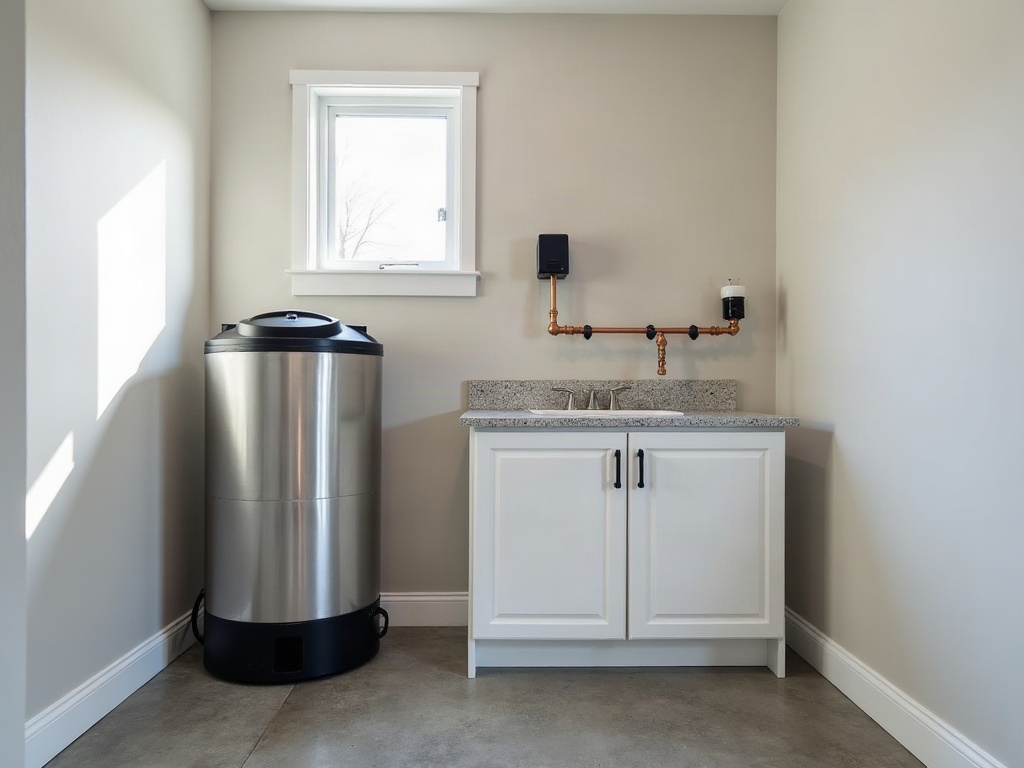
Does a water softener stay with the house when you sell? Most people assume yes. Idaho real estate law says: it depends.
That gap between assumption and law has cost Idaho buyers real money. We have seen deals where a seller packed up a hard-plumbed softener the day before closing because nobody put the right language in the contract. We have also seen buyers inherit a Kinetico lease they did not know existed until the service tech showed up three months later.
This matters even more right now. In September 2026, IDWR hydrologist David Hoekema confirmed that Boise's deep aquifers are not immediately affected by Idaho's historic drought, but well owners face direct exposure as reservoirs draw down with little reserve heading into winter. A working water softener is a documented asset in any Treasure Valley real estate deal, and both buyers and sellers deserve to know exactly who owns it before the keys change hands.
What "Convey" Means in an Idaho Purchase Agreement
In real estate, "convey" is the legal term for what transfers from seller to buyer at closing. When a purchase agreement says a feature "conveys with the property," it means ownership passes to the buyer as part of the sale, no separate transaction required.
Idaho Code Section 55-101 draws a clear line between real property and personal property. Real property, which includes fixtures, transfers with the sale by default. Personal property does not transfer unless the contract specifically says it does.
The practical rule: if something is plumbed in, wired, or hard-connected to the home, it almost certainly counts as a fixture under Idaho law and conveys automatically. The dispute is almost never about the kitchen faucet. It is almost always about appliances and systems that sit in a gray zone, like water softeners, water filtration units, and water heaters, where sellers sometimes assume they have the right to take something that the buyer reasonably expected to stay.
A water softener connected to the main water supply line, running a drain line to a floor drain, and plugged into a dedicated electrical circuit sits squarely in fixture territory under Idaho law. But the key word is "almost." The three-part Idaho fixture test is what actually decides it.
Is a Water Softener a Fixture or Personal Property Under Idaho Law?
Idaho courts apply a three-part test to determine whether something is a fixture or personal property:
- Method of attachment: How permanently is it attached? Can you remove it without damaging the home's systems?
- Adaptation to the real estate: Is it specifically adapted to serve this property, or is it a standalone appliance that could easily move to another home?
- Intent of the parties at time of installation: When it was installed, did the installer intend it to become a permanent part of the property?
A hard-plumbed water softener fails all three removal tests. Disconnecting it requires cutting water supply lines, capping a drain, and rerouting the plumbing. The home's water system does not work the same way without it because the bypass valve it ships with is not a full replacement for the softened water circuit. It is adapted to the home's specific water quality, sized to the home's square footage and number of bathrooms. And in nearly every installation we complete in Boise, Meridian, Eagle, and Nampa, the homeowner installs with the intent that it stays.
That means a hard-plumbed softener is a fixture. It conveys.
The one important exception: rental and lease units. Kinetico uses a dealer-network lease model in many parts of Idaho. Some Culligan contracts are rental agreements rather than purchases. When a softener is leased, the seller does not own it. The leasing company owns it. That means the seller cannot convey it and the buyer does not automatically receive it. Instead, the buyer inherits the lease obligation, which carries monthly fees, service terms, and sometimes early termination penalties. That is a completely different transaction than buying a home with an owned softener included.
When a Seller Can Legally Take the Water Softener
Short answer: only when the purchase contract explicitly lists it as excluded personal property.
If a seller removes a hard-plumbed softener before closing without a written contractual exclusion, that is a breach of the purchase agreement. The buyer has grounds for a damages claim equal to the cost of replacing the system. In Treasure Valley, a replacement system runs $2,000 to $3,200 installed. That is real money, and real liability for a seller who assumes they can just take it.
Sellers who want to keep their softener have one clean option: list it as excluded in the purchase agreement before the buyer signs. Buyers can accept the exclusion, negotiate it out, or walk. Once the contract is signed without that exclusion, the softener stays.
For rental or lease units, the obligation is disclosure. A seller who knows their softener is leased must tell the buyer before the offer is accepted. Burying it, or hoping nobody asks, is how disputes start. Buyers who discover a lease after closing have legitimate grounds to pursue damages for misrepresentation if the seller knew and did not disclose.
Contract Language Idaho Buyers Should Add Right Now
The Idaho Association of Realtors (IAR) standard purchase agreement includes a fixtures and personal property section. Most buyers and agents fill it in quickly. Do not. This is where you protect a $2,000 to $3,200 asset.
We recommend buyers add this exact language to the fixtures section:
"The water softening system, including all components, brine tanks, and associated plumbing connections, shall convey with the property as a fixture. Seller warrants that the system is owned free and clear with no lease or service agreement attached."
Add this second line to the inspection and disclosure requests:
"Seller shall provide the model number, service history, and current salt settings for the water softening system no later than five business days before closing."
If the listing mentions a "leased" softener, ask for a buyout before closing or renegotiate the purchase price to account for the lease obligation you are inheriting. A lease that runs $35 to $55 per month is $420 to $660 per year, compounding over the life of the lease. Factor that into your offer.
Why a Water Softener Conveys More Value in Treasure Valley's 2026 Drought Market
Idaho is in the middle of a historic drought. IDWR hydrologist David Hoekema noted in September 2026 that Boise's deep aquifers are not immediately affected, but that well owners face direct exposure as surface reservoirs draw down ahead of winter with little reserve. That is not reassuring language for anyone on a private well in Kuna, Star, or the outer Nampa bench areas.
Drought affects water quality in two specific ways that matter for softener owners. First, lower water table levels can draw from shallower, mineral-richer strata, concentrating hardness and other dissolved solids. Second, reduced dilution volume in municipal supply chains can push mineral concentrations slightly higher even in treated city water. Meridian already tests at an average of 8.4 GPG hardness under normal conditions. Private wells in the outer Treasure Valley can reach 12 to 17 GPG. In drought years, those numbers trend up.
A home with an installed, working water softener is protected from whatever the drought delivers. Pipes stay clear. Appliances run efficiently. Water heaters do not scale up at an accelerated rate. Skin does not dry out from mineral-laden shower water.
More information on Idaho's current groundwater situation is available directly from Idaho Department of Water Resources.
For buyers, inheriting a working softener is inheriting drought insurance at zero additional cost. For sellers, a home with a softener included stands out in a market where buyers are increasingly aware of what hard water costs them every year.
How a Water Softener Affects Home Value in Idaho
A water softener does not show up as a separate line item on an appraisal. Appraisers do not add $3,000 to a property value because the softener is owned and included. But the downstream effect on home value is real, and it shows up in buyer behavior rather than appraisal methodology.
Treasure Valley buyers actively filter for "water softener included" when searching listings, especially in Meridian, Eagle, and Boise's North End where hard water is a known quantity. A listing that clearly states the softener conveys attracts buyers who have already done the math on hard water costs and do not want to budget another $2,000 to $3,200 after closing.
The math behind their thinking: hard water costs the average Treasure Valley household $600 to $1,100 per year in accelerated appliance wear, increased detergent use, and higher water heating costs. Over a five-year window that is $3,000 to $5,500 in avoided costs, compounding. A five-year-old water softener with 10 or more years of life remaining represents that full avoided-cost benefit to the buyer at zero additional purchase price.
We break down the full financial picture in our guide on water softener home value in Boise, including how different neighborhoods compare and what sellers can do to document the softener's value before listing.
The short version: a properly maintained, owned softener is a documented asset. Market it as one.
Your Pre-Listing and Pre-Offer Checklist for Idaho Water Softener Conveyance
Whether you are preparing to list or about to submit an offer, here is the checklist we walk every Treasure Valley client through.
For Sellers
- 1. Confirm whether your softener is owned or leased before listing. Pull the original invoice or call your dealer.
- 2. If leased, disclose immediately. Do not wait for the inspection to surface it.
- 3. Decide before listing whether it conveys or is excluded. Set that expectation upfront in the MLS notes.
- 4. Have the model number and last service date ready. Buyers will ask.
- 5. If your softener has not been serviced in two or more years, service it before listing. A working system is a selling point.
For Buyers
- 1. Ask in writing before the offer whether the softener conveys. Get it confirmed in the counteroffer or acceptance.
- 2. Request proof of ownership before the offer is submitted. A receipt, invoice, or warranty registration works.
- 3. Add the ownership warranty language to the fixtures section of the IAR purchase agreement.
- 4. Get a water hardness test at inspection. Boise averages 10 to 15 GPG; Meridian averages 8.4 GPG; private wells can reach 15 GPG or higher.
- 5. Well buyers especially: in the 2026 drought context, a full water quality test is critical. See our full guide on what to test before close in Idaho.
Both parties benefit from settling the softener question early. It eliminates a common source of last-minute closing disputes and ensures the buyer knows exactly what they are getting and what condition it is in.
Frequently Asked Questions
If it is hard-plumbed into the home's water supply and drain lines, it is likely a fixture under Idaho law and conveys automatically unless the purchase contract specifically excludes it. The Idaho three-part fixture test (method of attachment, adaptation to the real estate, and intent at installation) determines this. A system connected to supply lines, running a drain, and on a dedicated circuit nearly always qualifies as a fixture.
Only if the purchase contract expressly lists it as excluded personal property. Removing a hard-plumbed fixture without a contractual exclusion is a breach of the purchase agreement. Buyers in that situation have grounds for a damages claim equal to the replacement cost, which runs $2,000 to $3,200 installed in Treasure Valley.
The seller does not own it and cannot convey it. Buyers inherit the lease obligation, including monthly fees, service terms, and potential early termination penalties. Sellers must disclose this upfront. Buyers should ask for a buyout before closing or negotiate a price reduction to account for the lease obligation they are assuming.
It does not appear as a separate appraisal line item, but a $2,000 to $3,200 installed system with years of life remaining is a documented asset. In Treasure Valley's hard water market, homes with softeners tend to attract buyers faster and signal better maintenance history. The buyer saves $600 to $1,100 per year in avoided hard water costs, which is real value built into every offer they make.
Yes. IDWR hydrologist David Hoekema noted in September 2026 that Boise's deep aquifers are not immediately affected, but well owners face direct exposure as reservoirs draw down with little reserve heading into winter. Drought conditions can concentrate minerals in both municipal and private well water. A home with a working softener provides protection regardless of how drought conditions affect local water quality over the next several years, making it a more valuable asset in the current market than it would be in a normal water year.
Not Sure What Your Water Is Doing?
Whether you are buying, selling, or just moved in, a free water hardness test tells you exactly what you are working with. We test for hardness, iron, pH, and dissolved solids, on-site, in about 15 minutes, with no pressure and no obligation.
We serve Boise, Meridian, Eagle, Nampa, Kuna, and Star. If you are on a private well and want to understand what the 2026 drought means for your water quality specifically, we can walk you through that too.
Free test. No sales pitch. Just data so you know what you are buying or selling.