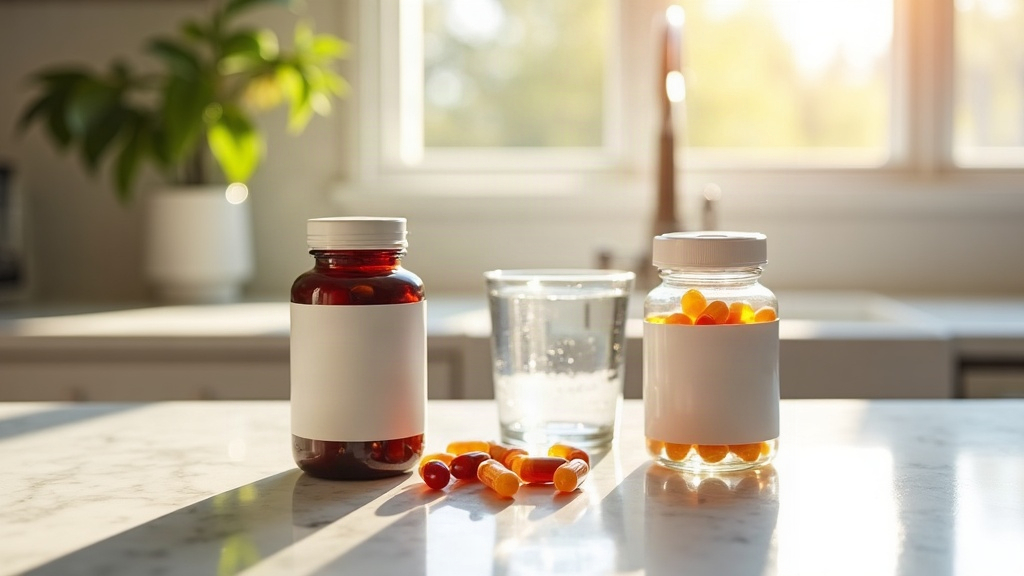
Why September Is the Right Time to Build Your Immune Stack
Schools are back in session across the Treasure Valley. Hallways are crowded, carpools are packed, and every enclosed space is doing what enclosed spaces do in fall: concentrating whatever is circulating in the community. Lower humidity makes respiratory droplets travel farther. And if last January taught us anything here in Idaho, it is that we do not want to be caught flat-footed when flu season arrives.
Idaho recorded a 15-year peak in flu doctor visits in January 2026, driven by a novel H3N2 subclade K strain. That kind of season does not materialize overnight. It seeds in September, spreads through October, and peaks by mid-winter. Right now, transmission is still low. That is not a reason to relax; that is your window. The 4 to 6 weeks between now and when community spread accelerates is exactly when immune prep actually pays off.
September is when you build the foundation so you are not scrambling in December.
The Immune Stack Trending in 2026
The supplement combination generating the most attention this fall is the zinc and quercetin pairing, and the science behind it is genuinely interesting. Zinc has well-established antiviral properties, but getting zinc into cells where it can do its job is the harder part. Quercetin acts as a zinc ionophore: it transports zinc ions across cell membranes, allowing zinc to interfere with viral RNA polymerase and disrupt replication at the intracellular level. Elderberry is a natural source of quercetin and also has direct antiviral evidence independent of its zinc-transport role.
Vitamin D rounds out the core stack. A 2026 meta-analysis spanning 25 randomized controlled trials found a 42% reduction in infection rates among individuals who were vitamin D deficient and then supplemented to adequate levels. In Idaho, where sun exposure drops sharply in fall and winter, deficiency is common. This is not a fringe supplement; it is one of the most studied interventions in the respiratory illness space.
A newer category gaining traction is colostrum, specifically products like ARMRA, which work on gut barrier integrity rather than direct antiviral activity. The logic: a more resilient gut lining means fewer opportunities for pathogens to penetrate. Which leads us directly to what most immune articles skip entirely.
The One Variable Your Immune Articles Never Mention
You have got the zinc. You have got the quercetin. You are taking vitamin D. Here is what the articles you read about this combo almost certainly did not tell you: your tap water may be working against you on two separate fronts.
Boise city water tests at 10 to 15 grains per gallon (gpg) of hardness. Meridian water runs harder, typically 12 to 17 gpg, because of the aquifer geology under that part of the valley. Hard water means high dissolved calcium and magnesium. These are not dangerous; they are natural minerals. But calcium and magnesium compete with zinc for the same intestinal absorption transporters. When you drink a glass of hard tap water alongside your zinc supplement, you are sending multiple minerals through the same narrow gate at the same time. Zinc is not guaranteed to win that competition.
The second factor is chloramine. Most water content online refers generically to "chlorine," but Boise upgraded to chloramine treatment specifically because it forms fewer disinfection byproducts. Chloramine is chlorine combined with ammonia. The critical difference: chloramine does not off-gas from a glass of water or a warm shower the way chlorine does. It persists in the water until it is filtered out by a carbon block or reverse osmosis system.
Why does that matter for immunity? Because 70 to 80 percent of your immune cells live in your gut, and gut microbiota directly regulates zinc transport, according to 2026 research published in Spectroscopy Online. A gut microbiome under persistent chemical pressure is not operating at full capacity. None of this means Boise water is unsafe; it meets all federal and state safety standards. This is a bioavailability and optimization conversation, not a safety one. But if you are spending money on quality supplements and drinking them with unfiltered hard tap water, you may not be getting the return you expect.
We have covered the connection between gut health and water quality in more detail at truewateridaho.com/truewater-gut-health-water-quality-boise-idaho/, if you want to go deeper on the microbiome side of this.
What Treasure Valley Water Looks Like and What to Do
The City of Boise and City of Meridian publish annual water quality reports that confirm the hardness ranges above. Well water in outlying areas of the Treasure Valley varies more, sometimes running harder than city supply depending on depth and local geology, which is why a home-specific test matters more than any regional average.
The solution hierarchy for most Treasure Valley households is straightforward. A whole-house water softener addresses the mineral antagonism problem: it exchanges calcium and magnesium for sodium through an ion-exchange process, reducing the mineral load in every glass of water you drink. A carbon block or reverse osmosis under-sink filter addresses chloramine: it physically removes the disinfectant before it reaches your glass. Most Treasure Valley families benefit from both. A softener at the point of entry, an RO unit at the kitchen sink for drinking water. That combination covers both vectors.
There is also a less obvious benefit worth mentioning. When filtered water tastes better, people drink more of it. And better hydration supports lymph circulation, which is the transport system that moves immune cells to where they are needed. It is not a flashy connection, but it is real.
If you are curious about how hard water affects other parts of your home as well, we broke that down in our guide on hard water and skin health in Boise, which covers some of the same mineral chemistry from a different angle.
Frequently Asked Questions
Get a Free Water Test Before Cold Season Peaks
You have already invested in your immune stack. This is the step that makes it work. A free water test shows you exactly what your home's water contains: hardness levels, chloramine presence, and anything else worth knowing. No pressure, no sales pitch. Just your numbers.
Boise families who get ahead of this in September are not scrambling in January. Schedule yours now and we will have it done well before peak season.