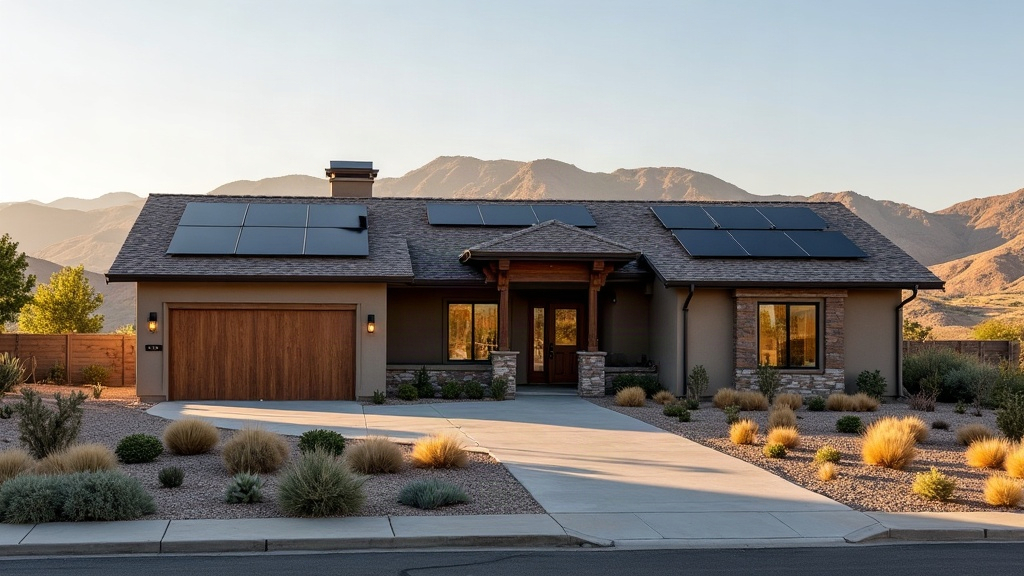
What if the same problem Meta spent millions to solve in Kuna, Idaho is quietly wasting money in your home right now? That is not a hypothetical. Meta's new Kuna data center just came online with a closed-loop water system specifically engineered to cut water consumption in the high desert West. The reason they went to those lengths is the same reason it matters for your home: water in the Treasure Valley is scarce, expensive, and increasingly regulated. Big tech figured that out before most homeowners did.
This is not a story about data centers. It is a story about water efficiency, and why the principles Meta's engineers built into a $800 million facility apply just as directly to the appliances running in your basement or utility closet right now.
What Meta's Water Engineers Know About Idaho
A data center is essentially a building full of servers that generate enormous amounts of heat. Cooling that heat traditionally requires massive quantities of water, which is evaporated to carry heat away from the facility. The industry average sits around 0.84 liters of water per kilowatt-hour of computing power. For a facility the size of Meta's Kuna campus, that adds up to millions of gallons per year.
Meta's closed-loop system works differently. Instead of evaporating water into the air and constantly drawing fresh supply, it recirculates the same water through a sealed cooling loop. The water absorbs heat, passes through a chiller, releases that heat, and cycles back. Dramatically less water is withdrawn from local sources per compute cycle. Companies like Amazon have achieved similar results, reporting water use rates roughly seven times better than the industry baseline at their most efficient sites.
The reason Meta engineered this into a Kuna facility specifically, and not just relied on standard cooling infrastructure, is straightforward: Idaho does not have unlimited water. Water rights in the West are tightly held, prior-appropriation law means "first in time, first in right," and a company drawing millions of extra gallons per year from an already stressed regional system faces both regulatory and reputational risk. Closed-loop efficiency was not optional. It was the cost of building here.
The Treasure Valley Has a Water Problem Big Tech Knows About
Idaho's 2026 drought has been persistent across the southern part of the state. The Snake River Plain, which supplies much of Treasure Valley's agricultural and municipal water, has seen below-average snowpack and reservoir levels running behind historical norms. Water managers across Ada, Canyon, and surrounding counties have been navigating junior water rights curtailments that would have been unusual a decade ago.
Kuna sits in Ada County, right in the heart of this pressure zone. When Meta chose that site, their site-selection team almost certainly evaluated local water availability as a constraint, not just a resource. The closed-loop system was part of the answer to that constraint.
Most Treasure Valley homeowners are not thinking about their water use in terms of regional scarcity. But they are experiencing the downstream effects: utility rate increases, conservation notices during peak summer months, and water that arrives at their tap carrying significant mineral content from the region's geology.
Your Home Has the Same Problem, Just Smaller Scale
A home is not a data center, but the efficiency logic is identical. Every appliance in your house that uses water, your dishwasher, washing machine, water heater, ice maker, has a certain amount of water it needs to do its job well. When the input water is degraded, those appliances need more water, more energy, and more time to achieve the same result.
Hard water is the primary degradation factor in the Treasure Valley. At 10 to 17 grains per gallon, the water coming out of most Boise and Meridian taps carries dissolved calcium and magnesium at levels that cause real operational problems for home systems. Scale accumulates inside pipes, reducing flow. It coats the heating element in your water heater, forcing it to work harder to transfer heat through a layer of mineral buildup. A scaled-up water heater can use 30 percent more energy than a clean one to deliver the same hot water.
The washing machine runs extra rinse cycles because hard water does not release soap residue the way soft water does. The dishwasher cycles longer and at higher temperatures for the same reason. Every extra cycle is water and electricity that should not have been spent.
This is not a small inefficiency. It compounds across every load, every shower, every dishwasher cycle, every day, in every hard water home in the valley.
How Hard Water Reduces Your Home's Water Efficiency
To make this concrete, consider the math on a typical Treasure Valley household. At 17 gpg hardness, visible scale begins building on fixtures and inside appliances within weeks of installation. Research from the Water Quality Association puts the real-world water savings for homes that switch to softened water at 2,700 to 4,700 gallons per year. That is water that was previously being spent compensating for hard water's inefficiencies: extra rinse cycles, extended appliance runtimes, and the occasional full flush of a scaled-up water heater.
Appliance lifespan tells the same story. Independent studies have shown that water heaters, washing machines, and dishwashers operating on softened water last 50 to 100 percent longer than the same appliances running on hard water. A water heater that should last 12 years may fail at 7 or 8 in a hard water home. That is an appliance replacement cost that most homeowners absorb without ever connecting it to their water supply.
Pipes are the silent version of this problem. Scale buildup inside supply lines reduces effective pipe diameter over time. As flow decreases, fixtures compensate by running longer to deliver the same volume. In severe cases, scale-blocked sections of pipe require full replacement. These costs are real, cumulative, and entirely preventable.
If you want to see how your water is performing, our article on the most common hard water signs in Boise homes covers what to look for in your daily routine. For a deeper look at how appliances are affected, see our guide on washing machine hard water damage in Idaho.
The Home Version of Closed-Loop Efficiency
Meta's engineers solved their problem at the source. Instead of letting unconditioned water run through systems that would scale, clog, and degrade, they treated the water before it entered the loop. The system runs more efficiently because the water running through it is doing what water is supposed to do, without leaving mineral deposits that create drag and heat loss.
A whole-home water softener does exactly the same thing for your house. Ion exchange removes the calcium and magnesium before the water touches your water heater, your washing machine, your pipes, or your showerhead. The appliances downstream get water that behaves the way water should, so they operate at the efficiency they were designed for, not at the degraded efficiency that hard water forces on them.
The result is fewer rinse cycles, lower water heater energy use, extended appliance life, and real reductions in annual water consumption. The Water Quality Association's 2,700 to 4,700 gallons per year savings figure represents the closed-loop principle applied at the residential scale: treat the input, and the whole system runs better.
Meta spent millions engineering water efficiency into a facility in Kuna. You can get the same principle working in your home for a fraction of that cost, and unlike a data center, the return shows up in your utility bill and your appliance replacement schedule every year.
Frequently Asked Questions
Find Out What Your Water Is Actually Doing to Your Home
We test your water for free and show you exactly what is in it. No pressure, no sales pitch, just real numbers. Treasure Valley homeowners deserve to know what they are working with.