Published November 1, 2026 • 4 min read
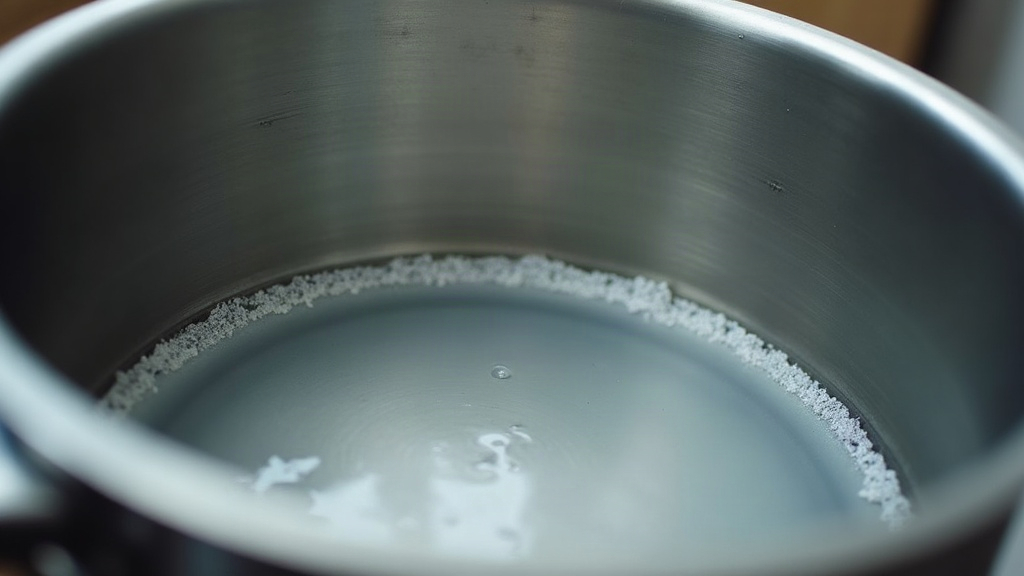
Thanksgiving is three weeks out, and the big stockpot is coming out of the cabinet. You pull it down and there it is: a chalky white ring around the inside, a cloudy haze on the bottom, maybe a rainbow tint where the burner hit it. The pot was clean when you put it away.
Good news first. That film is almost never a sign the pot is ruined, and it comes off in about ten minutes with something already in your pantry. Here is what causes it and how to keep it from coming back.
What That White Ring Actually Is
Tap water carries dissolved calcium and magnesium. When water sits in a pot and evaporates, or boils down, those minerals stay behind as a pale ring at the waterline. Heat speeds it up, which is why the film shows up worst on pots you boil in, like pasta pots, stockpots, and the kettle. Cooks call it limescale, and it is the same thing that builds up inside a coffee maker.
It is not the same as the tiny pits some cooks see from dropping salt into cold water. That is a salt issue, not a mineral issue, and the fix is to add salt once the water is already boiling.
The Ten Minute Fix
- Fill the pot with 9 parts water to 1 part white vinegar, enough to cover the film.
- Bring it to a boil and keep it going for about ten minutes.
- Let it cool, pour it out, and wipe with a soft sponge. Rinse and dry right away.
- For stubborn rings, rub with a paste of baking soda and water, or a splash of lemon juice.
Skip steel wool and rough scouring pads. They scratch stainless, and scratches give minerals more places to cling next time.
Why It Keeps Coming Back in Boise
Treasure Valley water is hard. Boise commonly runs 10 to 15 grains per gallon, and parts of Meridian reach 17. The more dissolved minerals in your water, the faster the ring comes back, and the more you notice it on a pot you use every week. If you scrub the same pot every month, the pot is not the problem. The water is.
You may have spotted the same pattern on cloudy glasses from the dishwasher or in a kettle that crusts over. Same minerals, different surface. Idaho is also coming off a historically dry water year with record-low snowpack, and lower flows can mean groundwater makes up more of what flows through local systems, so it is a good moment to know your number.
Habits That Keep Pots Clear
Dry pots by hand right after washing. Air drying lets droplets evaporate and leave their minerals behind as spots. Do not let water sit in a pot overnight, and wipe the waterline after boiling. A quick vinegar boil once a month keeps buildup from baking on, especially before a big cooking weekend.
Those habits help, but they treat the symptom. They do not change what comes out of the tap.
What a Softener Changes in the Kitchen
A water softener swaps the calcium and magnesium for sodium or potassium, so there is far less to leave behind. Most homeowners notice fewer rings on pots and cleaner kettles and heating elements within weeks. To be straight about it, a softener will not make cookware look brand new, and you will still want to dry your pots, but the monthly scrubbing mostly goes away.
Not sure what your water is doing? A free test shows your exact hardness in about ten minutes, before the holiday cooking starts.
Stainless Pots and Hard Water FAQ
Find Out What Is in Your Pots
Get a free water test and see your exact hardness in grains per gallon. No pressure, no sales pitch, just your numbers.