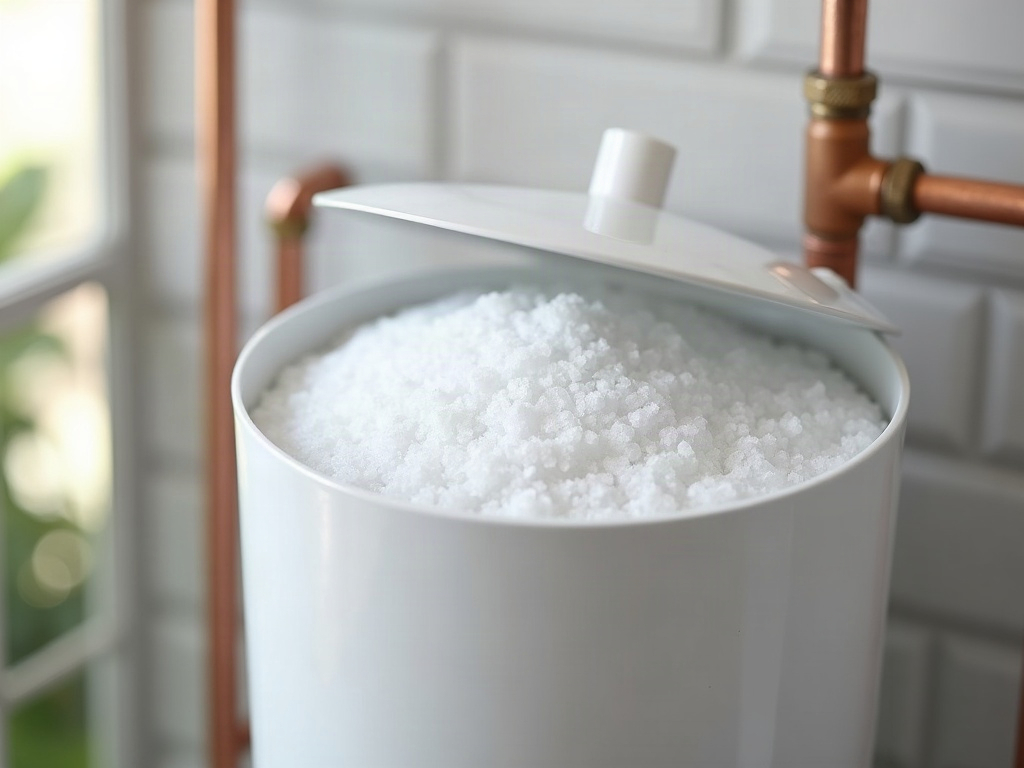
Many Homeowners Think Their Softener Is Broken. Usually, It Is Not
Here is the most common misconception we hear from Boise homeowners: "My water tastes salty, so my softener must be broken." The reality is that a salty taste almost never means the unit itself is defective. In nearly every case we see across Treasure Valley, the culprit is a brine or regeneration issue that is straightforward to correct, often without a service call at all.
Understanding why starts with how a softener actually works. Ion exchange is the process at the core of every water softener: hardness minerals, primarily calcium and magnesium, are pulled out of your water as it passes through a resin tank. The resin holds those minerals and releases a small amount of sodium in their place. For Boise households dealing with source water hardness in the 10-15 grains per gallon (gpg) range, a properly operating softener adds roughly 20-30 milligrams of sodium per liter. That is a level far too low for most people to taste.
The EPA's secondary drinking water standard puts the point at which sodium becomes noticeable around 200 mg/L. A well-maintained softener in Boise stays well under that number. When your water tastes distinctly salty, something has gone wrong in the brine cycle, not the fundamental ion exchange process.
That distinction matters for Treasure Valley homeowners right now. The Boise City Council recently approved the Eckert Road Bridge redesign, citing the Boise River System ordinance and its Clean Water Act requirements. Treasure Valley takes water quality seriously at the infrastructure level. Inside individual homes, though, a quieter problem can show up: softened water that suddenly tastes salty. Both share the same root concern. This guide covers what you can do about it inside your own home.
The Six Most Common Causes of Salty Water After Softening in Boise
When we diagnose salty water complaints across Boise, Meridian, Eagle, and Nampa, these are the six causes that account for the vast majority of cases:
- Salt bridge. A hardened crust forms across the top of the brine tank, creating an air gap between the salt and the water below. The brine solution cannot form properly; then, when the crust eventually breaks or shifts, a spike of highly concentrated brine can push through into the supply lines.
- Salt mushing. Wet, compacted salt settles at the bottom of the brine tank as a thick slurry. This blocks the brine draw valve, preventing proper brine draw during regeneration and leaving residual salt in the system.
- Clogged injector or venturi. The injector is a small component that creates suction to draw brine through the resin during regeneration. When it clogs with mineral scale, brine draw is incomplete, leaving excess salt sitting in the system after each cycle.
- Regeneration cycle too long or too frequent. Over-regeneration flushes more brine through the system than the rinse cycle can fully clear, and the excess ends up in your tap water.
- Brine tank float valve stuck or brine fill valve malfunctioning. Too much water in the brine tank dissolves too much salt, creating a more concentrated solution than the rinse cycle is designed to handle.
- Control valve seal failure. Worn seals inside the control valve allow brine to bypass the rinse cycle entirely, so concentrated brine reaches your supply lines without being flushed out.
One note specific to Meridian and Eagle households: source water hardness in those communities can run 14-17 gpg, which means your softener cycles more frequently than in lower-hardness areas. That additional wear accelerates both injector clogging and seal degradation, so issues that might take years to develop elsewhere can show up faster here.
Step-by-Step: How to Diagnose the Problem at Home
Before you call anyone, run through these six diagnostic steps. You can usually identify the cause in under 20 minutes.
- Taste test timing. Is the water salty only right after the overnight regeneration cycle, typically around 2 AM? Or does it taste salty throughout the day? Morning-only saltiness points directly to an incomplete rinse during regeneration. All-day saltiness suggests a brine tank issue, such as a salt bridge or stuck float valve, that is continuously contaminating the supply.
- Check the brine tank. Lift the lid and press down firmly on the salt. If it feels solid and does not give way, you have a salt bridge. If the salt has the consistency of wet sand or slush at the bottom, that is salt mushing. Both need to be cleared before any other fix will work.
- Check the brine tank water level. After a regeneration cycle, there should be 6-12 inches of water sitting above the salt level. More than that points to a stuck float valve or a malfunctioning brine fill valve, both of which cause over-saturation.
- Inspect the injector screen. The injector is a small component, often a colored cap, on the side of the control valve. Remove it and check the tiny screen inside for mineral scale buildup. Rinsing it with warm water and a soft brush often restores full function.
- Review your regeneration settings. Compare your current settings against the guide in our article on how regeneration cycles work. Factory settings are frequently configured for maximum salt use, which is rarely the right setting for most Boise households.
- Bypass and flush. Put your softener in bypass mode and run a cold tap for 10-15 minutes to flush residual brine from the lines. For step-by-step instructions on using the bypass valve, see our article on using the bypass valve to flush your system. This will tell you quickly whether the saltiness is sitting in the lines or is an ongoing production issue.
How to Fix a Salt Bridge or Salt Mushing in Your Boise Softener
Salt bridges and salt mushing are the two most common causes of salty water we see, and both are DIY-friendly repairs that do not require any special tools or parts.
To break up a salt bridge, use a broom handle or a wooden dowel to push down through the crust. Work it across the entire surface of the salt to break up the hardened layer completely. Never use a metal rod or anything sharp; you risk puncturing the brine tank. Once you have broken through, give the system 24-48 hours for the salt to dissolve properly and the brine concentration to normalize before running a manual regeneration cycle.
Salt mushing requires a bit more effort. Scoop out the wet salt slurry from the bottom of the tank and dispose of it. Flush the interior of the tank with warm water, and while you have access, clean the brine valve screen at the base of the tank. Refill with fresh pellet salt, keeping the tank half to two-thirds full, and run a manual regeneration once the brine solution has had a few hours to form.
A word on salt selection: avoid rock salt or solar salt in Idaho. These coarser salt grades dissolve unevenly and are more prone to mushing, especially given the humidity swings Treasure Valley sees between summer and fall. High-quality evaporated pellet salt is the right choice for this climate.
For ongoing prevention, inspect the brine tank monthly. Meridian and Nampa homeowners dealing with 14-17 gpg hardness should do this check more frequently, since higher-hardness water means more salt consumption and faster buildup conditions.
When the Fix Is a Settings Adjustment, Not a Hardware Problem
Sometimes the hardware is fine and the softener is just programmed incorrectly. This is more common than most people realize, particularly in homes where a softener was installed years ago and the settings have never been updated to match actual household water use.
A useful rule of thumb for calculating regeneration frequency: multiply your household's daily water use in gallons by the water hardness in grains per gallon, then divide by the softener's grain capacity. For example, a family using 100 gallons per day with 12 gpg hardness and a 30,000-grain softener would ideally regenerate every 25 days. Most factory settings are far more aggressive than that.
Salt dose per cycle is also worth reviewing. Factory settings typically program maximum salt use per regeneration. Dropping to a mid-efficiency setting reduces salt consumption by 30-40% with minimal impact on water softness, and it reduces the amount of brine moving through the system during each cycle, which directly lowers the chance of excess brine reaching your tap.
Finally, consider whether your softener uses a time-clock setting or demand-initiated regeneration (DIR). Time-clock softeners regenerate on a fixed schedule regardless of actual water use, which can cause over-regeneration in households with variable occupancy. DIR systems regenerate only when the resin is exhausted, making them a better fit for most Treasure Valley households.
What the Low-Snowpack Water Year Means for Treasure Valley Softener Owners
This context matters specifically for 2026. BoiseDev reported that the Boise Basin experienced record-low snowpack this past season, with accelerated reservoir drawdowns throughout the summer. Less mountain runoff means dissolved mineral concentrations in groundwater tend to run slightly higher than in a normal precipitation year. A softener programmed for average conditions may be under-treating harder-than-usual water, or over-salting in ways that compound the brine issues above.
If you have not tested your water hardness since your softener was installed, this year is a good time. A free water test confirms what your water looks like right now. This is particularly relevant in Nampa or Caldwell, where well water can see more variation in a drought year.
When to Call a Professional in Boise
The fixes above cover the majority of salty water issues, and most Boise homeowners can resolve them without a service call. That said, there are clear signals that professional help is the right move.
Handle these yourself: breaking a salt bridge, clearing salt mush, cleaning the injector screen, and adjusting regeneration settings. These are maintenance tasks, not repairs, and they do not require any specialized knowledge of your specific control valve model.
Call a professional when you are dealing with worn control valve seals, a cracked brine draw line, or if the problem recurs within a few weeks of your DIY fix. A recurring issue after a thorough cleanout usually points to a component that needs replacement rather than cleaning. If the resin tank itself smells salty, that is a signal of resin failure, a more serious and costlier issue. See our guide on resin replacement costs in Idaho for what to expect. Catching resin problems early, before total failure, typically saves $200-$500 compared to an emergency replacement.
The Water Softener Boise team serves Boise, Meridian, Eagle, Nampa, and Caldwell. We offer free water testing across Treasure Valley, which is the right first step if you are not sure what is causing the issue. Schedule your free water test or call us directly at (208) 968-2771.
Frequently Asked Questions
A mild salty taste usually means the brine rinse cycle did not complete properly or a salt bridge dumped concentrated brine into the line. While a one-time salty flush is not a health risk for most people, it signals a system issue you should correct quickly. If anyone in your household is on a sodium-restricted diet, run the tap for two minutes, switch to bypass mode, and call us at (208) 968-2771 until the issue is resolved.
Once you break up the salt bridge and allow fresh water to cycle through, the taste typically clears within one to two regeneration cycles, usually 12 to 24 hours. Running a manual regeneration after the fix speeds this up. If the taste persists beyond 48 hours, the issue is likely something deeper; worn seals or a clogged injector may need attention, and a service call is the right next step.
We recommend skipping the softened water for cooking and drinking until the issue is fixed. Use your bypass valve to run hard water to the kitchen in the meantime (see our article on how to use the bypass valve). Most Boise softeners are installed on the main line, so bypassing restores full, untreated water quickly. Hard water will not harm cooking; it simply adds calcium and magnesium rather than sodium.
Morning salty taste almost always points to the regeneration cycle running overnight (typically 2 AM). During regeneration, brine is drawn through the resin tank and rinsed out, but if the rinse cycle is too short or the injector is partially clogged, residual brine stays in the lines and shows up in your first glass of the day. Check your regeneration timer and injector as a first step.
A correctly set softener treating Boise water (10-15 grains per gallon hardness) adds roughly 20 to 30 milligrams of sodium per liter. To put that in context, a slice of bread contains 150 mg of sodium. The EPA does not regulate sodium in drinking water as a safety standard; it is only a secondary aesthetic guideline noting taste becomes noticeable around 200 mg/L. A well-maintained softener in Boise stays well under that threshold.
Not Sure What's Causing Your Salty Water?
We offer free water testing across Treasure Valley. Our team diagnoses the issue, explains what is happening, and gives you honest options: no pressure, no sales pitch.