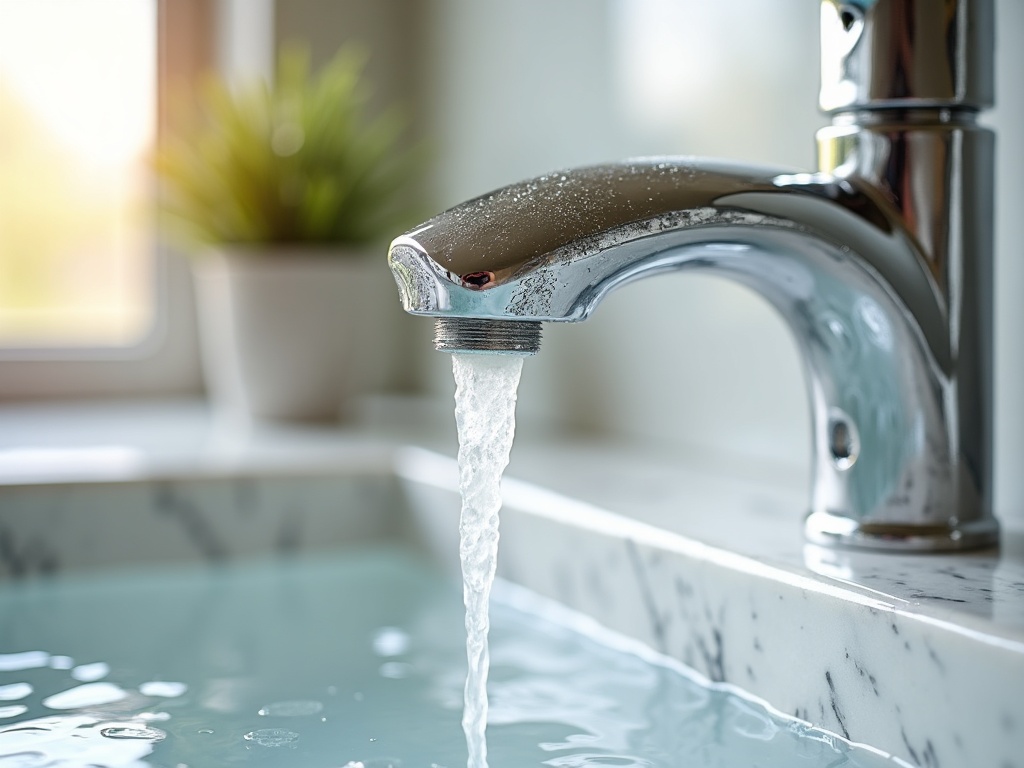
Canyon County is in the middle of a drought emergency that has stretched from spring into summer, with water allotments cut and some farmers leaving fields unplanted. Down in Nampa, a water main break made headlines this week. And now the City of Meridian is signaling a proposed 4.2% combined sewer and water rate increase this fall to fund aging infrastructure upgrades. The message from every direction is the same: Idaho's water infrastructure is under pressure.
What most homeowners miss is that this pressure problem does not stop at the city meter. Inside homes across Meridian, a slower, invisible version of the same story is playing out inside pipes and fixtures. If you have noticed your shower pressure dropping, your dishwasher taking longer to fill, or a general "weak" feel to your water, the cause may not be on the city's side of the line at all. It may be mineral scale built up inside your own plumbing.
What's Behind Meridian's Water Pressure Problems Right Now
The Canyon County drought emergency declared in April is still squeezing the region in August. Farmers have had water allotments reduced, and some irrigated fields were never planted this season because there simply was not enough water to go around. The CJ Strike Reservoir on the Snake River was closed to sturgeon fishing due to abnormally low dissolved oxygen levels, a sign that the Snake River arm is stressed. And the Nampa water main break this week is a reminder that old distribution infrastructure, already under strain from seasonal demand swings, does not always hold.
Meridian's proposed rate increase signals the city is taking infrastructure investment seriously. That is encouraging. But city mains and treatment facilities are only one part of the water delivery chain. Once water passes your meter, it is your plumbing, your pipes, and your fixtures. And in a city where the water is as hard as Meridian's, those pipes have likely been accumulating mineral deposits for years.
The infrastructure stress you are reading about in the news? Your home has its own version of it, hidden inside the walls.
Understanding Meridian's Hard Water Problem
Meridian consistently measures among the hardest water in the Treasure Valley, ranging from 12 to 17 grains per gallon (gpg) depending on the season and which part of the city you are in. For comparison, water above 10.5 gpg is classified as "very hard" by the USGS water hardness scale. Boise runs between 10 and 15 gpg; Meridian tends to land at the top of that range or above it.
The source is the Snake River Plain aquifer, which is the primary groundwater source for much of the Treasure Valley. As water moves through limestone and other sedimentary rock formations, it picks up dissolved calcium and magnesium. Surface water mixed in during high-flow seasons can moderate the hardness somewhat, but Meridian's geology keeps the mineral content consistently high.
Those calcium and magnesium ions are harmless to drink. The EPA does not regulate water hardness as a health contaminant. But they are not harmless to your pipes, your appliances, or your water pressure. When hard water is heated, or simply sits in pipes for any period of time, those minerals come out of solution and bond to surfaces as calcium carbonate scale.
How Scale Narrows Your Pipes and Drops Your Pressure
Think of scale buildup the way you would think of plaque in an artery. It does not clog all at once; it builds slowly over years, layer by layer, steadily narrowing the interior diameter of the pipe. Water pressure is a function of how much water can move through a given space. As the opening narrows, flow rate drops and pressure at the fixture falls.
Even a quarter inch of scale on the interior wall of a half-inch pipe represents a significant reduction in the usable pipe diameter, and in smaller lines like those feeding showerheads and appliances, even less than that makes a noticeable difference. In homes more than ten years old, this buildup has had time to accumulate in ways that newer construction has not yet experienced. If you bought your Meridian home in the early-to-mid 2010s or inherited an older property, the internal pipe conditions may be substantially different from what they looked like on day one.
Hot water lines scale faster and more aggressively than cold water lines. Heat accelerates mineral precipitation, which is why your water heater and the pipes connected to it tend to show the worst buildup first. This is also why many Meridian homeowners notice the pressure difference in the shower (hot side) before they notice it at a cold-water tap. If your hot water pressure feels noticeably weaker than your cold pressure at the same fixture, scale is almost certainly part of the story.
Signs Hard Water Is Affecting Your Water Pressure
Not every low-pressure problem is a hard water problem, so it is worth identifying the pattern before assuming scale is to blame. Here is what to look for:
- Whole-house pressure drop: If pressure is low at every fixture throughout the home, the issue is likely in a main line, the pressure reducing valve (PRV), or widespread scale in larger pipes. A single-fixture problem usually points to a clogged aerator or showerhead.
- Hot side consistently weaker than cold: This is one of the clearest signals that scale is the issue. Hot water lines are the first to accumulate mineral deposits in hard water conditions.
- White or yellowish crust on faucets, showerheads, and valve handles: That visible buildup on the exterior is a direct window into what is happening on the interior of your pipes. If you see heavy scale outside, there is scale inside too.
- Appliances taking longer to fill: Dishwashers, washing machines, and toilet tanks all draw water through the same plumbing. Slower fill cycles often mean restricted flow somewhere upstream.
- Temporary pressure drop after a water heater flush: If a plumber recently flushed your water heater and you noticed a brief pressure drop or flake-like debris, that is scale breaking loose. It confirms heavy mineral accumulation in your hot water system.
The combination of hard water (which Meridian has in abundance), an older home, and a hot water system that has never been serviced creates the conditions for significant scale-driven pressure loss. We see this pattern regularly in homes across North Meridian, near Ten Mile Road, and in older neighborhoods closer to downtown.
How to Diagnose the Root Cause
Before you call anyone or spend any money, you can do a few things yourself to narrow down the cause.
Check your pressure at the hose bib. A simple pressure gauge that threads onto an outdoor hose bib costs under $15 at any hardware store. Normal municipal pressure in Meridian runs between 50 and 60 PSI. If you read 40 or below, there is a real pressure problem. If you read 55 but your shower still feels weak, the restriction is almost certainly in a specific fixture or a branch line, not the main supply.
Test at multiple fixtures. Low pressure everywhere points to the PRV or main supply. Low pressure only at hot-side fixtures points to scale. Low pressure at one specific fixture suggests a clogged aerator or showerhead. Unscrew the showerhead and soak it overnight in white vinegar. If pressure improves dramatically the next morning, you confirmed a scale-clogged showerhead. If pressure is still poor with the showerhead removed, the restriction is in the pipe upstream.
Check your PRV. Most Meridian homes have a pressure reducing valve installed where the main water line enters. These valves have a lifespan of roughly 10 to 15 years. If yours is original to the house and the home is more than a decade old, a failing PRV is worth ruling out. A plumber can check this in minutes.
Schedule a free water test. We offer free water hardness, TDS, and mineral testing for Meridian homeowners. This gives you a precise measurement of your water's mineral content so you can make decisions based on actual data rather than guessing. You can book a test at truewateridaho.com/book/ or call us at (208) 968-2771.
What Meridian Homeowners Can Do
The right fix depends on how far along the buildup is and how long-term you want the solution to be.
Short-term: soak showerheads and aerators in vinegar. Remove them, submerge in white vinegar overnight, and scrub with a toothbrush. This dissolves light-to-moderate surface scale and is a free fix that can restore significant flow at individual fixtures. It does not address the pipes or appliances, but it buys time and confirms whether scale is the issue.
Medium-term: descale your water heater. A professional water heater flush and descale removes accumulated sediment from the tank and can partially restore hot water flow. In heavily scaled systems, this can feel like a noticeable improvement. Plan on doing this every one to two years in Meridian's water conditions if you do not have a softener. You can also read more about how hard water scale damages water heaters and what it costs to fix the problem versus prevent it.
Long-term: install a water softener. This is the only solution that addresses the root cause. A salt-based ion exchange water softener removes calcium and magnesium from the water before it enters your home's plumbing. Once soft water is flowing, scale stops forming. Existing scale in pipes slowly dissolves and flushes out. Appliances last longer, water heater efficiency improves, and fixtures stay clean. If you have already had scale-related pressure issues, a softener stops the accumulation from continuing. You can learn more about what proper softener maintenance looks like once you have one installed.
A quality water softener system in Meridian typically runs between $2,500 and $4,500 installed, depending on home size, water hardness level, and the system selected. That is a real number. We do not quote low and add on later. For most homeowners dealing with ongoing appliance damage, plumbing repairs, and bottled water costs, the math works out over a two-to-four year payback period.
Frequently Asked Questions
How do I know if my low water pressure is a city problem or a pipe problem inside my home?
Attach a pressure gauge to an outdoor hose bib before any indoor plumbing branches off. If the reading is below 50 PSI, contact the City of Meridian water department to check whether pressure is normal at your meter. If the gauge reads normal (50 to 60 PSI) but pressure inside the home is still poor, the restriction is in your internal plumbing, most likely a clogged fixture, a failing pressure reducing valve, or scale buildup in your pipes. A free water test from Water Softener Boise can help identify whether hard water mineral scale is contributing to the problem.
How hard is the water in Meridian, Idaho, and is it actually a problem?
Meridian water ranges from 12 to 17 grains per gallon, which classifies it as very hard to extremely hard by USGS standards. Anything above 10.5 gpg is considered very hard. The water is safe to drink, but over time the mineral content causes scale to accumulate inside pipes, water heaters, and appliances. That buildup reduces water pressure, lowers appliance efficiency, and shortens the lifespan of dishwashers, washing machines, and water heaters. It is a real and costly problem for Meridian homeowners who do not treat their water.
Will a water softener actually restore my water pressure?
In many cases, yes. A water softener stops new scale from forming immediately. Over weeks and months, the now-soft water moving through your pipes gradually dissolves existing scale deposits, slowly widening the interior diameter of scaled lines. In moderate cases, homeowners notice meaningful pressure improvement within the first few months. In severe cases, the most heavily scaled sections of pipe may need to be replaced, but the softener prevents the problem from continuing in the new lines. It is also the only long-term fix; vinegar soaks and descaling treatments are maintenance, not solutions.
How much does a water softener installation cost in Meridian?
A quality water softener system installed in a Meridian home typically runs between $2,500 and $4,500. The range depends on home size, your current water hardness level, and the system capacity required. We do not use low-ball quotes with add-on fees. We give you a real number upfront after a free water test to determine exactly what your home needs. Most Meridian homeowners see a payback period of two to four years once you account for extended appliance lifespans, reduced plumbing maintenance, and eliminated bottled water costs.
Is the drought affecting water quality or pressure in Meridian right now?
The Canyon County drought emergency is primarily impacting agricultural water allotments rather than municipal water delivery. Meridian's treated water supply has remained consistent for residential customers so far. That said, drought conditions can concentrate minerals in groundwater as aquifer levels drop, which can push hardness levels toward the higher end of Meridian's typical 12 to 17 gpg range. If you have noticed changes in your water's taste, smell, or the amount of scale buildup on fixtures this summer, a free water hardness test is worth doing. It takes about 30 minutes and gives you a current, accurate reading.
Get a Free Water Test in Meridian
If your water pressure has been dropping or you are seeing white buildup on your fixtures, do not guess at the cause. We will come to your home, test your water hardness, TDS, and mineral content, and tell you exactly what you are dealing with. No sales pressure, no obligation. Just accurate information so you can make the right call for your home.