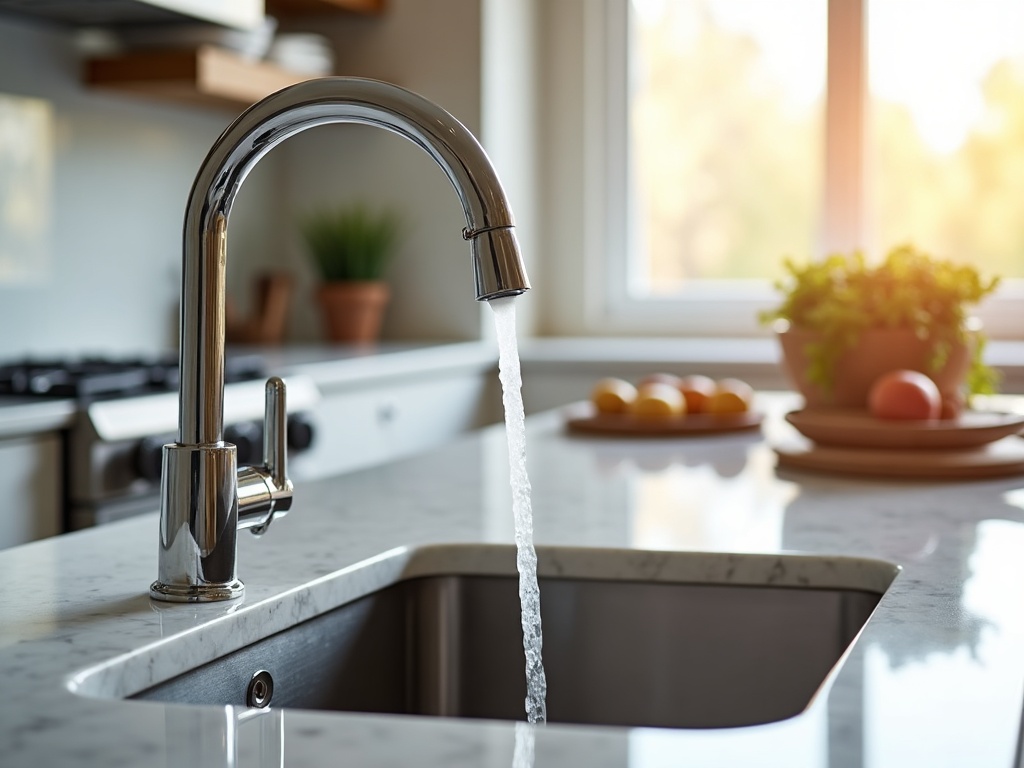
If you have filled a glass of water from your Meridian tap lately and caught a sharp, swimming-pool smell, you are not imagining it. That smell is real, it has a specific cause, and this summer it is stronger than usual. We want to break down exactly what is happening in Meridian's water system, why the 2026 Idaho drought is making it more noticeable, and what you can actually do about it.
Why Meridian Water Smells Like Chlorine (The Short Answer)
The City of Meridian is required by federal law to disinfect your drinking water before it reaches your tap. Disinfection prevents bacterial contamination in the distribution system, which stretches hundreds of miles of pipe across the city. Without it, pathogens could multiply between the wellhead and your kitchen faucet.
The disinfectant Meridian uses is not plain chlorine. It is chloramine, a compound formed by combining chlorine with a small amount of ammonia. Chloramine stays stable over longer pipe distances than free chlorine, which is why water utilities serving large distribution networks prefer it. The EPA allows up to 4 mg/L of chloramine in treated drinking water. Meridian's typical residual at the tap runs between 0.5 and 1.2 mg/L, well within legal limits.
The smell is most noticeable right at the faucet and in a hot shower, where heat and pressure release the chloramine into the air. It is intentional, it is legal, and it is a sign the system is working. But that does not mean you have to live with it.
What Meridian's Water System Actually Is
One of the most common misconceptions we hear from Meridian homeowners is that their water is blended with Boise River surface water. It is not. Meridian draws 100 percent of its supply from groundwater, pulling from 26 production wells that tap three separate underground aquifers beneath the Treasure Valley.
This is a meaningfully different system from the City of Boise, which blends roughly 70 percent groundwater with 30 percent Boise River surface water. Surface water carries more organic matter, which reacts more readily with disinfectants. Meridian's all-groundwater system generally produces cleaner source water, but the disinfectant requirement still applies.
Meridian's groundwater also comes with a hardness level of approximately 8.4 to 12 grains per gallon (gpg). That puts it squarely in hard water territory. Hard water and chloramine together are a particularly noticeable combination. The mineral content heightens your perception of the disinfectant taste and odor in ways that neither issue would produce on its own. If you feel like Meridian water tastes "off" in a way that is hard to describe, that is the likely explanation. You can read more about Meridian's hardness specifically in our article on Meridian Idaho water hardness levels.
The Drought Connection: Why It's Worse in Summer 2026
This summer the smell is particularly sharp, and the reason runs deeper than seasonal heat. In April 2026, Idaho declared a drought emergency. Approximately 81 percent of the state is currently in drought conditions, and the Snake River is sitting 4 to 5 feet below normal levels. The same water shortage forcing Treasure Valley farmers to accept reduced allotments and absorb losses in the six figures is also shaping how municipal water systems operate.
Here is the connection: when drought drops aquifer recharge rates and demand climbs in summer heat, water tends to move more slowly through distribution systems. In slower-moving water, disinfectant residual degrades faster. To stay ahead of bacterial risk and remain compliant with EPA endpoint requirements, utilities maintain or modestly raise disinfectant dosage at the source.
Homeowners at the ends of distribution lines, further from the treatment point, often notice the sharpest increase in smell. If your neighborhood is toward the outer edges of the Meridian service area, your tap may be drawing water that has traveled further and received a stronger initial dose to compensate for the longer residence time.
This is not a water quality failure. It is a predictable response to drought conditions. But it is a real reason the smell you are noticing in August 2026 is more pronounced than it was two summers ago.
Is the Chlorine Smell a Health Risk?
For most people, Meridian's tap water at its current disinfectant levels is safe to drink. The EPA's maximum contaminant level for chloramine is 4 mg/L, and Meridian runs well under that threshold in typical conditions.
The more nuanced concern is disinfection byproducts (DBPs). When chlorine or chloramine reacts with naturally occurring organic matter in water, it can form compounds like trihalomethanes (THMs) and haloacetic acids. Long-term exposure to elevated DBP levels has been associated with increased health risks in epidemiological research. The Environmental Working Group (EWG) has flagged Meridian water for testing above their advocacy thresholds for chloroform and trihalomethanes. It is important to note these are not EPA violations, but EWG's thresholds are significantly stricter than federal standards.
There are specific groups for whom chloramine removal is not optional: kidney dialysis patients (dialysis machines must use water with no chloramine), fish and reptile owners (chloramine is toxic to aquatic life even at tap levels), and immunocompromised individuals who may have heightened sensitivity. For these households, standard pitcher filtration is not sufficient.
For most healthy adults, the risk is low at current levels. But the sensory nuisance is real, and the filter gap we cover next is something almost every Meridian homeowner gets wrong.
Why Standard Filters Don't Fully Fix the Chloramine Smell
This is where most Meridian homeowners run into a wall. They buy a Brita or similar carbon pitcher filter, notice minor improvement, and assume that is as good as it gets. The issue is that standard activated carbon is very effective at removing free chlorine, but it performs poorly against chloramine.
Chloramine is a more stable molecule. Breaking it down requires catalytic carbon media (sometimes called catalytic activated carbon), which uses a different surface chemistry than standard carbon block. Catalytic carbon also requires adequate contact time with the water to work effectively. A pitcher filter that passes water through a small carbon block in seconds does not provide either requirement.
Reverse osmosis (RO) is the other reliable method. RO membranes physically reject chloramine molecules along with other dissolved solids. For households that want near-complete removal at the kitchen tap, an under-sink RO system is the most thorough option. You can compare the two approaches in detail in our article on reverse osmosis vs. water softeners for Idaho homes.
The shower smell is its own problem. In a hot shower, chloramine volatilizes in the steam and you inhale it directly. A faucet or pitcher filter does nothing for that exposure. Standard shower filters sold at hardware stores are also typically not rated for chloramine removal; they are designed for free chlorine. The only reliable solution for shower exposure is a whole-house catalytic carbon filtration system installed at the point of entry, so every fixture in the house receives treated water.
What Meridian Homeowners Can Do Right Now
If you want to reduce the chlorine smell at your tap today without buying equipment, there are two things that help marginally. First, fill a pitcher and let it sit uncovered for 30 minutes. Free chlorine will off-gas into the air. This does less for chloramine than for free chlorine, but it reduces the overall chemical load slightly. Second, run your cold tap for 30 seconds each morning before drinking. Water that sat overnight in copper or galvanized pipes picks up a stronger smell and taste, and flushing it out makes a noticeable difference.
For a real improvement at the kitchen tap, look for a pitcher or countertop filter specifically rated for chloramine removal with catalytic carbon media. Read the product spec sheet, not just the marketing description. If it says "removes chlorine" without specifying chloramine, assume it will not solve your problem.
For long-term, whole-home improvement:
- A whole-house catalytic carbon filter installed at the main line handles chloramine at every faucet and shower in the home.
- An under-sink RO system at the kitchen tap provides near-complete removal for drinking and cooking water.
- For shower exposure specifically, there is no shortcut. Only a whole-house system addresses what you breathe in the shower.
Every home's situation is a little different depending on which part of the Meridian distribution system you are on, your pipe age, and your water use patterns. We offer free water tests to Meridian and Treasure Valley homeowners so we can assess your specific situation rather than give you a generic answer.
When to Call the City vs. a Water Professional
Not every chlorine smell requires a water treatment professional. Some situations call for a call to Meridian Public Works at 208-888-5242 first.
Contact the city if you notice a sudden, intense chlorine smell that appeared overnight, if your water has changed color (brown, yellow, or cloudy), or if you experience a significant pressure drop. These can indicate a water main break, a hydrant flush event, or an emergency dosing response in your distribution zone. Hydrant flushing in particular temporarily spikes disinfectant levels at nearby taps. The smell typically resolves within a few hours as fresh water moves through the system. The city's water FAQ at meridiancity.org is a useful first stop for utility-related questions.
Call a water treatment professional if the smell is persistent, has been getting gradually worse over months, or if someone in your household has a health condition that makes chloramine exposure a real concern. Those are signs the issue is at your point of use, not a temporary distribution event. The Idaho DEQ drinking water program also publishes annual water quality reports for municipalities across the state if you want to review the most recent data for your area.
Not sure what's in your Meridian water?
We test for chloramine, hardness, DBPs, and more. Free for Treasure Valley homeowners.
Frequently Asked Questions
Is it safe to drink Meridian water if it smells like chlorine?
Does Meridian Idaho use chlorine or chloramine to treat water?
Why does my Meridian water smell stronger in summer than winter?
Can a Brita filter remove the chlorine smell from Meridian tap water?
Why does my shower smell like chlorine even after I installed a faucet filter?
Get a Free Water Test for Your Meridian Home
We will test your specific tap water for chloramine levels, hardness, and disinfection byproducts, and give you a straight answer on what filtration actually makes sense for your home. No sales pitch, just data.