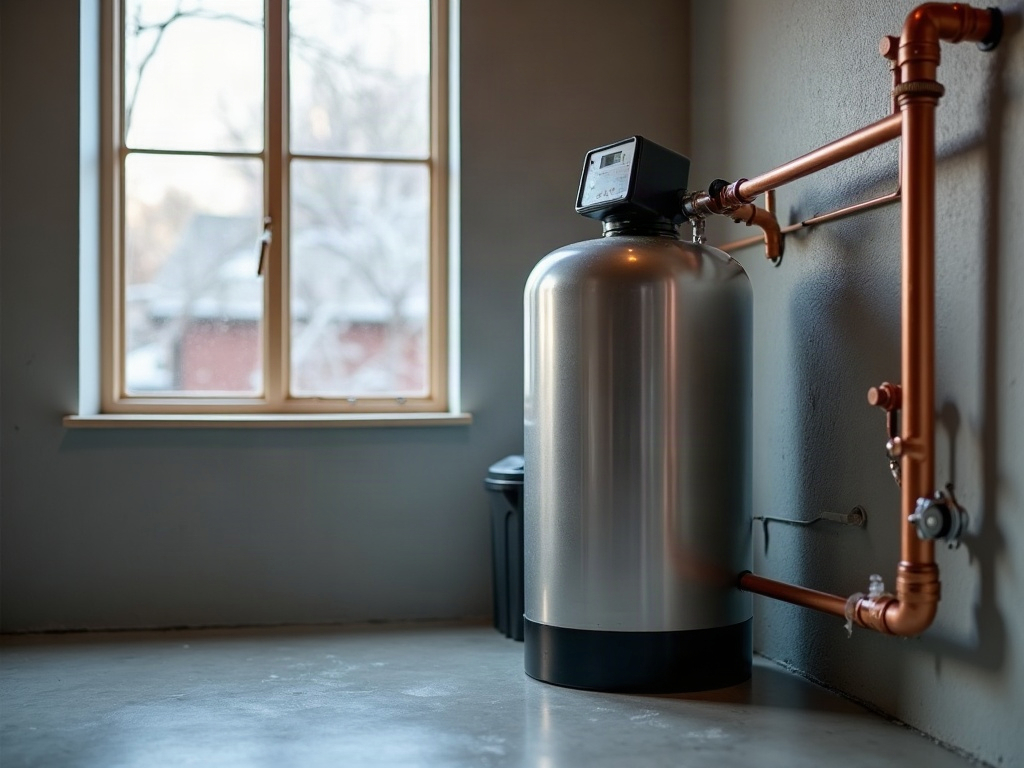
Most homeowners think their water hardness is fixed year-round. That assumption costs real money every winter in the Treasure Valley.
Here is what is actually happening beneath your faucets: Boise City Council is currently debating the Eckert Bridge project, which would preserve floodplains and wetlands alongside the Boise River. That debate highlights something bigger about the city's seasonal relationship with river water. As winter approaches and river flows drop, Boise and Meridian utilities shift away from that softer surface water and draw more heavily from deep groundwater wells. Those wells run significantly harder than the river. Your water softener was likely calibrated in summer. It was not designed for what is coming.
On top of that, Boise is currently under Stage 2 Summer Conservation with the Boise River Flow Trigger active, limiting outdoor irrigation through December 31, 2026. Low river flows mean more groundwater reliance. And this winter, with the Nampa-Meridian Irrigation District shutting off agricultural deliveries on September 28, 2026, that reliance starts earlier than normal.
If you have a water softener and you have not touched the settings since spring, you are about to watch it lose the battle against winter hardness. Here is everything you need to know.
Why Idaho Water Gets Harder Every Winter
Treasure Valley utilities operate a blended water supply system. During summer, when the Boise River runs strong from snowmelt and upstream flows, utilities pull a significant share of their supply from surface water. The Boise River runs relatively soft, typically in the 10-15 grains per gallon (gpg) range for the Boise service area. That blend holds your tap water hardness in a manageable range through the warmer months.
Winter changes the equation. River flows drop. The Boise River Flow Trigger that activates Stage 2 conservation is a symptom of exactly this shift: less surface water available means utilities draw more from the Eastern Snake River Plain Aquifer. That aquifer percolates through limestone, basalt, and volcanic deposits before it reaches your tap. The result is water that runs 17-22 gpg in winter, compared to the summer blend sitting around 10-15 gpg in Boise and 12-17 gpg in Meridian.
Meridian customers feel this more sharply because Meridian's municipal supply is more groundwater-dependent year-round. During winter peaks, Meridian can see hardness approach 20-22 gpg. Eagle and Nampa customers experience similar patterns.
The math is straightforward: a softener calibrated for 13 gpg summer water suddenly faces 19-20 gpg winter water. Without adjustment, the unit regenerates on the wrong schedule, uses salt inefficiently, and lets hard water slip through to your pipes and appliances.
What You Will Actually Notice in Your Home
Hard water announces itself in ways that look like maintenance problems rather than water problems. Here is what to watch for as Treasure Valley hardness climbs this fall:
- Scale builds faster on faucets and showerheads. Calcium deposits that used to take months to form start appearing in weeks when hardness jumps from 13 to 20 gpg.
- Soap and shampoo lather less. Calcium ions in hard water bind with soap molecules before they can foam. You end up using more product to get the same result, and the soap curd leaves a film on your skin and hair.
- Dishes look cloudier and more spotted. Dishwashers running hard water leave mineral deposits that no amount of rinse aid fully corrects. The dishes are clean, but they look dirty.
- Laundry feels stiffer. Mineral deposits lock into fabric fibers. Towels that feel soft in October start feeling stiff and rough by January if the softener falls behind.
- Water heater efficiency drops. EPA data shows that just 1/16 inch of scale on a heating element reduces efficiency by 12%. In a hard Idaho winter without softener adjustment, scale accumulates at an accelerated rate across the full season.
None of these problems scream "water hardness." They look like old towels, a faucet that needs cleaning, a dishwasher that needs repair. The underlying cause is water that your softener is no longer treating effectively.
What to Change on Your Water Softener This Fall
The adjustments are not complicated, but they are time-sensitive. Here is what we recommend for Treasure Valley households before October hardness peaks:
1. Update the hardness setting on your control head. Most digital softeners from the last decade have a programmable hardness number in the settings menu. If your current setting reflects a summer water test at 12-14 gpg, bump it up to 18-20 gpg to reflect the winter aquifer supply. Your owner's manual will walk you through the menu. If you cannot find the manual, the brand name plus "hardness setting" in a search usually gets you there in two minutes.
2. Increase regeneration frequency for timer-based units. If your softener regenerates on a fixed schedule rather than by water usage, shift from every 5 days to every 3-4 days during winter months. More regeneration keeps the resin bed fresh and prevents hardness breakthrough.
3. Check salt levels monthly. A softener working harder against winter water depletes salt faster. A brine tank that runs dry for even a day passes hard water through to your entire home. Monthly checks from October through March are a simple habit that protects everything downstream.
4. Watch for salt bridging in the brine tank. Cold utility rooms in Idaho winter increase the risk of salt bridging, where a hard crust forms in the brine tank and blocks salt from dissolving into the water. If your softener seems to regenerate but water is still hard, check for a bridge by pressing gently on the salt surface with a broom handle.
5. Check resin health if your unit is 7-10 years old. Resin beads break down over time. An older softener that worked fine in summer may not have the capacity to handle winter hardness. If your unit is approaching the end of its service life and you start seeing hardness breakthrough in November, it may be time to evaluate rather than keep patching.
How to Know If Your Winter Water Is Actually Harder
You do not have to guess. We offer a free water test for Treasure Valley homeowners at no charge and no obligation. We test both the incoming hard water side and the outgoing soft water side of your softener.
That two-point test tells you exactly how hard your source water currently is, how much your softener is actually removing, and whether the unit is keeping up. If hardness on the soft side is above 1 gpg, the softener is not fully treating the water. Most people are surprised to discover their softener was passing 3-5 gpg of hardness through during peak winter months.
We also test for iron and manganese, which contribute to staining and buildup separately from hardness. Iron above 0.3 ppm can overwhelm a standard softener's ability to regenerate cleanly, and Treasure Valley well water often carries elevated iron levels during winter aquifer draws.
The free test takes about 20 minutes and you leave with the actual numbers. You can also try basic hardness test strips from a hardware store for a rough reading between professional tests.
What Happens If You Skip This Adjustment
The cost is real and measurable. Hard water damage costs Treasure Valley households an estimated $700-900 per year in accelerated appliance wear, increased energy bills, and higher soap and detergent consumption. That number rises in winters with higher-than-average hardness.
Scale accumulation on water heater elements builds across the full winter season. A 12% efficiency drop per 1/16 inch of scale does not happen overnight, but by March, a heater that went the whole winter without softener protection is running measurably less efficiently and has mineral deposits that are harder to remove than if they had been prevented.
Shortened appliance lifespan is the bigger long-term cost. A water heater that should last 12-15 years may need replacement at 8-10 years in hard water conditions. Dishwashers, washing machines, and whole-house fixtures all carry the same calculus. The softener adjustment takes 10 minutes. The appliance replacement takes 10 hours and several thousand dollars.
Idaho Drought and Your Tap Water This Winter
This year's hardness spike may be more pronounced than a typical winter. Idaho is heading into its third consecutive year of below-average snowpack, and the Nampa-Meridian Irrigation District is shutting off agricultural deliveries on September 28, 2026, weeks earlier than in a normal year.
That early shutoff matters because agricultural irrigation recharges the shallow aquifer. When irrigation stops earlier, the recharge cycle shortens, and the shallow groundwater that utilities draw from for drinking water tends to concentrate minerals at higher levels. Reduced recharge combined with higher winter demand creates conditions for a more pronounced hardness spike than the historical average.
The Idaho Department of Water Resources tracks groundwater levels across the Eastern Snake River Plain Aquifer, and the trend lines heading into fall 2026 are consistent with elevated mineral concentrations through winter. This is not a crisis, it is a seasonal pattern with a predictable fix. But the fix requires action before October, not after you start noticing the effects.
For reference, our internal data from free water tests across Meridian and Boise over the past three winters shows hardness regularly climbing 4-6 gpg higher than summer baseline by December. In a drought year like 2026, we expect that climb to be at the higher end of that range.
For more detail on preparing your system before the season changes, see our guide to Water Softener Winter Prep in Boise. And if you want to understand what long-term hard water does to your water heater specifically, read our breakdown of Hard Water Scale in Water Heaters.
Get a Free Water Test Before Winter Hits
We test both sides of your softener, show you the actual numbers, and tell you exactly what adjustments to make. No purchase required and no pressure. Serving Boise, Meridian, Eagle, Nampa, and the full Treasure Valley.