Every September in Boise and Meridian, the same thing happens. Overnight temperatures drop into the 40s, and people flip their thermostats from cool to heat for the first time. Within a day or two, the furnace kicks on and the whole-home humidifier follows. By the second week of October, something else shows up too: a film of white powder on the TV stand, the countertops, the coffee table. People assume it is dust from the forced-air system. It is not.
Turning on your furnace is the best water quality test your home gets all year. The humidifier vaporizes water and pushes it through the air. If that water is hard, which it is at 10-15 grains per gallon (gpg) in Boise and 12-17 gpg in Meridian, the minerals stay behind and go everywhere. That white film is calcium and magnesium. Your humidifier is not malfunctioning. It is just doing exactly what it was designed to do with water it was never meant to handle.
This is a particularly common problem during fall HVAC startup week in the Treasure Valley. Eagle, Meridian, and Boise homeowners are all flipping systems right now, and the humidifiers that sat dormant all summer are back in action. For the next five to six months, they will run through hundreds of gallons of hard water. Here is what that costs you, and what you can do about it.
Why Humidifiers and Hard Water Don't Mix
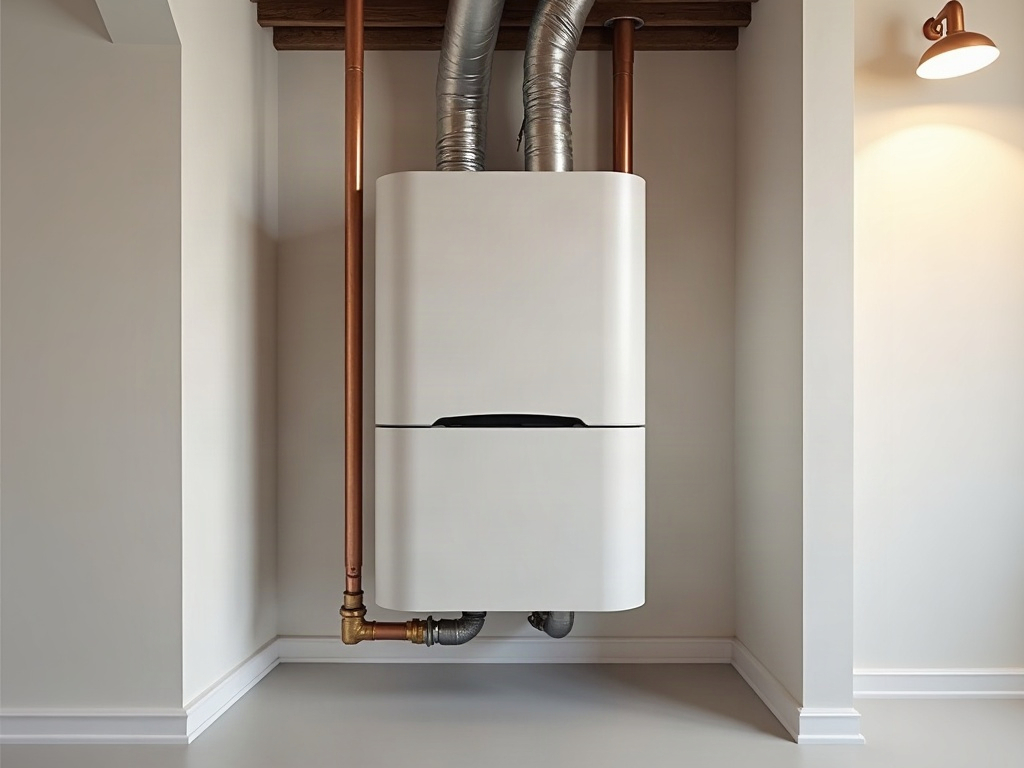
A whole-home humidifier works by pulling water from your supply line and evaporating it through an evaporator pad or drum. Flow-through units let water run across the pad continuously; drum units recirculate it. Either way, the water makes direct contact with heating elements, pads, and internal housing for extended periods.
Hard water carries dissolved calcium and magnesium carbonate. When water evaporates, those minerals do not evaporate with it. They stay behind, crystallizing into scale on every surface they touch. In a humidifier running 8 to 12 hours a day through an Idaho winter, that adds up fast.
At 10-17 gpg, Treasure Valley water is nearly double the 7 gpg threshold that defines "hard water." You can read more about what that means for your home in our 2026 Boise water quality report. For a humidifier, it means visible scale buildup within weeks, not years.
The White Dust Explained
The white film appearing on your furniture is calcium carbonate. It is the same mineral that forms limescale on your showerhead and your kettle. When a humidifier vaporizes hard water, calcium particles become suspended in the air as fine particles, then settle on every horizontal surface in the rooms the humidifier serves.
This is especially noticeable with ultrasonic humidifiers, which use high-frequency vibrations to create a fine mist rather than heat. The mist carries dissolved minerals directly into the air as droplets. When those droplets evaporate, the mineral residue stays behind on furniture, electronics, floors, and in some cases your lungs.
Evaporative whole-home units attached to your HVAC produce less airborne calcium than ultrasonic models, but they do deposit scale heavily on the evaporator pad itself, which leads to the next problem.
How Scale Destroys Your Humidifier Pad
The evaporator pad in your whole-home humidifier is designed to be porous, allowing water to spread across a wide surface area so it can evaporate efficiently. When scale builds up on the pad fibers, those pores close off. A pad that is even 30% clogged with mineral deposits can lose half its humidification capacity.
Manufacturers recommend replacing the pad annually. That recommendation assumes average water conditions. In Boise and Meridian, with water running 10-17 gpg, many homeowners find their pad is completely sealed with scale by mid-winter, sometimes within four to six weeks of the heating season. Replacing it once before the season starts and once in January is not unusual without a softener.
Evaporator pads typically run $15 to $40 each, depending on your unit. That is $30 to $80 per season just in pad replacements, plus the labor cost if you hire an HVAC technician to do the swap. Multiply that across 10 to 15 years of homeownership and you are looking at several hundred dollars in entirely preventable maintenance. The damage compounds: scale also builds up in the water distribution tray, the solenoid valve, and the drain line. Any of those components failing means a service call, not just a pad swap.
For more on how hard water accelerates appliance wear beyond just the humidifier, our appliance damage cost article breaks down the numbers by category.
The Bacteria Problem Nobody Mentions
Scale creates a secondary problem that is not visible and gets almost no attention in home maintenance content: standing water and mineral buildup inside a humidifier creates ideal conditions for bacterial growth.
Most whole-home humidifiers have a drain line that removes excess water continuously. When scale partially blocks the drain or the water distribution tray, water sits in the unit longer than it should. Warm, stagnant water with mineral deposits on every surface is where Legionella, mold spores, and other pathogens thrive. These get distributed through your HVAC system and into the air your family breathes all winter.
This is not a scare tactic. It is standard HVAC maintenance guidance. Most major humidifier manufacturers include language in their installation guides about the importance of keeping internal surfaces free of scale and standing water. With hard water, that maintenance burden is significantly higher because scale accumulates faster and traps biofilm in its surface irregularities.
A water softener eliminates the calcium and magnesium that make scale possible. No scale means smooth internal surfaces that resist biofilm attachment, faster drainage, and a unit that can actually be cleaned effectively.
How a Water Softener Fixes This for Good
A whole-home water softener installs on the main supply line, typically near your water heater in the utility room. It exchanges calcium and magnesium ions for sodium ions through a resin bed, producing soft water that flows to every fixture and appliance in the house, including the humidifier supply line.
With soft water going into your humidifier:
- No scale forms on the evaporator pad, extending its life to a full season or longer
- Internal components stay clean, reducing service calls and extending unit lifespan
- No white dust settles on furniture or electronics
- Standing water drains cleanly rather than sitting in a scaled tray
- Your HVAC technician has less to clean during annual maintenance
The Water Softener Boise team installs systems sized specifically for Boise and Meridian water conditions. We start with a free water test so you know exactly what you are working with before committing to anything. If your hardness is on the higher end of the Meridian range (14-17 gpg), we size the system accordingly to regenerate at the right frequency for your household demand.
Stop Replacing Humidifier Pads Every Winter
A free water test takes 30 minutes and tells you exactly what your water is doing to your home. We serve Boise, Meridian, Eagle, Nampa, and the surrounding Treasure Valley.