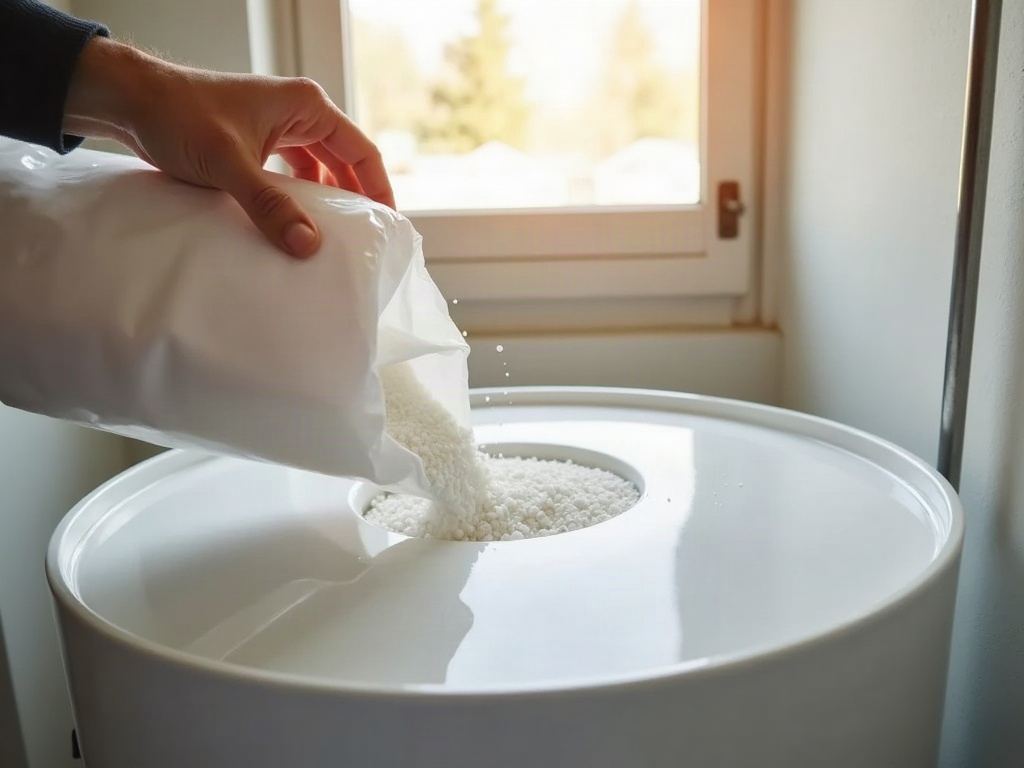
How Often to Add Salt to a Water Softener in Boise
Here is a number that should change how you manage your softener: national guides are built around 7 to 10 grains per gallon. Boise-area water runs 10 to 15 gpg. That gap means the standard "add salt every two months" advice leaves a Treasure Valley softener salt-starved in three to four weeks, not eight. Your softener is working harder than anyone in Denver or Portland ever needed to worry about.
Caldwell officials recently told KIVI TV that delivering water to one of Idaho's fastest-growing communities is their number one infrastructure challenge, with pipes and treatment plants barely keeping pace with growth. What city engineers won't mention: municipal systems address supply, not hardness. As more wells draw from the same Treasure Valley aquifer and drought concentrates minerals, Boise-area water is measurably harder in 2026 than it was five years ago. Your softener is the only thing standing between that mineral load and your pipes. But it only does the job if the brine tank stays properly salted.
What Is Boise's Actual Water Hardness?
The USGS defines "very hard" water at 10.5 grains per gallon. Boise city water sits at 10 to 13 gpg depending on the season and which aquifer source is feeding your zone. That puts most Boise households right at or above the very hard threshold year-round.
Meridian runs 7 to 8.4 gpg on average, but that number is deceptive. Some Meridian wells, particularly in newer subdivisions drawing from deeper aquifer layers, test at 12 to 17 gpg. If you are on city water in Meridian and your softener seems to be working overtime, your zone may be running harder than the city average suggests.
Nampa, Caldwell, Eagle, and Star can reach 14 to 17 gpg in certain zones, especially during dry years when the aquifer level drops and minerals concentrate. The 2026 drought has pushed hardness readings higher across the Treasure Valley compared to five-year averages.
At very hard levels, a properly set softener regenerates every 5 to 7 days instead of the 10 to 14 days a national guide might suggest. More regeneration cycles mean more salt consumed per month. This is not a flaw in your equipment; it is your equipment doing exactly what Boise water demands of it.
How Salt Usage Actually Calculates at Boise Hardness
The math is straightforward once you plug in local numbers. Regeneration frequency is determined by: hardness (gpg) multiplied by daily water use (gallons), divided by your softener's grain capacity. A family of four in Boise using roughly 300 gallons per day with 12 gpg hardness burns through 3,600 grains daily. A 32,000-grain softener hits its capacity in about nine days. Factor in a 20 percent safety buffer and that unit regenerates every six to seven days.
Salt per cycle varies significantly by unit efficiency. An older or lower-efficiency unit can consume 15 to 20 pounds of salt per regeneration cycle. A high-efficiency unit with demand-initiated regeneration uses 8 to 12 pounds per cycle. That difference adds up fast at Boise hardness levels.
Working the numbers out to monthly salt consumption: at 10 to 16 pounds per week, a Boise household goes through roughly one 40-pound bag every two and a half to four weeks. National guides say one bag per month. In Boise, that is under-salting. Running low on salt does not just mean softer water disappears; it means the resin bed starts passing hard water and scale accumulates immediately.
If you want a more precise number for your home, check our water softener buying guide for Boise which walks through sizing calculations for different household sizes and hardness levels.
The Simple Rule: When to Check and When to Fill
Forget the national rule of checking once a month. In the Treasure Valley, check your brine tank every two weeks. Open the lid, look inside, and use these thresholds:
- Salt below one-third of the tank depth: add a bag now, not next week.
- Salt level below four inches from the bottom: add a bag.
- Salt above two-thirds of the tank capacity: do not add more. Overfilling causes bridging (more on that below).
- Salt should sit three to four inches above the water line at minimum.
For most Boise households, the practical starting point is to mark your calendar every three weeks and do a quick check. Some households will burn through salt faster depending on household size, water use habits, and whether you are on city or well water. After two or three monthly cycles you will know your actual rhythm and can adjust from there.
Salt Bridge: The Hidden Failure Mode Idaho Homeowners Miss
A salt bridge is one of the most common service calls we see across Nampa, Meridian, and Eagle. It happens when salt grains fuse into a hardened crust spanning the width of the brine tank, leaving a void of air between the crust and the water below. From the top, it looks like the tank is still full of salt. Meanwhile, the water cannot reach the salt to form brine, and your softener runs regeneration cycles with plain water instead of brine. Your water goes hard and you have no idea why.
Idaho's humidity swings accelerate bridging. Dry winters followed by humid summer irrigation seasons cause salt to absorb moisture and then dry out repeatedly, which is the exact cycle that causes crystals to bond together into a crust.
Test for a bridge: take a broom handle and press it straight down through the salt. If you feel a crust and then a hollow void underneath, you have a bridge. Break it up by working the handle through the crust until it crumbles down to the water. Do not pour hot water into the tank to melt it; thermal shock can crack a plastic tank.
Prevention is simpler than the fix. Use pellet salt instead of rock salt, never fill above two-thirds capacity, and check every two weeks so you catch a developing bridge before it seals completely.
Does Boise Tap Water vs. Well Water Change the Schedule?
City water in Boise and Meridian is blended and treated before it reaches your tap, which means hardness is relatively consistent season to season. You can set a regular salt schedule and trust it to stay accurate most of the year.
Well water in Eagle, Star, Kuna, and rural Caldwell is a different story. Aquifer depth, seasonal recharge rates, and local geology all affect hardness readings, and those readings change. During drought years like 2026, well water users across the Treasure Valley have seen hardness measurements climb as aquifer levels drop and minerals concentrate. USGS monitoring of Treasure Valley groundwater has documented measurable hardness increases in recent years tied to drought and increased agricultural draw.
Well water in some zones can spike above 20 gpg during dry summers. At that level, a softener sized for 12 gpg will regenerate constantly and still struggle to keep up.
If you are on well water, we recommend testing every six months, once in spring and once before winter. A basic well water test from the EPA's recommended lab list covers hardness along with other key parameters. A $15 test strip kit from any hardware store works fine for tracking hardness between full tests. Recalibrate your softener's regeneration settings each time you test if hardness has shifted by more than two gpg.
What Happens When You Run Low on Salt
This is the part worth reading twice. Very hard water, 10 to 15 gpg, deposits roughly 1.5 pounds of scale inside your pipes per year. That scale does not just sit there; it narrows pipe diameter, reduces flow, and creates rough surfaces that collect more scale over time. Once scale starts building in a water heater, efficiency drops 22 to 30 percent according to the U.S. Department of Energy. That loss shows up on your gas or electric bill every single month until the heater is replaced or descaled.
Dishwashers and washing machines are similarly affected. Scale inside heating elements causes appliances to work harder and fail sooner. A water heater that should last 12 years often lasts 7 to 8 years in an unsoftened hard-water home.
The effects on skin and hair are faster. Within two to three weeks of a softener running out of salt, most people notice dry skin, dull hair, and more soap or shampoo needed to lather properly. Hard water does not rinse soap cleanly; it leaves a mineral film on everything it touches, including you.
A 40-pound bag of softener salt costs $7 to $10 at Home Depot or Costco. A water heater replacement in the Boise area runs $1,200 to $1,800 installed. The math on staying stocked with salt is not complicated. For a full picture of maintenance tasks that protect your investment, see our guide to water softener maintenance in Boise.
Best Salt Type for Treasure Valley Conditions
At Boise hardness levels, salt type matters more than it does in softer-water markets. Here is how the options compare for Treasure Valley conditions:
- Pellet salt (evaporated): This is what we recommend for Boise. It is the purest form of softener salt, leaves the least residue in the brine tank, and reduces bridging risk. It is the right call when your softener is regenerating every five to seven days.
- Solar crystals: Slightly cheaper and works fine, but leaves more residue in the brine tank over time. Requires cleaning the tank more often. Acceptable if cost is the main concern.
- Rock salt: The cheapest option and not recommended at 10 gpg and above. The high mineral impurities accumulate quickly in the brine tank and can clog the brine valve at high regeneration frequencies.
- Potassium chloride: Sodium-free alternative that works the same as salt in the regeneration process. Costs three to four times as much as pellet salt. Worth considering if a household member is on a sodium-restricted diet and objects to even trace sodium in the water, but there is no performance advantage at Treasure Valley hardness levels.
For local sourcing, Home Depot and Costco both carry 40-pound bags of pellet salt for $7 to $10. Buying two bags at a time keeps you from running low between check-in dates.
Frequently Asked Questions
How often should I add salt to my water softener in Boise specifically?
For most Boise households on city water with 10 to 13 gpg hardness, plan to add a 40-pound bag of salt every two and a half to four weeks. Check the brine tank every two weeks and add a bag any time the salt drops below one-third of the tank capacity or below four inches from the bottom. Do not rely on national guides that say once a month; that schedule is built for softer water markets and will leave your softener under-salted at Boise hardness levels.
How do I know if my water softener is actually running out of salt vs. just looking low?
The clearest sign is water that suddenly feels hard again: soap that does not lather well, spots on dishes and glassware, and a different feel on skin and hair after showering. You can also check your softener's bypass valve; run a glass of water and rub a drop between your fingers. Soft water feels slightly slippery; hard water feels flat. Inside the brine tank, if you can see the water surface below the salt level, add a bag. If the salt looks full but your water feels hard, test for a salt bridge by pressing a broom handle down through the salt.
What is a salt bridge and how do I fix one in my brine tank?
A salt bridge is a hardened crust of fused salt that forms across the width of the brine tank, leaving a void between the crust and the water below. It looks like the tank is full of salt, but water cannot reach the salt to dissolve into brine. Your softener runs regeneration cycles with plain water and your water goes hard with no obvious explanation. To fix it, take a broom handle and push it straight down through the salt until you break through the crust. Work the handle around until the crust crumbles down to the water level. Do not use hot water to melt it; thermal shock can crack the tank. To prevent bridges, use pellet salt, never fill above two-thirds capacity, and check every two weeks.
Does it matter what type of salt I use in my water softener in Idaho?
Yes, at Treasure Valley hardness levels it matters more than in softer-water regions. We recommend pellet salt (evaporated) for Boise-area homes. It is the purest option, leaves the least residue in the brine tank, and reduces bridging risk, which is important when your softener is regenerating every five to seven days. Rock salt is the cheapest option but not recommended at 10 gpg and above because the mineral impurities accumulate quickly at high regeneration frequencies. Solar crystals are a reasonable middle ground. Potassium chloride works the same as salt but costs three to four times more; use it only if there is a medical reason to reduce sodium in the water.
My well water hardness seems to change. Should I adjust my salt schedule seasonally?
Yes. Well water in Eagle, Star, Kuna, and rural Caldwell varies with aquifer depth, drought conditions, and seasonal recharge. During dry years like 2026, hardness in some Treasure Valley wells has climbed measurably as aquifer levels drop and minerals concentrate. We recommend testing your well water twice a year, once in spring and once in fall. A basic hardness test strip ($15 at any hardware store) is enough to track whether your hardness is shifting. If your reading has changed by more than two gpg since you last set your softener, recalibrate the regeneration frequency in your softener's settings. A softener programmed for 12 gpg but running against 18 gpg well water will regenerate too infrequently and pass hard water between cycles.
Not Sure What Your Boise Water Is Actually Doing?
We offer free water tests across the Treasure Valley. Bring us your numbers and we will tell you exactly what regeneration schedule and salt type your home needs. No guessing, no national averages.