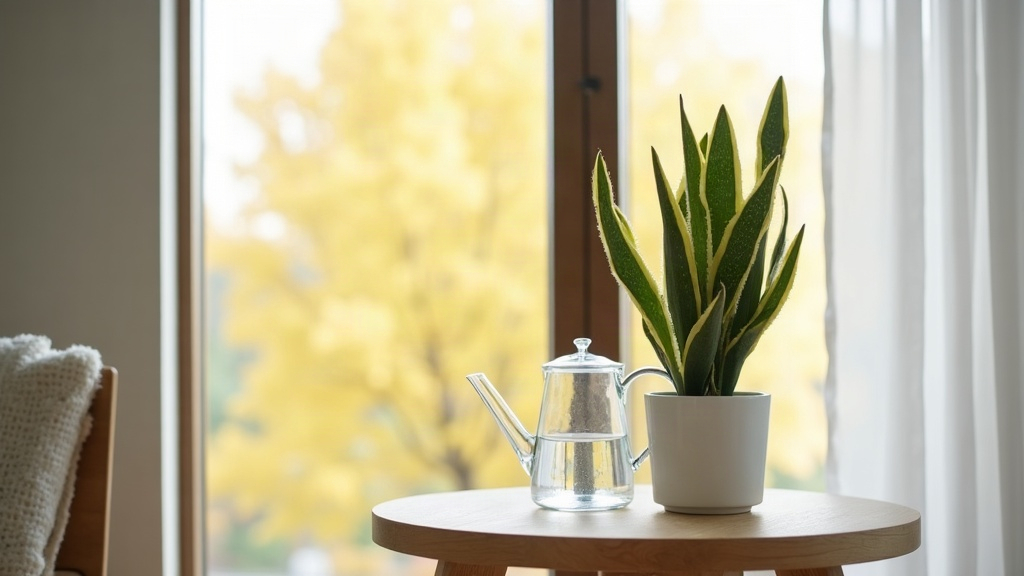
Published October 17, 2026 • 5 min read
Overnight lows in the Treasure Valley are dipping into the 30s, which means every plant parent from Eagle to Nampa is doing the same thing this week: hauling the pothos, the fiddle leaf fig, and that one stubborn monstera back inside. It is also the week the questions start. Why is there a white crust on the soil? Why are the leaf tips going brown? Why did a plant that thrived on the patio start sulking in the living room?
Houseplant forums are full of answers: too much light, too little light, overwatering, underwatering. Those are all real. But there is one cause that gets a lot less airtime, and it is coming out of your tap.
Good news first. Nothing here means you are bad at plants. A closed pot is a harder environment than an open patio bed, and a few small habits fix most of it.
Why Plants Sulk When They Come Indoors
Outside, rain and irrigation flush through the soil and carry dissolved salts away. Inside, a pot has one way out: the drainage hole. Whatever you pour in that does not get used by the plant, including minerals, tends to stay behind as water evaporates from the soil surface.
Add the fall shift in conditions. Indoor air gets dry once the furnace kicks on, plants near heating vents get blasted with warm air, and light drops as days shorten. A plant under that kind of stress shows it first at the leaf tips and edges.
Many of the crisp brown edges you will see in the next month are about humidity, heat, and light, not water. Move the plant away from the vent and check your light before you blame anything else. But when you see a white crust too, keep reading.
The White Crust Is Not Mold
That chalky ring on the soil surface or around the pot rim is usually dissolved minerals and fertilizer salts left behind as water evaporates. Houseplant guides point to overfeeding as the most common source, and that is fair. But tap water adds to the pile every single time you water.
In Boise, that contribution is not small. Treasure Valley tap water typically runs 10 to 15 grains per gallon of hardness, and parts of Meridian reach 17. Every watering delivers calcium and magnesium that the plant does not eat. Over a few months in a closed pot, that can add up to some of the crust you can see, plus salt you cannot.
You may also see white spots on the leaves themselves. Those are usually dried water droplets from misting or splashing, and they wipe off. Plants like calatheas, prayer plants, and ferns tend to be the fussiest about mineral-heavy water.
A Five-Minute Fall Reset for Every Plant
Flush the soil. Put the pot in a sink or tub and run water through until it flows freely from the drainage hole, then let it drain fully. Repeat once. This washes out built-up salts. Do it every few months, not every watering.
Scrape and top-dress. Gently remove the top half inch of crusted soil and replace it with fresh potting mix. If the whole pot is caked and the plant keeps declining, repot into fresh mix.
Let water sit. Leaving tap water out overnight lets chlorine escape. It does not remove hardness minerals, so do not expect it to fix a crust problem by itself.
Water your fussy plants differently. Rainwater, distilled water, or reverse osmosis water gives sensitive plants a cleaner start. If you have an RO tap at your kitchen sink, that is a good source for the calatheas.
Watch the fertilizer. Feed lightly through winter. Plants grow slowly in low light, and extra fertilizer just becomes extra salt.
Where a Water Softener Fits (and Where It Does Not)
Here is the part we would rather tell you straight. Softening swaps hardness minerals for sodium or potassium, and sodium is not what a houseplant wants in its soil. If you have a softener, give your plants water from an untreated line, such as an outdoor spigot (confirm yours is not softened) or a dedicated filtered tap, rather than the softened kitchen faucet.
That said, the hardness you are fighting at the pot is the same hardness that scales your kettle, spots your glasses, and shortens the life of your water heater. We covered that side of the story in what hard water costs Boise homes. For a plant, the plan is easy: flush, filter, and keep soft water out of the pot. A test tells you whether your tap is mild enough to skip the special watering routine.
Not sure how hard your water actually is? That is a ten-minute test, and it tells you whether this is a plant problem or a water problem. Our fall humidifier guide covers the other indoor-air habit that gets hit by the same minerals.
Houseplants and Hard Water FAQ
Know What Is in Your Tap Water
Get a free water test and see your exact hardness in grains per gallon. No pressure, no sales pitch, just your numbers.