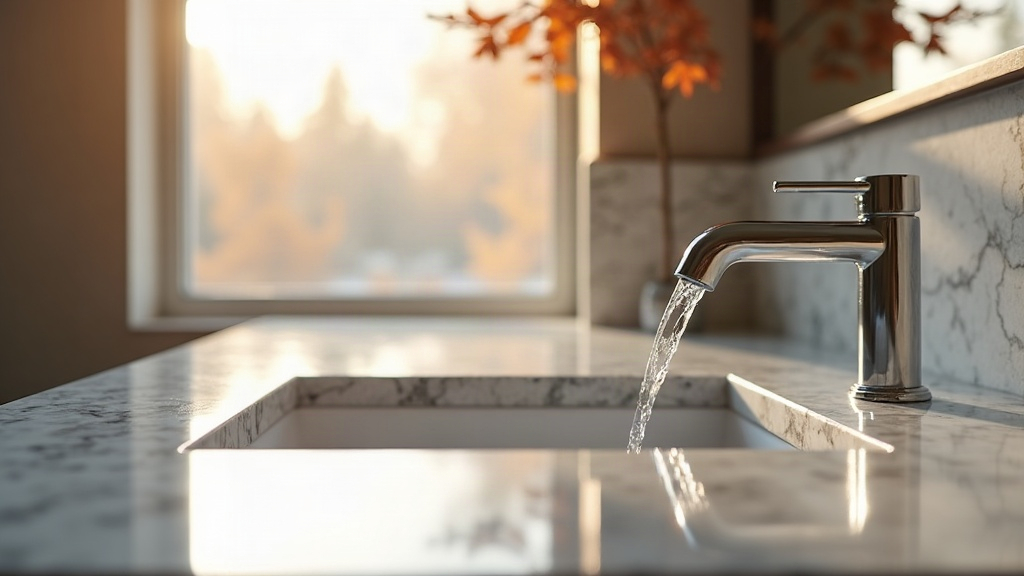
September is the cruelest month for your skin. Humidity drops, the air conditioning flips to heat, and that summer glow you worked for starts to crack and flake. Most women in Boise upgrade their moisturizer, add a serum, and still wonder why their skin feels tight by October. The missing piece is not a better product. It is what comes out of your tap.
Why September Is the Most Dangerous Month for Your Skin
Your skin barrier is a thin, lipid-based shield that holds moisture in and keeps irritants out. Dermatologists call it the stratum corneum, but you know it as the difference between skin that looks hydrated and skin that feels like paper by noon.
All summer long, ambient humidity helps prop that barrier up. You may not even realize how much work the outdoor air is doing. Then September hits and Boise humidity drops sharply. Indoor heating turns on and strips the remaining moisture from the air inside your home. Your skin barrier goes from supported to under siege in a matter of weeks.
Dermatologists consistently flag this seasonal transition as the hardest on skin. The combination of lower humidity outside, forced hot air inside, and more time spent indoors creates a dehydrating trifecta. Your skin did not suddenly get sensitive. The environment just stopped helping it.
The 2026 Skin Barrier Playbook (What Actually Works)
Barrier Repair 2.0 is the dominant skincare trend this fall, and for good reason. The industry finally moved past "moisturizing" as a generic goal and started talking about the lipid layer specifically. Here is what the evidence actually supports:
- Ceramide-first formulas. Ceramides are the mortar between your skin cells. Look for products that list ceramides 1, 3, and 6-II. These are not marketing words. They are specific lipids your barrier needs to function.
- Gentle cleansers only. Anything that strips oil sets you back. Fragrance-free, low-pH cleansers with minimal surfactants are the standard now.
- Moisturize on damp skin. Applying moisturizer within 60 seconds of washing locks in the water you just touched. Waiting until skin is dry means you are working with less.
- A bedroom humidifier. Eight hours of forced-air heat every night is eight hours of dehydration. A humidifier in your sleep space gives your skin a fighting chance to recover overnight.
- Shorter, cooler showers. Hot water dissolves the oils that hold your barrier together. This is the advice nobody wants to hear, but it matters more in fall than any other season.
If you do all of this and your skin still feels tight, still looks dull, and still flakes despite a solid routine, there is a variable most skincare content never mentions.
So Why Is Your Skin Still Struggling Even When You Do Everything Right?
Picture this: you switched to a gentle, fragrance-free cleanser. You added a ceramide moisturizer. You are moisturizing on damp skin. And yet, every time you wash your face, you get that tight, filmy feeling. That slight film that no amount of serum seems to fix.
That film is not your cleanser. It is your water.
Boise and Meridian run on hard water, and hard water leaves a residue of calcium and magnesium ions on your skin every single time you rinse. You cannot see it, but your skin can feel it. A lot of people in the Treasure Valley chalk this up to the dry Idaho air and keep buying better products. The problem was never the air, and it was never the products. It was upstream from both.
This is the insight that changes everything: your skincare routine is working against a hidden variable you have probably never tested.
What Hard Water Actually Does to Your Skin Barrier
Hard water contains elevated concentrations of calcium and magnesium ions. When that water contacts your skin, those ions bind to soap and cleanser molecules, creating an insoluble residue. That residue sits on your skin and physically disrupts the lipid layer, the same layer ceramide products are trying to rebuild.
The research is clear on this. Hard water exposure increases skin surface pH, which weakens enzyme activity in the barrier. It blocks ceramide absorption, meaning that $40 ceramide serum you bought cannot fully penetrate because there is a mineral film in the way. It also increases transepidermal water loss, which is the technical term for your skin losing moisture faster than it can hold it.
Boise municipal water tests between 10 and 15 grains per gallon (GPG). Meridian runs slightly harder, between 12 and 17 GPG. Anything above 7 GPG is considered hard. Anything above 10 GPG is considered very hard. You have likely been washing your face in very hard water for years. See also our article on how hard water affects eczema and sensitive skin in Idaho for a closer look at the clinical side of this.
Summer partially masked this problem. Higher outdoor humidity and the barrier support it provides softened the visible effects. Fall strips that away. The hard water damage was always there. Now you just have nothing buffering it.
Boise and Meridian: Built for Hard Water Skin Problems
The Treasure Valley sits on a regional aquifer that pulls mineral-rich groundwater from the surrounding geology. That is not a criticism of local water management. The water is safe to drink. But safe to drink and gentle on your skin are two different standards.
In August, the Idaho Statesman reported that Boiseans use roughly 65 million gallons of Veolia-managed municipal water per day during summer months, much of it going to lawn irrigation. That same Veolia water, with the same mineral load, flows through your shower head and into your bathroom sink every morning.
Meridian residents pull from a slightly different blend of surface and groundwater sources, which is why the GPG can run higher there than in Boise proper. If you have lived in both cities and noticed your skin behaving differently, that variation is real. It is geography. It is not your skin type changing.
A water softener does not change your skincare products. It changes what those products are working with. When the mineral film is gone, ceramides absorb the way they are supposed to. Cleansers rinse clean. Skin holds moisture through the night. It is an infrastructure fix that protects everything downstream, including your skin. For more on the full range of effects, our hard water and hair loss in Boise article shows how the same mineral buildup affects hair and scalp health too.
Frequently Asked Questions
Does hard water actually make dry skin worse in the fall?
Yes, and fall specifically makes it worse. In summer, ambient humidity helps your skin barrier compensate for the mineral residue hard water leaves behind. When humidity drops in September and indoor heat starts running, that compensation disappears. Hard water damage that was manageable in July becomes visibly noticeable by October. The water hardness did not increase. Your skin just lost its buffer.
Will a water softener really make a difference for my skin barrier?
Research published in dermatology journals has shown measurable improvement in skin hydration and barrier function in households that switched from hard to soft water. The mechanism is straightforward: removing calcium and magnesium ions from shower water eliminates the mineral film that blocks ceramide absorption and disrupts the lipid layer. Most people notice a difference in skin feel within a few weeks of softening their water.
What GPG level is Boise and Meridian water, and is that considered hard?
Boise municipal water typically tests between 10 and 15 grains per gallon (GPG). Meridian, which draws from a different groundwater blend, tends to run between 12 and 17 GPG. Water hardness is classified as hard above 7 GPG and very hard above 10 GPG. Both cities fall solidly in the very hard category for most of the year. A free water test from TrueWater Idaho will give you the exact number for your address.
Can I fix hard water skin effects with better skincare products alone?
Partially, but not fully. Higher-quality ceramide formulas, barrier creams, and gentle cleansers all help. But if the water itself is leaving a calcium film on your skin every time you rinse, that film physically limits how much those products can absorb. You are repairing and damaging at the same time. Products help manage the symptoms. Softening your water addresses the source.
Find Out What Is Actually in Your Water
A free water test takes about 20 minutes and tells you exactly how hard your water is and what that means for your skin, your hair, and your home. No obligation. Just answers.
Serving Boise, Meridian, Nampa, Eagle, and the Treasure Valley.
Book Your Free Water TestOr call us directly: (208) 968-2771