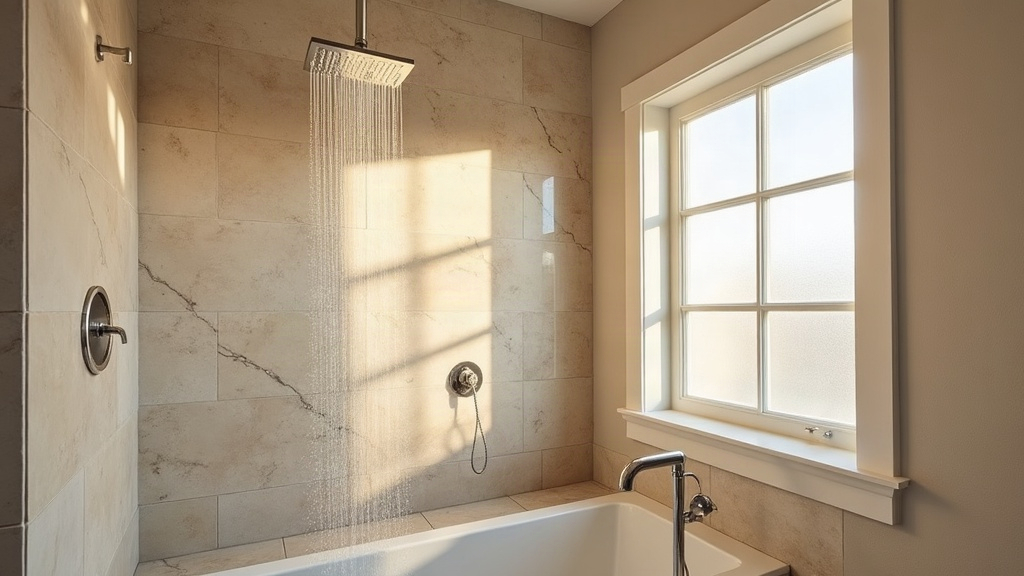
Fall Hair Shedding Hard Water Boise: What's Really Clogging Your Follicles
Most people blame the season when fall hair shedding hits. But Boise's hard water is the part nobody's talking about. Every September and October, search engines light up with people asking why their hair is suddenly everywhere: in the shower drain, on the pillow, coating the bathroom floor. The answer involves real biology, but if you live in Treasure Valley, your tap water is making it significantly worse.
First, the biology. There is a well-documented dermatological phenomenon called seasonal telogen effluvium. Hair follicles run on a cycle: growing phase (anagen), transition phase (catagen), and resting phase (telogen). At any given moment, roughly 85% of your follicles are actively growing and about 15% are resting. During summer, increased UV exposure pushes a larger-than-normal percentage of follicles into the telogen phase. It is a natural protective response. The problem: two to three months later, all those resting follicles shed at once. That timing lands squarely in late September through November.
According to research published on the NIH's StatPearls platform, a typical telogen effluvium episode shifts roughly 30% of active follicles into the resting phase. Under normal daily shedding, you lose around 100 hairs. During peak seasonal shedding, that number can climb to 300 hairs a day. Dermatologists classify this as physiological, not pathological. It is your body doing something it was designed to do. Most people grow it all back without intervention. But that phrase "without intervention" carries a hidden asterisk for anyone washing their hair with Boise water.
Where Hard Water Enters the Picture
Boise and Meridian run on some of the hardest municipal water in the Pacific Northwest. Meridian's water typically tests between 12 and 17 grains per gallon (GPG). Core Boise neighborhoods run 10 to 15 GPG. For context, water is classified as "hard" at anything above 7 GPG. Treasure Valley households are washing their hair with water that is nearly double that threshold on average.
Hard water is loaded with dissolved calcium and magnesium ions. When that water hits your scalp, those ions do not simply rinse away. They bind to the keratin protein structure in your hair shaft and deposit a thin, invisible film of calcium salts on the surface. Every wash adds another layer. Over time, that residue builds up in the follicular openings themselves, partially blocking the pores and ducts that feed each strand. The scalp's natural pH, which should hover slightly acidic to maintain a healthy microbiome and proper sebum flow, gets disrupted by the alkaline mineral deposits. Stylist and Boise salon professionals at unDone have noted that mineral buildup on the scalp causes itchiness, dandruff, and increased hair loss that clients often attribute to stress or aging rather than their water.
A 2024 study in the International Journal of Trichology found that just 30 days of hard water exposure made hair fibers measurably weaker, rougher, and more prone to breakage compared to hair washed with soft water. The hard water group had statistically significant reductions in tensile strength. That was 30 days. Most Boise residents have been washing with this water for years.
The Double-Hit: Why Fall Is the Worst Season for Boise Hair
Now layer in what summer does in Treasure Valley. Longer days, more outdoor time, higher sweat output, and more frequent washing from June through August means your scalp has been processing hard water at an accelerated rate. Calcium and magnesium accumulation is at its annual peak by the time September rolls around. Follicles that have been partially clogged and sitting in mineral-residue buildup all summer are already operating at a disadvantage.
Then seasonal telogen effluvium kicks in. What would otherwise be a manageable, temporary shed becomes heavier for people dealing with hard water scalp damage in Boise. The follicle's recovery, its ability to re-enter the anagen (growth) phase cleanly and quickly, is slower when the pore is congested, the pH is off, and the scalp microenvironment is compromised. You are not just shedding seasonally. You are shedding seasonally on top of a scalp that has been accumulating mineral stress since June.
There is also a broader local water context worth noting. In a recent decision, the Boise City Council approved the Freehouse subdivision but required the developer to connect to city water rather than drill a new private well, with council members citing concerns about wells running dry in the area. Decisions like that signal ongoing pressure on the region's water infrastructure. What comes out of Treasure Valley taps is a living story, not a fixed variable. Knowing what is in your water matters for your household, and it matters for your hair.
What You Can Actually Do About It
The good news: hard water scalp damage is reversible, and seasonal shedding is temporary. The combination is manageable if you address the water side of the equation. Here are practical steps, in order of impact:
- Chelating shampoo once a week: Chelating shampoos contain EDTA or citric acid compounds that actively bind to and strip mineral deposits from the hair shaft and scalp. This is not the same as clarifying shampoo. Look for "chelating" specifically on the label. Use it once a week during fall shedding season, not as your daily wash.
- Cool rinse at the end of each shower: Hot water opens the hair cuticle and encourages mineral absorption. A 30-second cool rinse at the end helps close the cuticle and reduces how much residue bonds to the shaft.
- Scalp exfoliation every two weeks: A simple scalp scrub or exfoliating brush removes surface buildup and keeps follicular openings clear. This has become a mainstream dermatologist recommendation in 2026 as scalp care has grown as a category.
- Shower filter as a quick fix: An inline shower filter with a KDF or carbon block stage reduces calcium and magnesium at the showerhead. Not as effective as a whole-home system, but it makes a noticeable difference and installs in about 10 minutes.
- Whole-home water softener as the permanent solution: A water softener works through ion exchange, trading the calcium and magnesium ions in your water for sodium ions before the water ever reaches your pipes, your showerhead, or your scalp. The mineral accumulation issue goes away at the source. For Boise and Meridian households at 12 to 17 GPG, this is the only approach that addresses the problem permanently rather than managing symptoms wash by wash.
The connection between hard water and hair loss in Boise is something we cover in depth separately if you want to go further on the follicle science. And if you are curious what your specific home's water hardness is, a free test will give you exact GPG numbers for your address.
One more note on timing: if you want to get ahead of the worst of the seasonal shedding window, September is the right month to act. The peak typically runs October through November. Getting a softener installed or at least a shower filter in place now means your scalp goes into that window with cleaner follicles and a healthier pH baseline. Recovery will be faster on the other side.
We also put together a full breakdown of the 2026 Boise water quality report if you want to see the full mineral panel for your neighborhood.
Frequently Asked Questions
Is fall hair shedding normal, or should I be worried?
Seasonal shedding is a normal biological process. Dermatologists call it seasonal telogen effluvium, and it is considered physiological rather than pathological. Most people see it resolve on its own within a few months as the hair cycle resets. If shedding is severe, prolonged past three months, or accompanied by visible thinning patches, that warrants a conversation with a dermatologist. The hard water piece does not cause the seasonal shedding; it amplifies it and slows recovery.
How hard is Boise water compared to the national average?
The national average for water hardness in the US is around 7 to 10 GPG. Boise core neighborhoods run 10 to 15 GPG, and Meridian runs 12 to 17 GPG. That puts Treasure Valley well above average, which is why hard water issues, including mineral buildup on appliances, scale on fixtures, and scalp accumulation, are so common here compared to softer-water cities.
Can a water softener actually reduce hair shedding?
A water softener will not stop the natural seasonal telogen effluvium cycle; that is biological and will happen regardless. What softened water does is remove the hard water variable. Your scalp's follicular openings stay cleaner, your scalp pH stays closer to its healthy range, and your hair cuticle stays smoother. That means the seasonal shedding you do experience is not compounded by mineral-stressed follicles, and recovery after the shedding window is faster. Multiple Boise households we work with have reported noticeably less drain clog and improved hair texture within 4 to 6 weeks of installation.
What is a chelating shampoo and where do I find one in Treasure Valley?
A chelating shampoo contains chelating agents like EDTA (ethylenediaminetetraacetic acid) or citric acid derivatives that bind to metal and mineral ions and lift them off the hair shaft. Unlike a standard clarifying shampoo, which mainly removes product buildup, a chelating shampoo specifically targets mineral deposits from hard water. Brands like Malibu C, Kenra Platinum, and Ion Crystal Clarifying are commonly available at Sally Beauty and some Target locations in the Boise area. Use it once a week max; it is aggressive and can be drying if overused.
Find Out What's Actually in Your Water
We offer free water hardness testing for Boise, Meridian, and Treasure Valley homes. Know your exact GPG number, see what your water is doing to your pipes and your scalp, and get honest answers with no pressure. Takes about 20 minutes at your home.