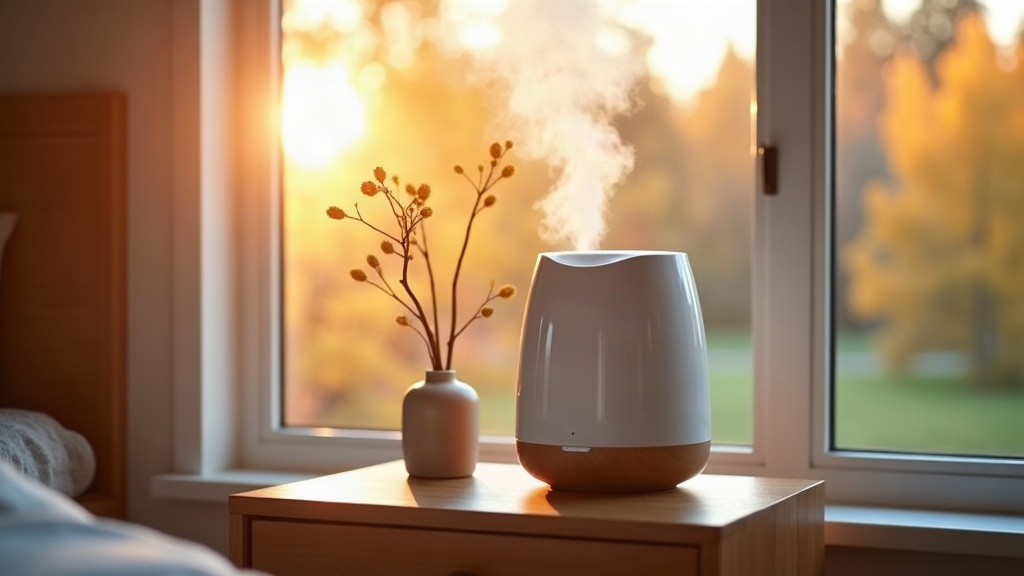
September in the Treasure Valley means golden light on the foothills, Boise State football on Saturday afternoons, and for a lot of families, a sneezing season that won't quit. The Snake River Plain's ragweed and grass pollen counts peak right now, and Boise consistently ranks among the more allergenic cities in the Mountain West.
The usual response: close the windows, turn on the air filtration, and grab a humidifier. It's actually smart. Allergists recommend keeping indoor humidity between 40 and 50 percent during allergy season because dry air dries out your mucous membranes, making them less effective at filtering airborne irritants. A humidifier is a reasonable tool.
The problem is what Boise tap water does to most humidifiers, and what those humidifiers then do to your air.
Boise's Fall Allergy Season Is No Joke
Ragweed peaks in September across Idaho. The Snake River Plain's geography creates a natural pollen accumulation zone: warm, dry air from summer lingers while pollen from late-season plants spreads across the valley. Wind patterns that run east to west through the Treasure Valley don't scatter pollen so much as redistribute it across Boise, Meridian, Nampa, and Caldwell.
Beyond ragweed, September also brings mold spore spikes as temperatures swing between warm afternoons and cool nights. Organic material that sat through a dry summer starts breaking down in the cooler September evenings, releasing spores that don't show up in pollen counts but still trigger allergy symptoms in sensitive people.
If your family's symptoms tend to get worse in the first two weeks of September, you're not imagining it. The outdoor air quality genuinely shifts. Closing windows and managing your indoor environment is the right move. Most people just don't account for what their indoor fix is adding back into the air.
Why Treasure Valley Homeowners Reach for Ultrasonic Humidifiers
Walk the seasonal aisle at any Costco or Target in Meridian and you'll find the humidifier section well-stocked by mid-August. Ultrasonic models dominate because they make sense on paper: quiet, cool mist, no hot heating element, safe for kid's rooms and bedrooms. They're energy efficient and they work fast. You can feel the difference in room humidity within 20 minutes of running one.
Here's how they work: an ultrasonic transducer vibrates at very high frequency, breaking water into a fine mist of tiny droplets. No heat. No boiling. Just atomized water particles that float into the air and raise the humidity level.
That process sounds clean. It isn't, when your water isn't.
The Hard Water Problem Your Humidifier Box Doesn't Mention
Boise city water runs at 10 to 15 grains per gallon (gpg) of dissolved minerals, mostly calcium and magnesium. Meridian water can reach 12 to 17 gpg, especially in neighborhoods drawing from deeper aquifers in the northern part of the city. To put that in context, the national average is around 10 gpg. Treasure Valley water is harder than average.
You see evidence of this hardness every day: the white ring around your faucet base, the hazy film on your shower glass, the spots on dishes straight out of the dishwasher. Those are dissolved minerals that were in your water and got left behind when the water evaporated.
Your ultrasonic humidifier does the same thing to your air. It atomizes the water and sends it airborne, minerals included. The water droplets evaporate, but the calcium carbonate and magnesium particles don't. They stay suspended briefly, then settle out as a fine white powder on every surface in the room.
This is the "white dust" problem that the EPA specifically flags in its guidance on home humidifiers. They recommend distilled or demineralized water in ultrasonic units for exactly this reason. Most people buying a $60 humidifier at Costco don't read the EPA's guidance on indoor air quality before turning it on.
What White Dust Actually Does During Allergy Season
Here's the irony: you ran the humidifier to help your allergies. The white dust it's generating from Boise hard water is actively making things harder for inflamed airways.
Calcium carbonate particles at this particle size are inhalable. When white dust settles on your pillow, your kid's stuffed animals, your bedroom rug, or your bedding, it gets re-suspended every time something disturbs it. Someone walks across the room. The dog shakes. A child rolls over in bed. Those mineral particles go back into the breathing zone.
If you're already dealing with ragweed-inflamed airways, your immune system is primed to react to airborne particles. Inhaled calcium carbonate from your own humidifier adds to that load. The sneezing, congestion, and scratchy throat you blamed entirely on the outdoor pollen count may have a significant indoor component coming from your own bedroom.
People with asthma are particularly sensitive to this. Several studies on indoor air quality have noted increased respiratory irritation in households using ultrasonic humidifiers with hard tap water, especially in sleeping rooms where people spend eight hours with their faces near the bedding where white dust settles. The problem is nearly invisible because white dust looks like ordinary household dust.
The Fix Is the Water, Not the Humidifier
There are two approaches, one inconvenient and one permanent.
The inconvenient option is distilled water. No dissolved minerals, no white dust. If you have one humidifier in one room and you're willing to haul gallons home from the grocery store at $1 to $2 each, this works. Run the math on a four-month allergy season with daily refills and it adds up faster than most people expect, especially once you account for two or three humidifiers running through a typical Treasure Valley home.
The permanent option: soften your water. A whole-house water softener removes dissolved calcium and magnesium at the entry point through ion exchange. Every tap in your home produces soft water. Every humidifier running on soft water produces clean mist with no mineral particles to settle out as white dust.
Soft water through an ultrasonic humidifier means the humidifier actually does what it's supposed to do: add clean moisture to dry indoor air. No white haze on your furniture. No mineral particles re-suspending from your pillow every time you roll over during allergy season.
Most Meridian and Boise homeowners we talk to notice the difference within the first week. The white haze on nightstands stops accumulating. Allergy symptoms that weren't fully explained by outdoor pollen counts start to improve. It's not a dramatic revelation, just a steady absence of something that was quietly making things worse.
The free water test is where this conversation usually starts. It takes about 20 minutes, tells you your exact hardness level, and gives you the information to decide whether a softener makes sense for your home. No obligation, no pitch until you ask for one.
Find Out What's Actually in Your Boise Water
A free water test takes about 20 minutes and shows you exactly what your humidifier is atomizing into your air. No sales pressure. Just information from a local team that knows Treasure Valley water.